
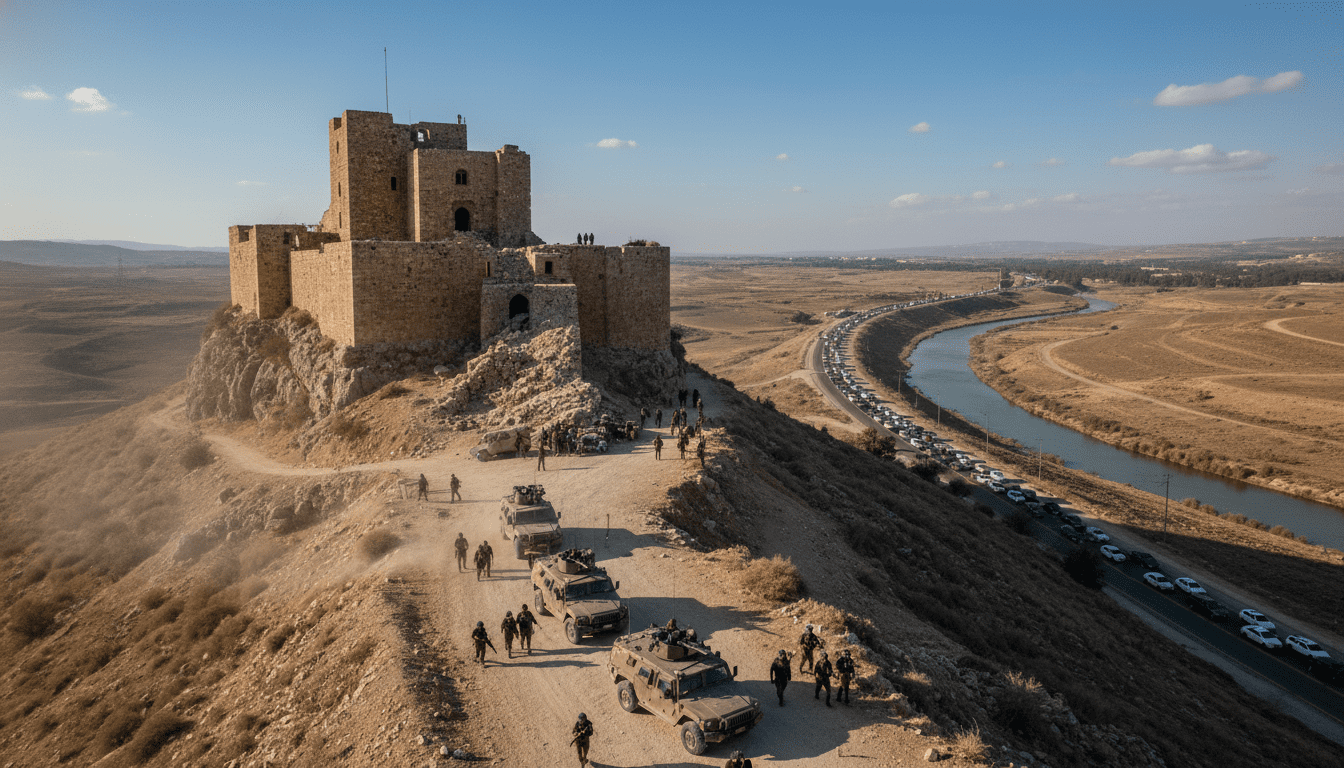
Israeli forces seize Beaufort fortress as evacuation order extends to Zahrani River
Israeli forces took control of the Beaufort fortress in southern Lebanon, prompting evacuation orders extending to the Zahrani River and marking a sharp escalation in clashes with Hezbollah.
Opening summary
Israeli troops captured the historic Beaufort fortress on Sunday as the military declared large swathes of southern Lebanon a combat zone and ordered civilians to move north of the Zahrani River. The seizure follows a renewed ground offensive in which Israeli units crossed the Litani River, built new bridging, and pushed deeper into border areas amid intensified exchanges with Hezbollah. The move has been framed in Israel as a tactical gain to disrupt militant supply lines while Lebanon and international actors warn of broader escalation.
Evacuation order and scope of operations
The Israeli evacuation directive issued early Sunday did not confine itself to isolated border towns but designated extensive areas of southern Lebanon as active battlefields. Residents were told to seek safety north of the Zahrani River, which the military described as a buffer line to avoid Israeli airstrikes. Local authorities reported urgent population movements as families and communities sought refuge from the expanding theater of operations.
Ground advances and river crossings
In recent days Israeli ground forces advanced beyond earlier frontlines, crossing the Litani River and erecting multiple temporary bridges to support continued movement northward. Commanders said brigades and air support were engaged in coordinated operations to secure key positions and lines of approach. The tempo of the advance has increased contact with Hezbollah positions and complicated humanitarian access in contested zones.
Capture of Beaufort and tactical implications
The Beaufort fortress, perched on a roughly 700-meter ridge a few kilometres northwest of Metula, fell to Israeli troops after a renewed assault. Military officials described the operation as involving several brigades and the air force and said a surprise approach from the west helped overcome defenses that earlier repelled an attempt months ago. Control of the Beaufort ridge gives forces a dominant observation and interdiction position over surrounding valleys and roadways, reducing safe routes for resupply into southern Lebanon.
Terrain challenges and limits to further push
Despite the strategic value of the Beaufort high ground, commanders and analysts caution that the rugged, hilly terrain of southern Lebanon will complicate sustained advances. Narrow, steep tracks expose armoured formations to ambushes, and every secured height often reveals another hill that must be cleared and held. Military planners must balance the tactical advantage of elevated positions with the risk posed by anti-tank teams, prepared defensive positions, and the logistical burden of operating in difficult mountain country.
Human cost and breakdown of ceasefire arrangements
The capture of Beaufort came amid renewed rounds of strikes and counterstrikes that have already produced civilian casualties and infrastructure damage. Lebanese sources reported multiple fatalities from Israeli attacks over the weekend, underscoring that the ceasefire framework mediated in April has effectively collapsed. Hezbollah has responded with increased rocket and drone attacks into northern Israel, triggering repeated alerts and signalling that the group retains the capability to widen the conflict.
International response and diplomatic friction
France requested an urgent UN Security Council session to address the Israeli advance, while French officials struck a cautious tone, affirming Israel’s right to self-defence but warning that prolonged occupation of Lebanese territory cannot be justified. Diplomatic exchanges in recent days have so far failed to produce a new, enforceable cessation of hostilities, with Washington-mediated talks not including Hezbollah and producing no immediate de-escalation. Regional and European capitals have expressed concern about civilian displacement and the potential for a wider confrontation.
Political stances in Beirut and Jerusalem
In Beirut, Prime Minister Nawaf Salam accused Israeli forces of pursuing a “scorched earth” policy and warned against collective punishment of civilians, while urging direct negotiations as the only sustainable exit from the confrontation. Hezbollah representatives in the Lebanese parliament dismissed the Washington talks as proof of the failure of direct-state negotiations and insisted their own position would not be surrendered. In Jerusalem, senior officials framed the operation as necessary to protect communities in the north and said forces would consolidate and expand control over captured zones as required.
The situation on the ground remains fluid, with both military engagements and diplomatic efforts set to continue in the coming days as displaced civilians, regional actors and international institutions seek to limit further deterioration.
