
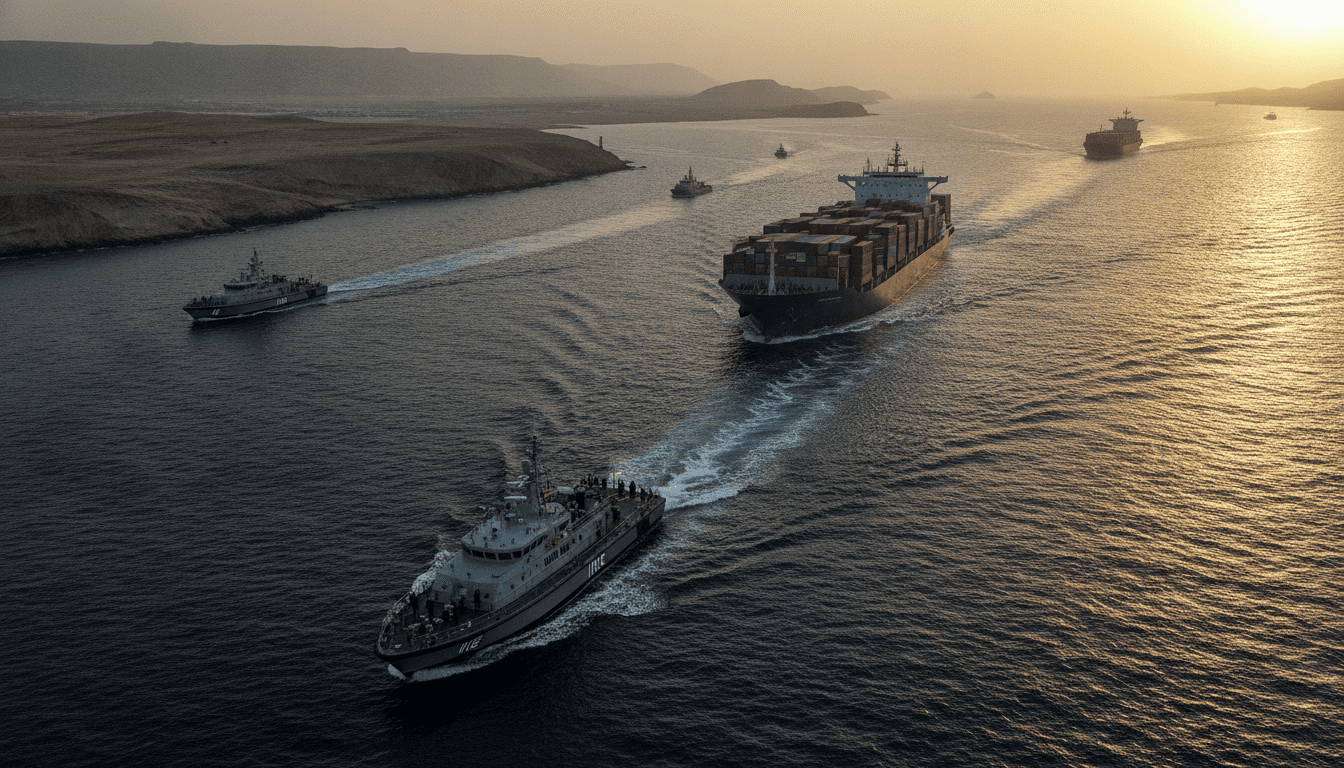
Iran’s Strait of Hormuz Navigation Dispute Intensifies After IRGC Warning
IRGC warns ships to use only its approved routes through the Strait of Hormuz as Oman and the IMO announce a coordinated transit lane amid US–Iran talks.
Iran’s Islamic Revolutionary Guard Corps (IRGC) has issued a directive telling commercial vessels to use only routes approved by the force through the Strait of Hormuz, raising tensions as maritime traffic attempts to resume. The warning followed Oman’s announcement of a new transit corridor for ships in the strait that it said had been coordinated with the International Maritime Organization (IMO). Both developments come after a recent memorandum of understanding between the United States and Iran that paused hostilities and initiated a 60-day negotiation process over the waterway’s future.
IRGC orders ships to use only approved Strait of Hormuz routes
The IRGC statement insisted that commercial craft must follow corridors it designates while transiting the Strait of Hormuz, citing security concerns and operational control. The move was framed by Iranian authorities as necessary to prevent incidents and to assert maritime control in one of the world’s busiest chokepoints. Shipping companies and maritime insurers were quick to note the potential for conflicting guidance from different authorities in the same waters.
Industry sources said the IRGC guidance could complicate navigation for tankers and container vessels already adapting to altered routing and higher premiums after weeks of disruption. Operators typically follow notices issued by coastal states and internationally recognized bodies like the IMO; competing directives risk confusion and increased costs.
Oman and the IMO announce coordinated transit lane in the strait
Oman on Wednesday unveiled a new transit lane through the Strait of Hormuz and said it had coordinated the route with the International Maritime Organization. The Omani announcement emphasized safe passage and adherence to established international navigation standards to restore regular traffic patterns. Oman’s role as a regional mediator and maritime stakeholder positions it to offer practical routeing solutions acceptable to commercial operators.
The IMO’s involvement signals a preference for internationally recognized measures to manage traffic in the strait, rather than unilateral controls, according to diplomats and maritime experts. Coordinated lane planning typically aims to reduce collisions and clarify expectations for vessel routing and reporting.
US–Iran memorandum left navigation dispute unresolved
The recent memorandum of understanding between Washington and Tehran largely halted overt hostilities but did not fully settle who controls navigation and security arrangements in the Strait of Hormuz. The MoU included provisions on reopening the waterway but left detailed operational questions to a 60-day negotiation window intended to produce a broader peace agreement. Observers said the navigation dispute was among several unresolved items that could derail or delay a final settlement.
U.S. and Iranian officials have described the MoU as a step toward de-escalation, yet the IRGC warning underscores persistent distrust and differing interpretations of sovereign authority at sea. The competing actions by Tehran and Muscat show how tactical measures on the water can quickly become strategic bargaining chips in diplomacy.
Shipping disruption since closures and blockades
Maritime traffic through the Strait of Hormuz has only recently begun to recover after months of severe disruption, during which Iran effectively restricted passage and the United States implemented a naval blockade on Iranian ports. Those measures led to rerouted voyages, delayed cargoes and a spike in insurance premiums for vessels in the region. The shipping industry has emphasized the economic consequences of uncertainty in the strait, given its role in global energy and trade flows.
Ports, charterers and cargo owners have been adjusting schedules and sourcing alternatives to mitigate the impact, but long-haul rerouting raises fuel and time costs. Any renewed ambiguity about approved lanes or enforcement could prompt another wave of diversions and higher premiums.
Regional naval posture and the risk of incidents
Military and commercial officials warn that overlapping directives and active naval postures increase the risk of miscalculation or accident in the Strait of Hormuz. The narrowness of the waterway, combined with high commercial density and naval presence from multiple states, creates a complex operating environment. Analysts say clear, internationally accepted routeing and communication protocols are essential to prevent incidents that could rapidly escalate.
Naval commanders from relevant states have been conducting patrols and surveillance while diplomatic teams attempt to negotiate functional arrangements. The presence of multiple authorities issuing guidance over the same sea lanes complicates deconfliction and could force neutral third-party monitoring to reduce misunderstandings.
Diplomatic clock: 60-day negotiations and potential outcomes
The 60-day negotiation window established by the U.S.–Iran memorandum is now the principal forum for resolving outstanding security and navigation issues in the Strait of Hormuz. Diplomatic delegates will need to reconcile Iran’s insistence on control measures with international demands for free and safe passage under maritime law. Possible outcomes range from a jointly administered transit regime and third-party monitoring to a return to pre-crisis norms with written guarantees and verification mechanisms.
Observers say that any durable solution will require technical agreements—on routeing, reporting, and enforcement—as well as political assurances that reduce incentives for unilateral action. The speed and depth of progress in the negotiations will determine whether commercial traffic can resume without layered restrictions.
The next weeks will test whether diplomatic channels can produce operational clarity in the Strait of Hormuz or whether competing national directives will perpetuate the uncertainty that has disrupted global shipping.
