
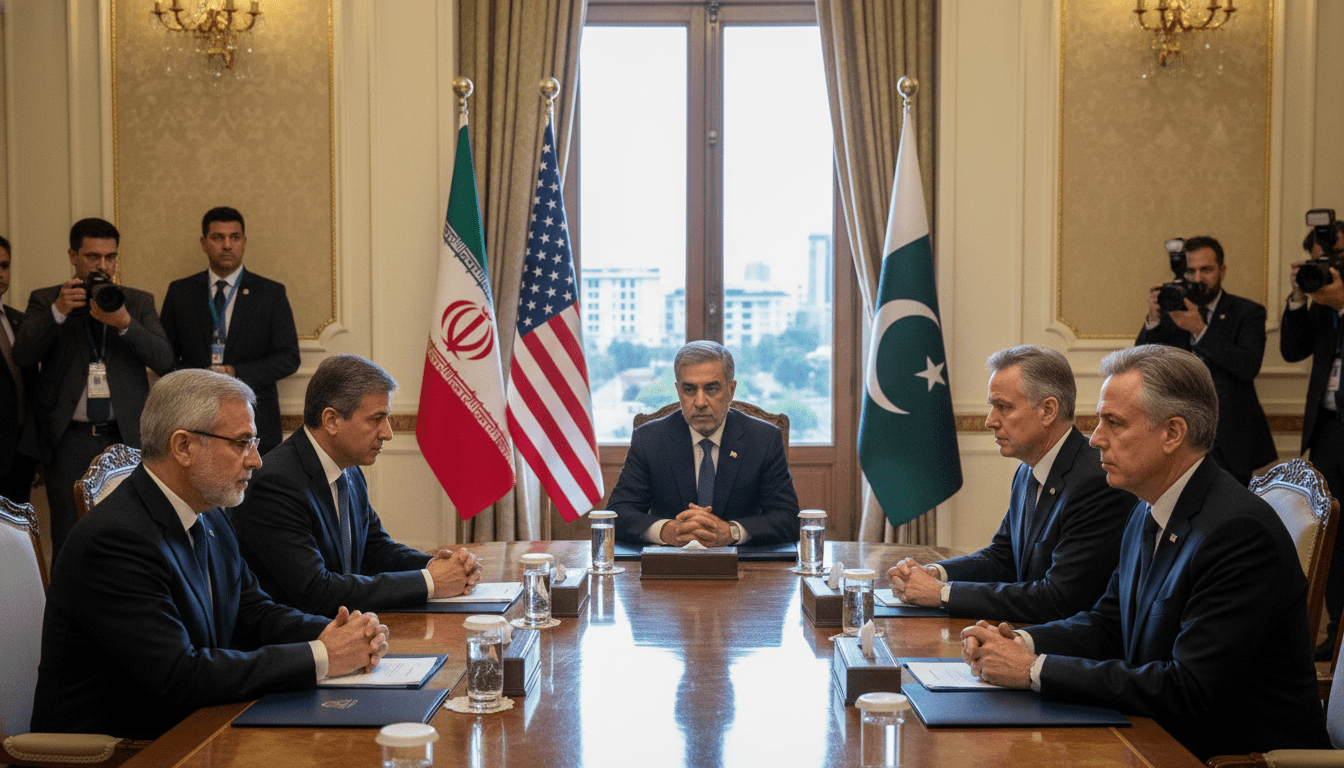
Iran Ready to Resume Negotiations with United States if Washington Lifts Blockade, Tehran Says
Iran ready to resume negotiations with the United States is at the center of Tehran’s latest diplomatic posture, with its UN envoy stating talks could restart once the US removes what Iran calls a blockade. Amir-Saeid Iravani said Islamabad would host the next round if conditions are met, signaling a potential return to direct diplomacy.
Tehran Conditions Talks on US Blockade Lift
Iran’s UN ambassador, Amir-Saeid Iravani, framed a clear precondition for renewed diplomacy: the United States must end measures Tehran describes as a blockade. He told Iranian media that only after Washington lifts those restrictions would Iran agree to a new round of negotiations. The statement ties any diplomatic advance explicitly to tangible policy steps by the United States.
Islamabad Identified as Proposed Negotiation Venue
Iravani identified Islamabad as the intended location for the next talks, signaling Pakistan’s potential role as host and intermediary. Naming a venue so early is notable because it suggests preparatory work or at least a shared understanding on logistics among interested parties. Choosing Pakistan aligns with its historical role as a regional interlocutor and may be intended to reassure parties about a neutral forum.
Ceasefire Compliance Cited as Preconditions
Tehran also tied talks to compliance with an existing ceasefire, accusing the United States of violations that must stop before negotiations resume. The ambassador emphasized that Iran sees adherence to ceasefire commitments as a non-negotiable confidence-building measure. By linking diplomacy to security behavior, Tehran set conditions intended to shift the conversation from abstract willingness to concrete actions.
Balancing Diplomacy and Military Readiness
Iravani conveyed a dual message of openness to political solutions and readiness to respond militarily if challenged, reflecting Tehran’s attempt to combine diplomatic flexibility with deterrence. He said Iran is prepared for a political settlement but also signaled preparedness for other scenarios, a formulation that underlines the government’s intent to preserve leverage. That posture is typical when a state wants to extract concessions while keeping pressure on potential adversaries.
Regional and International Reactions to Tehran’s Stance
The announcement is likely to draw swift responses from regional capitals and international actors monitoring the crisis, particularly countries involved in mediation or with security stakes in the outcome. Neighboring states may welcome the prospect of talks but will watch closely for any escalation or continued enforcement measures by the United States. Multilateral stakeholders, including UN forums and European partners, could be urged to facilitate or verify steps such as the lifting of sanctions or blockades.
Diplomatic Pathways and Practical Hurdles Ahead
Even if both sides express willingness, a sequence of practical and political obstacles remains: verification mechanisms for any blockade lift, agreement on the agenda, and confidence-building measures to ensure compliance. Logistics for convening in Islamabad will require coordination on security, participant lists, and whether third-party guarantors are necessary. Domestic politics in Washington and Tehran could also complicate or delay any immediate implementation of the ambassador’s proposal.
Final paragraph without title
For now, Tehran’s public positioning places the ball in Washington’s court, presenting a clear set of preconditions for a return to talks while leaving room for international mediation. If the United States were to act on lifting the contested measures and both sides agree to a neutral venue, diplomats say a negotiated path could reopen—but only after technical details and trust-building steps are negotiated.
