
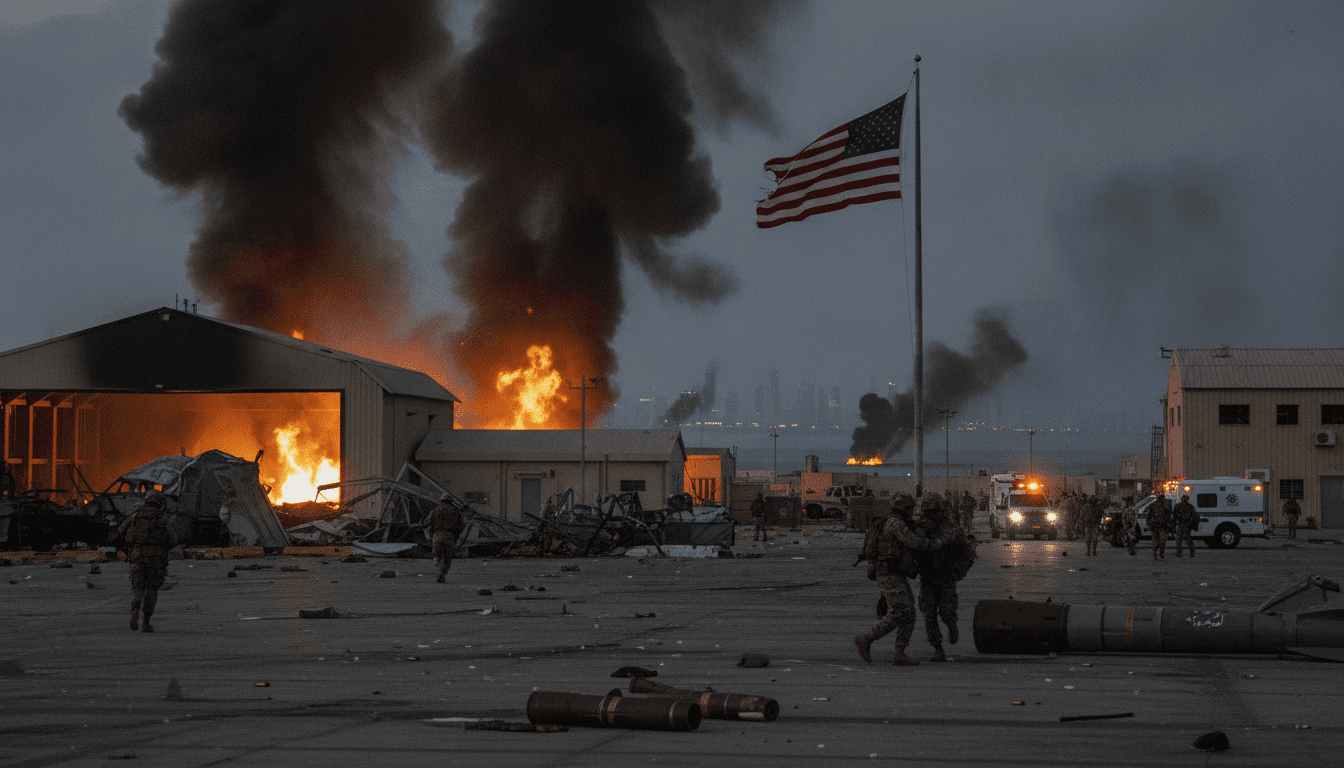
US-Iran strikes escalate after Iran launches missile and drone attacks on Kuwait and Bahrain
Iran launched missile and drone attacks on Kuwait and Bahrain targeting US facilities, prompting US-Iran strikes and a severe warning from President Trump in a rapid escalation.
Summary of cross-border attacks
Iran’s Islamic Revolutionary Guard Corps said it fired missiles and deployed drones at eight US-linked sites in Kuwait and Bahrain, describing the operation as retaliation for recent US actions. The IRGC posted the claim to its Telegram channel, saying the strikes were a response to what it called US aggression and a breach of an earlier ceasefire framework.
Kuwaiti authorities reported their territory had come under attack and said air defenses were active against incoming rockets and drones. A US government official also confirmed that US personnel and facilities in the Gulf were targeted during the barrage, signaling a direct confrontation moving beyond diplomatic warnings.
US retaliation and military objectives
US Central Command (CENTCOM) said American forces struck multiple targets inside Iran in a separate operation, identifying air defense sites, drone storage facilities and surveillance infrastructure as the primary objectives. CENTCOM described the action as a response to an earlier Iranian attack on a commercial freighter that transited the Strait of Hormuz on an unapproved route.
US statements framed the strikes as limited, precision operations aimed at degrading Iran’s capacity to launch further attacks on commercial traffic and allied positions in the region. Pentagon officials emphasized they were acting to protect shipping and personnel while attempting to avoid a broader escalation.
Regional defenses and Kuwaiti reports
Kuwait’s military reported that its air defenses engaged several incoming projectiles during the incident and that authorities were assessing damage and potential casualties. Bahraini officials have not released detailed public tallies but acknowledged activity consistent with defensive intercepts over their airspace.
Regional security sources noted that the simultaneous use of missiles and armed drones complicates defense plans for Gulf states that host US forces. Analysts say the mix of systems increases the risk of miscalculation amid crowded airspace and heightened alert levels across the Gulf.
Political rhetoric heightens tensions
President Donald Trump issued a stark public warning following the strikes, asserting that the United States could be forced to resume full-scale hostilities and saying the Islamic Republic “would not long exist” if pushed into a wider war. The statement, posted on the president’s online platform, intensified diplomatic alarm and underscored the risk that strong rhetoric could outpace military intent.
US lawmakers and foreign ministers expressed concern over both the military exchanges and the inflammatory language from Washington. Some officials called for immediate de-escalation through diplomacy, while others argued for strengthening deterrence and protection of commercial shipping lanes.
Diplomatic framework under strain
Earlier announcements described a framework agreement intended to halt fighting and reopen the Strait of Hormuz, with negotiators allotted 60 days to convert that outline into a final accord. That diplomatic process now faces acute strain after the sequence of strikes and counterstrikes, raising questions about whether talks can proceed amid renewed violence.
Diplomats involved in the negotiations warned that continued military action could erode trust and complicate efforts to finalize terms that would guarantee safe passage for maritime traffic. Regional and international actors are privately urging restraint to preserve the prospect of a negotiated settlement while working on contingency plans for maritime security.
Implications for maritime trade and regional stability
Shipping firms and insurers monitor the Strait of Hormuz closely because even brief disruptions can spike freight costs and raise global energy-market anxieties. The recent exchanges risk an uptick in insurance premiums and rerouting of vessels if carriers assess the transit corridor as too hazardous for normal operations.
Experts warn that a protracted cycle of tit-for-tat strikes could draw in allied forces and regional proxies, expanding clashes beyond the immediate locations targeted. For now, military leaders say they are balancing force protection with efforts to limit civilian harm and avoid a widening conflict across the Gulf.
The coming days will test whether diplomatic channels can survive amid military responses and whether international pressure will be sufficient to bring both sides back from the brink. The trajectory of US-Iran strikes will largely determine the region’s stability and the security of one of the world’s busiest maritime passages.
