
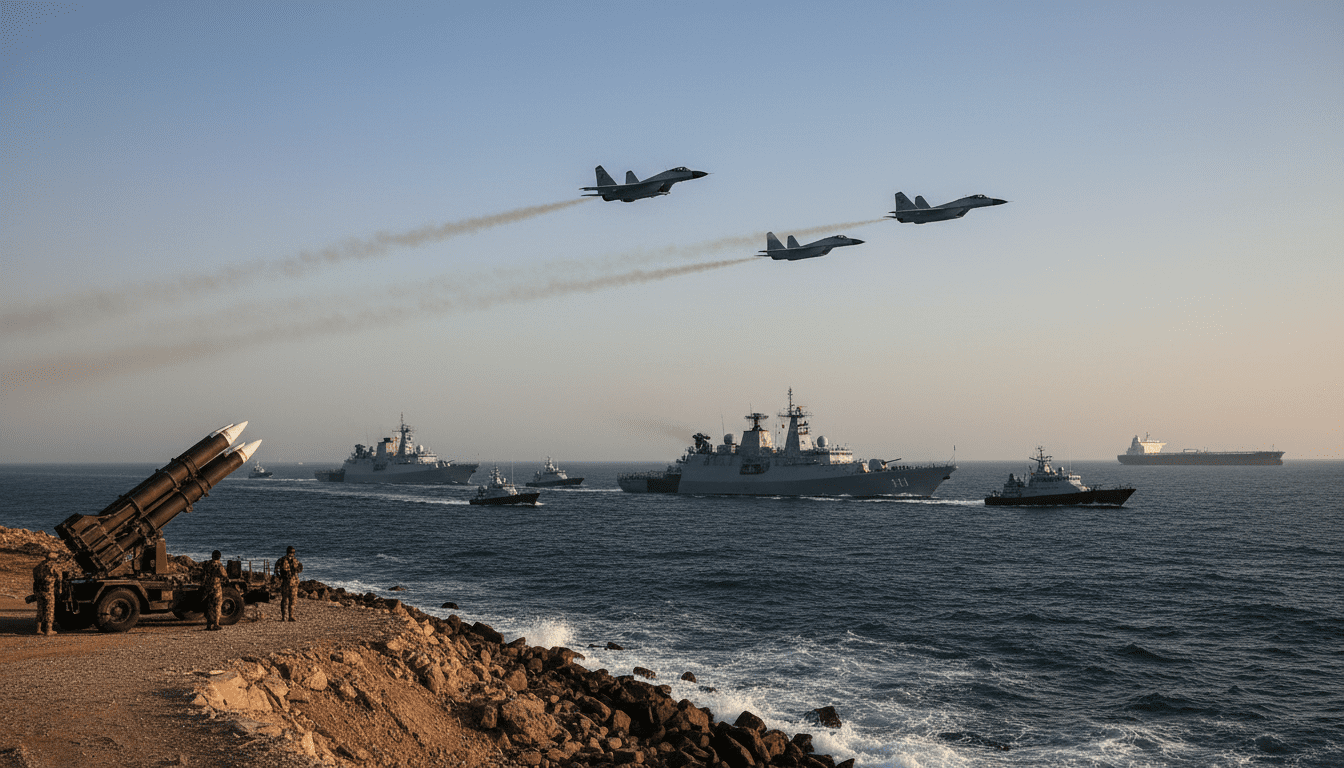
Iran Announces Resumption of Strict Control Over Strait of Hormuz
Iran to resume strict control of the Strait of Hormuz, accusing the U.S. of a naval blockade of ships to and from Iranian ports and of breaking its promise.
Iran’s central military command said it would resume “strict management” of the Strait of Hormuz, reversing an earlier decision to ease restrictions as part of negotiations with the United States.
The announcement, broadcast on state television, framed the move as a response to what Tehran called an ongoing U.S. naval blockade of vessels visiting Iranian ports.
Iran warned that freedom of movement through the Strait of Hormuz would not be restored until Washington ended what Tehran described as obstruction of commercial traffic.
Iran Reinstates Control Measures
The central military headquarters said the prior decision to unblock the channel had been contingent on reciprocal guarantees from the United States, which it now says were not honored.
The statement emphasized that Iranian forces would again apply stringent oversight to shipping transiting the narrow waterway that links the Persian Gulf with the Gulf of Oman.
Officials presented the measure as a defensive posture aimed at safeguarding what they described as Iran’s maritime interests and the security of its ports.
Tehran Accuses U.S. of Breaching an Understanding
In its state broadcast, Iran accused Washington of continuing naval operations that effectively limit vessels sailing to and from Iranian harbors.
The military command said those actions constituted a breach of the understanding underpinning earlier de-escalatory steps and justified a reimposition of controls in the strait.
Tehran’s statement framed the action as conditional: the central command said it would lift the restrictions only if the United States restored unfettered movement for all vessels.
Strait of Hormuz: Strategic Chokepoint at Risk
The Strait of Hormuz is a critical maritime gateway for the region, serving as a primary transit route for commercial shipping and energy exports.
Because the channel is geographically narrow, any restrictions or military activity there can quickly affect global shipping patterns and raise the risk of collisions or confrontations.
Observers say measures that tighten control over passage through the strait often prompt heightened vigilance among international shipping operators and coastal navies.
Potential Consequences for Shipping and Energy Flows
Reimposed controls in the Strait of Hormuz could force operators to reroute vessels, alter schedules, or seek higher insurance coverage, increasing costs for shippers.
Energy markets are especially sensitive to disruptions in the strait because a significant portion of regional oil and gas exports pass through it; the prospect of constrained flows can influence market sentiment.
Industry groups and trading firms typically monitor such developments closely to assess whether practical impediments to transit are temporary or part of a longer-term pattern.
Regional Security Dynamics and Risk of Escalation
The announcement adds a new dimension to security calculations across the Gulf, where multiple countries maintain naval assets and where tensions have flared intermittently.
Military analysts caution that measures framed as “strict management” can escalate into confrontations if miscommunications occur or if commercial vessels are detained or diverted.
Diplomats and maritime stakeholders have historically urged restraint and clear communication to reduce the risk of incidents that could widen into broader conflict.
Diplomatic Implications and Uncertain Next Steps
Tehran’s public conditioning of passage on U.S. actions creates a diplomatic challenge: it makes maritime freedom of movement a bargaining point in broader negotiations.
How Washington and allied navies choose to respond could shape whether the situation stabilizes through talks or hardens through increased naval deployments.
For now, the timeframe for any de-escalation is unclear, and both sides face domestic and strategic pressures that complicate immediate concessions.
The resumption of strict oversight in the Strait of Hormuz underscores how quickly maritime confidence can shift amid geopolitical friction, raising stakes for shipping firms, energy markets, and regional security actors.
With the situation described by Iran as contingent on Washington’s conduct, international observers say the coming days will be critical to determine whether the renewed controls represent a sustained change or a leverage point in wider diplomatic exchanges.
As the region adjusts to the announcement, companies and governments will be watching for practical rules of engagement at sea and for any steps toward restoring unhindered passage through the strait.
