
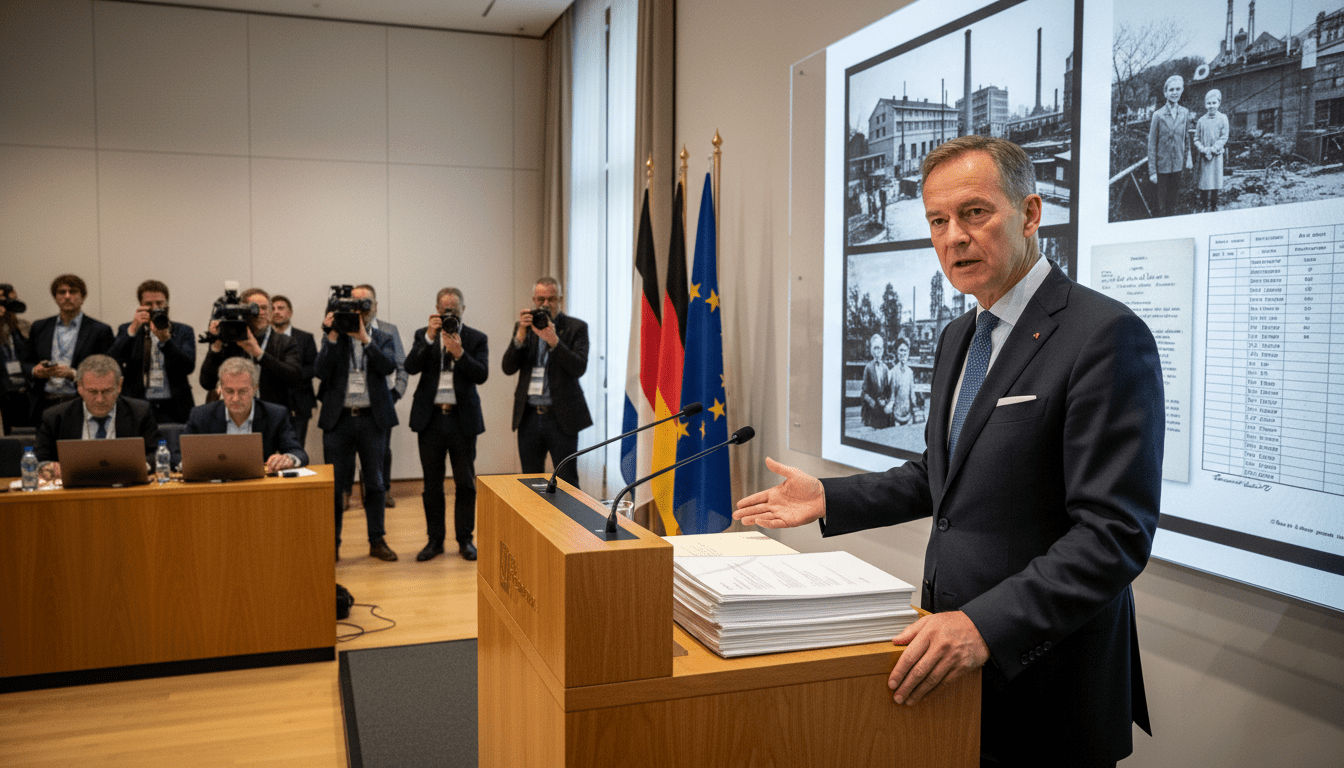
Germany’s richest linked to Nazi-era wealth, historian reveals
New research by historian David de Jong traces how Nazi-era wealth transfers and expropriation enriched families that remain among Germany’s richest today.
Historian connects family loss to broader Nazi-era wealth transfers
David de Jong began his investigation after uncovering his grandfather’s fate: a Jewish entrepreneur who owned several stocking factories and lost businesses, property and family after the Nazi rise to power. De Jong’s work links that personal story to a larger pattern of asset transfers and seizures that, he argues, generated significant Nazi-era wealth for others. The historian says these transfers were not isolated incidents but part of a systematic process that reshaped business ownership across Germany and occupied territories.
Forced dispossession and legal mechanisms of expropriation
De Jong details how forced sales, seizure orders and discriminatory legislation stripped Jewish owners of their companies and real estate during the 1930s and 1940s. Known broadly as Aryanization, these practices often relied on coerced transactions, manipulated valuations and state-backed pressure to transfer assets to non-Jewish buyers. The process combined bureaucratic policy and private opportunism, resulting in the legal appearance of regular commercial transactions that masked the coercion behind them.
Paths from expropriated assets to lasting fortunes
According to de Jong, proceeds from expropriated firms and properties were reinvested, consolidated and passed through new ownership structures that turned short-term gains into durable wealth. Companies that acquired assets during the Nazi era often merged, expanded and used profits to buy additional businesses, creating capital that survived wartime disruption. De Jong’s research highlights how some families and corporate entities converted wartime acquisitions into stakes in major postwar firms, art collections and foundations that persisted across generations.
Postwar legal responses and avenues for retention
The historian argues that postwar legal settlements, economic reconstruction priorities and incomplete denazification created conditions that allowed many wartime beneficiaries to retain acquired wealth. Restitution programs and compensation schemes were uneven and frequently required claimants to prove complex lines of ownership amid destroyed or concealed records. In many cases, legal frameworks favored continuity of economic activity, enabling beneficiaries to argue for the legitimacy of their holdings and to shield assets from full reversal.
Archival research and delayed public reckoning
Decades later, de Jong’s archival investigations have exposed documents, transaction records and correspondence that trace who profited from dispossession and how assets changed hands. These discoveries have prompted renewed calls for transparency from historians, victims’ families and some civil-society groups. De Jong emphasizes that much relevant material remained scattered in corporate archives, municipal registries and private collections, which delayed comprehensive public knowledge of the scale and beneficiaries of Nazi-era wealth transfers.
Restitution efforts remain partial and contested
While some families have won restitution or financial compensation, de Jong stresses that outcomes have been uneven, often dependent on legal resources, political will and the survival of documentary evidence. Large corporations and wealthy family foundations have in several cases faced inquiries, returned items or funded compensation initiatives, but critics argue that these measures rarely fully address historical injustices. The historian calls attention to settlements that prioritize legal closure over full disclosure, leaving unresolved questions about the extent to which present-day fortunes trace to wartime expropriation.
Calls for greater transparency and institutional accountability
De Jong and other researchers urge governments, corporations and financial institutions to open relevant archives and commission independent reviews to clarify ownership histories. They suggest that naming beneficiaries and publishing transaction records would enable a more informed public debate about restitution and moral responsibility. The historian also recommends support for scholarly projects that can construct robust provenance chains, which are essential for any meaningful reparative measures.
The case of de Jong’s grandfather, hidden in Amsterdam while others assumed control of his enterprises, serves as a human example of a larger structural injustice that historians say still shapes wealth in Germany. De Jong’s work reframes how scholars and the public understand the origins of some modern fortunes and underscores the persistent gaps in accountability, documentation and compensation that survivors’ families continue to confront.
