
Berlin Makers Revive Surplus Fabric with Upcycled Textiles for Homes
Berlin designers turn leftover fabrics into vibrant upcycled textiles for homes—hand-dyed curtains and linens that blend color, craft and sustainability.
Strong Opening: Upcycled Textiles Bring Color Back into Homes
Upcycled textiles are finding a new audience as Berlin designers transform warehouse leftovers into hand-crafted curtains, table linens and soft furnishings. The work, often dyed and stitched by hand, replaces mass-produced sameness with pieces that carry visible history and color. Makers describe the approach as both practical and expressive, using remnants that would otherwise be discarded. Customers respond to the story and texture as much as to the final product.
Berlin Maker Reimagines Surplus Fabric
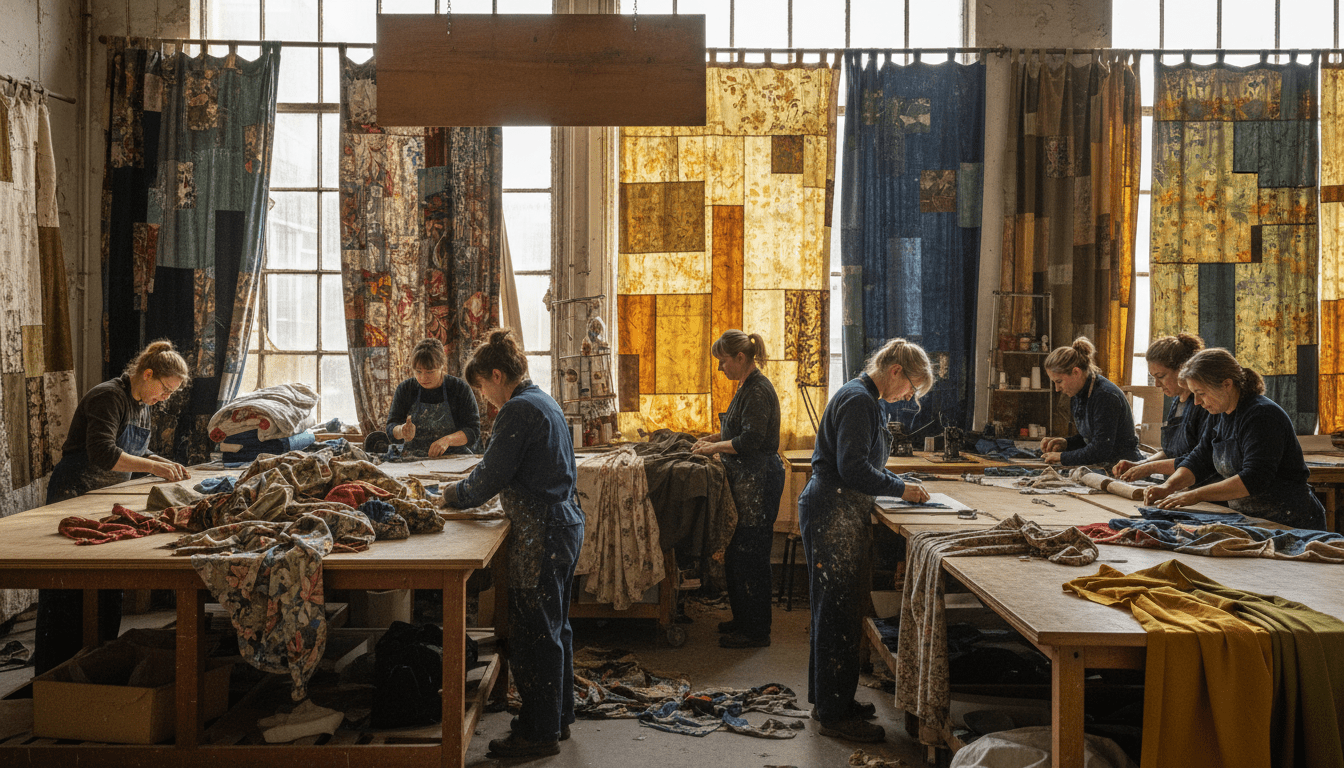
In studios across the city, artisans are sorting through rolls and boxes of surplus cloth, selecting pieces for hue, weight and print rather than brand. One Berlin designer, known for assembling curtain panels that glow like stained-glass windows, sources her materials from factory overstock and secondhand stockpiles. The result is a collection of unique textiles that reads as part-archive, part-artwork. These pieces are presented as functional home items, not gallery installations.
Craft Process: Dyeing, Stitching and Salvaging
The production begins with assessment: dyes, shrinkage and seam allowances determine whether a scrap will be cut, dyed or left intact. Hand-dyeing techniques are used to unify disparate patterns and to intensify color contrasts where needed. Patchwork and careful seam placement convert irregular pieces into large usable panels suitable for curtains or throws. Artisans emphasize longevity through reinforced seams and careful finishing to ensure the upcycled textiles hold up in daily use.
Designers Add Narrative and Wit to Fabric
Many creators intentionally highlight a fabric’s previous life, leaving seams, labels or faded areas visible as proof of origin. Decorative decisions—unexpected color pairings, playful trims, or exposed stitching—are chosen to give each piece a personality. Designers say buyers often choose these items because they want an object with a backstory rather than a blank, anonymous product. The interplay of humor and history becomes a selling point as much as the materials themselves.
Market Response and Pricing for Upcycled Textiles
Demand for small-batch, handcrafted home textiles has grown among buyers seeking individuality and sustainable alternatives to fast furniture. Retailers and makers report that customers accept higher price points for custom work and durable construction. Sales channels include studio shops, local markets, curated e-commerce platforms and interior-design collaborations. For many craftsmen, the enterprise remains intentionally small to preserve quality and to justify the manual labor involved.
Environmental Rationale Behind the Movement
Reusing surplus fabrics reduces pressure on production cycles and diverts material from landfills, contributing to lower textile waste in the supply chain. By giving existing textiles a second life, makers avoid the energy and water associated with producing new yardage. While upcycling does not replace systemic change in manufacturing, small-scale reuse projects demonstrate practical steps that designers and consumers can take today. Proponents call for greater collection and redistribution networks to scale the impact.
Interior Impact: Texture, Color and Domestic Character
Upcycled textiles are shifting interiors away from uniform minimalism toward layered, tactile spaces that reflect individual taste. Curtains assembled from varied fabrics filter light in complex ways, casting colored shadows and altering room atmosphere throughout the day. Table linens and cushions made from remnant cloth introduce pattern and contrast without requiring a full renovation. Interior designers note that such pieces can become focal points, anchoring a room around color and texture rather than furniture.
The movement toward upcycled textiles in Berlin exemplifies a broader search for meaningful, sustainable domestic goods that balance craft with everyday utility. As makers refine techniques and expand supply sources, these hand-crafted pieces are likely to remain a niche alternative that appeals to buyers prioritizing story, quality and environmental intent.
