
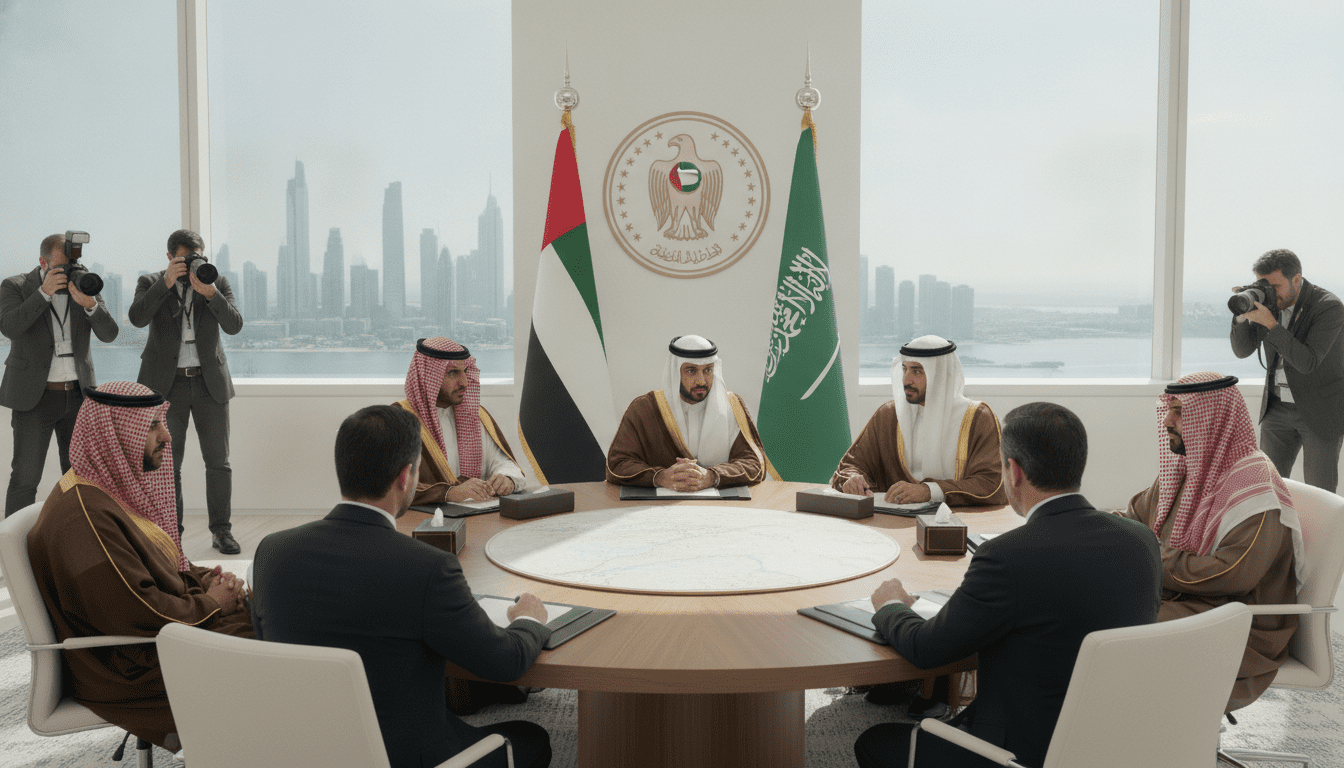
Gulf Security Reconsidered as Washington and Tehran Near Ceasefire
As Washington and Tehran move toward a ceasefire, Gulf security is poised for a major reassessment as states weigh new defence options and regional diplomacy.
The apparent move toward a long-term memorandum between the United States and Iran has sent Gulf capitals into reassessment mode, with leaders already discussing post-war security frameworks. President Donald Trump announced the cancellation of planned strikes and said a signing time and place would be announced soon, while Tehran signalled a more cautious review of proposed terms. Gulf security concerns now centre on how to protect territories that were not party to the conflict but suffered direct attacks.
Ceasefire talks advance between Washington and Tehran
Officials in Washington signalled that a memorandum of understanding with Tehran is imminent, and US plans for additional strikes were called off as negotiators worked to finalise terms. Iranian officials in Tehran have said they are still reviewing the proposal, reflecting a careful domestic calculus ahead of any formal signing. Pakistan’s prime minister publicly suggested a deal was being made, heightening expectations of a near-term announcement that would reshape regional dynamics.
Any formal ceasefire would shift the immediate security burden onto Gulf states, which must adapt quickly to a new strategic environment. For governments that hosted US facilities and troops during the fighting, the question is whether the post-war settlement will restore previous deterrents or leave gaps that require alternative arrangements.
Gulf hosts exposed as security arrangement frays
The conflict exposed vulnerabilities in the decades-old model of security partnerships anchored by US military presence across the Middle East and North Africa. The United States operates facilities in at least 19 locations across the region, and tens of thousands of troops were stationed in the area before the conflict began, providing logistical and intelligence support to Gulf partners. That network had provided a deterrent for many states, but the recent campaign showed how hosting external forces can make countries targets.
Experts note the paradox now facing Gulf capitals: reliance on external guarantees has shielded them in the past, yet that same footprint turned some states into battlegrounds during the war. The realization is prompting a search for a security approach that reduces exposure while preserving key alliances.
Targeted attacks raise casualties and alarm
Since the offensive began, Gulf states that host foreign military assets were struck repeatedly by drones and rockets, producing both civilian casualties and military damage. At least 28 people are known to have been killed across the six GCC states in suspected Iranian strikes, underscoring how the conflict spilled into neighbouring territories. The attacks have prompted urgent questions about air defences, intelligence sharing and the capacity of existing agreements to prevent cross‑border danger.
Scholars argue that the strikes pierced the perception of an impregnable security umbrella and illustrated the limits of current guarantees. The human toll and political fallout in capitals from Abu Dhabi to Manama are driving a debate about what mix of deterrence, diplomacy and domestic capability will best protect citizens going forward.
Energy routes and economic strains reshape priorities
Disruption to the Strait of Hormuz and other maritime chokepoints has compelled Gulf economies to re-evaluate export routes and diversification plans. Some states managed to redirect flows; Saudi Arabia increased shipments via its East-West pipeline, and Oman benefited from port traffic outside the strait. Other economies more dependent on the waterway, including the UAE, Bahrain, Kuwait and Qatar, faced heavier disruptions and were reminded of the strategic cost of transit concentration.
Analysts say building alternative pipelines and logistics hubs is possible but expensive and time-consuming, meaning short- to medium-term economic resilience will depend on contingency planning and regional cooperation. Rising energy prices helped some exporters, but the broader economic lesson is that security and economic policy are now inseparable priorities for Gulf states.
Diplomatic openings with Iran and regional initiatives
The war accelerated diplomatic trends that had already begun, with several Gulf states pursuing partial rapprochement with Tehran in recent years. The UAE reopened ties with Iran in 2022 and Saudi Arabia moved toward normalisation under a China-brokered agreement, laying groundwork for renewed engagement. Proposals such as the 2019 Hormuz Peace Initiative envisioned MENA-led security frameworks involving Iran and Gulf states, though trust remains limited after recent strikes.
Regional voices now argue that durable Gulf security must feature local ownership, with Iran treated as a stakeholder rather than a perpetual adversary if behaviour changes. That is a politically fraught proposition, since any security pact would require verifiable commitments and mechanisms to prevent future cross-border attacks.
Gulf states consider alternatives to sole reliance on Washington
Policy discussions in Gulf capitals are increasingly focused on hybrid strategies that retain ties with the United States while nurturing regional and domestic capabilities. Moves could include deeper defence cooperation with other partners, mutual defence pacts, and investment in local defence industries to reduce reliance on external deployments. A recent mutual defence agreement between Saudi Arabia and Pakistan is being cited as a model for bilateral guarantees that supplement wider alliances.
Analysts caution that no single solution will instantly replace decades of security architecture, and that new approaches will require time, money and political will. The consensus emerging among Gulf policymakers is pragmatic: maintaining diverse partnerships while strengthening domestic defences will be essential to limit exposure to future conflicts.
The coming days and weeks, as negotiators finalise any US‑Iran memorandum and Gulf leaders weigh new options, will be decisive for the future of Gulf security. Capitals will need to translate strategic reassessment into concrete plans that protect populations, secure energy lifelines and reduce the likelihood that regional wars again engulf states that did not choose to fight.
