
Advisory Board Urges 500 Billion Euro Special Fund to Prioritize R&D and Core Infrastructure
Advisory board urges channeling the 500 billion euro special fund to R&D, hospitals, energy and digital projects and calls for transparency to speed spending.
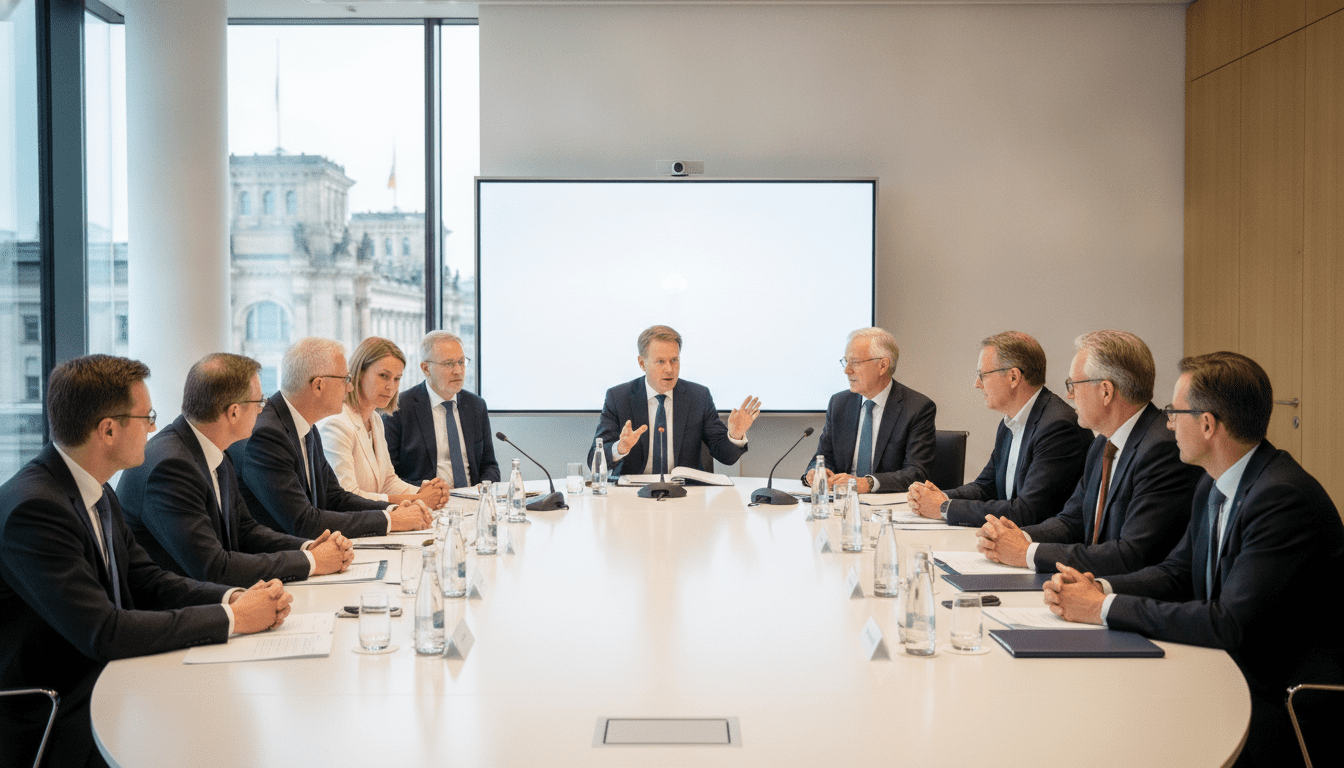
Germany’s independent Investition and Innovation advisory board has recommended that the 500 billion euro special fund be steered more decisively toward research and development alongside core infrastructure spending. The board’s first report calls for a clear, cross-departmental investment target and stronger prioritization of R&D to maximize growth effects from the special fund. Members warned that money alone will not deliver results without coherent planning, faster implementation and improved transparency at regional and municipal levels.
Advisory Board Recommends Stronger R&D Focus
The advisory board, established in September 2025, told the Federal Ministry of Finance that funding for research and development must receive a larger share of the special fund’s allocations. In its first formal assessment the panel argued that R&D spending is currently fragmented across too many programmes and should be consolidated to achieve greater impact.
Chair Harald Christ and deputy chair Ann‑Kristin Achleitner emphasized that a binding, cross-ministerial investment framework would help align projects and raise the multiplier effects of public spending. The board listed priority fields for the special fund including transport and energy infrastructure, civil protection, hospitals and care homes, schools and digitalisation.
Monitoring Shows Mixed Disbursement Performance
The advisory board delivered a mixed evaluation of expenditure flows from the special fund in 2025 and early 2026. From the 300 billion euro federal pillar of the fund, roughly 14 billion euros were disbursed in 2025, which the board said represents about 74 percent of that year’s planned federal outflows. In the first four months of 2026 an additional 11.2 billion euros were paid, equivalent to approximately 28 percent of the annual target for 2026, a pace the board described as “on plan” for the federal share.
By contrast, state-level disbursements lagged far behind: the board reported that the Länder had drawn only about one percent of their allocated funds to date. Overall government spending in the 2025 budget year amounted to 24 billion euros against a planned 37.2 billion, a discrepancy the advisory body says must be closed through faster project starts and clearer responsibilities.
Calls for Greater Transparency and Standardised Reporting
To improve oversight, the board recommended harmonising state reporting standards with federal practice and creating a publicly accessible project database. The suggested database would include uniform master data for projects and a quarterly disclosure of actual versus planned expenditures to allow policymakers and the public to monitor progress.
The advisory panel argued that standardised, timely reporting is essential to detect bottlenecks early and to enable targeted remedies where projects stall. The board also urged that reporting rules be applied equally across federal, state and municipal levels to reduce fragmentation and increase accountability.
Municipal Financing and the Limits of the Fund
The report highlighted the central role of local authorities in delivering public investment, noting municipalities account for roughly 40 percent of all public investment and around 60 percent of public construction spending. Municipal fiscal strain is acute, the board said, with local government financing deficits rising to 31.9 billion euros in 2025.
The advisory board cautioned that the special fund alone cannot resolve structural weaknesses in municipal finance and called for broader measures to strengthen local balance sheets. It also recommended steps to mobilise private capital to supplement public investment and accelerate modernisation of the municipal asset base.
Government Response: Incentives to Speed Spending
Finance Minister Lars Klingbeil has signalled support for faster implementation and proposed a bonus‑malus incentive system to reward quick and sensible spending. Under the idea, projects that use funds efficiently and meet milestones could receive additional support, while slow or poorly executed projects might see allocations reduced.
Board members welcomed the incentive proposal as one possible tool to increase tempo, but they stressed that incentives must be paired with clear objectives, simplified procedures and stronger project management at all levels of government to be effective.
Economic Institutes Raise Questions Over Additionality
Independent economic institutes have expressed scepticism about how “additional” many of the fund’s expenditures will actually be. Analyses released around the fund’s first anniversary by the Institute of the German Economy (IW) and the ifo Institute argued that a large majority of the new borrowing could replace previously planned investments rather than add new ones, with the IW estimating about 86 percent and ifo roughly 95 percent of the funds would not be strictly additional.
Government officials, including Minister Klingbeil, and the advisory board’s chair have rejected that characterisation, saying the fund is intended to address a long-standing investment backlog and to finance transformational projects that would not otherwise proceed at scale. The dispute underscores the need the advisory board identified for clearer project definitions and public monitoring to demonstrate additionality.
The board pledged to continue its half‑yearly reporting to the Finance Ministry and to press for faster, more transparent use of the 500 billion euro special fund so that allocated sums translate into measurable economic and social improvements.
