
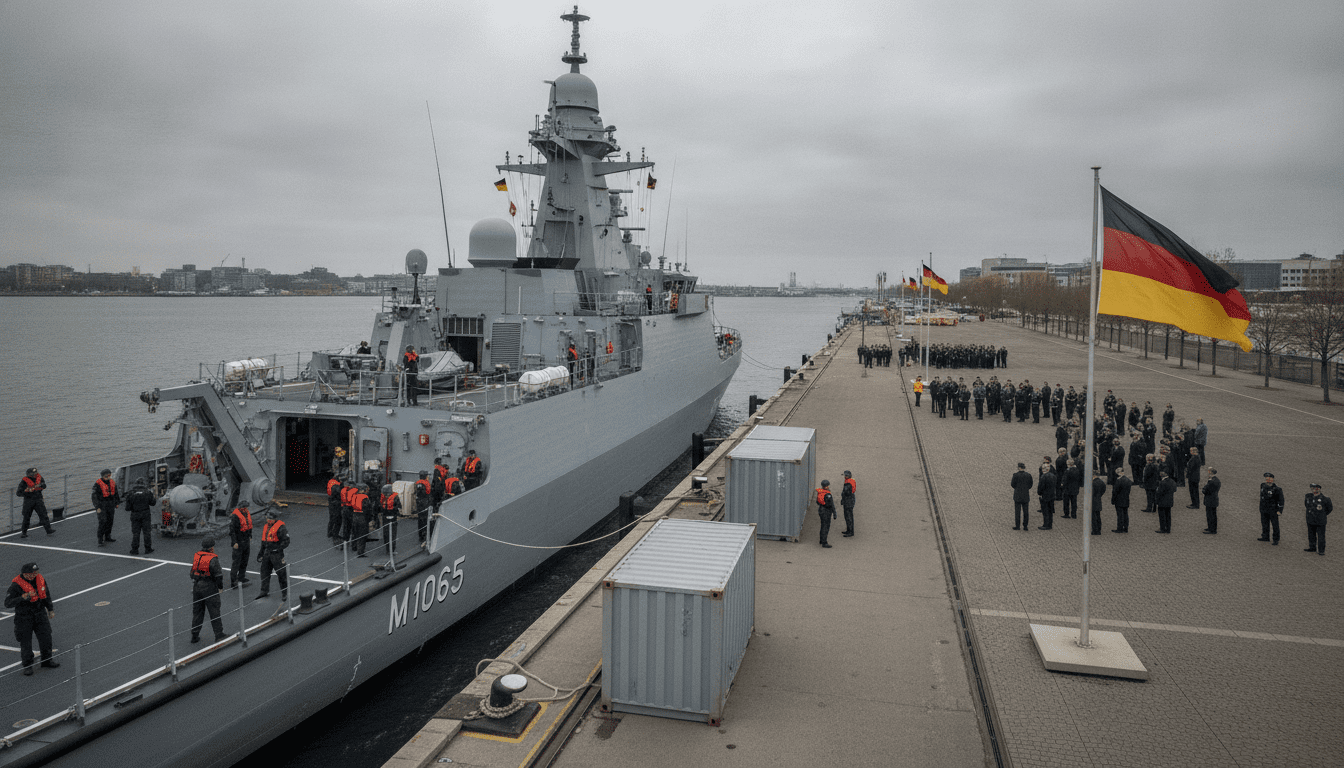
German navy positions minehunter Fulda and supply ship Mosel as preparations for possible Strait of Hormuz mission
Germany positions Fulda and Mosel in eastern Mediterranean and readies crews and equipment for a possible deployment to the Strait of Hormuz, pending a Bundestag mandate.
The German Navy has moved the minehunter Fulda and the supply ship Mosel into the eastern Mediterranean and declared both vessels and their crews ready to respond to developments in the Strait of Hormuz within days. The deployment, intended to protect merchant shipping and support mine-clearance operations, remains conditional on a formal mandate from the German Bundestag and an agreed legal basis for international action.
German vessels staged in eastern Mediterranean
The minehunter Fulda and the logistical ship Mosel are currently operating in the eastern Mediterranean, the Defense Ministry reported, while personnel conduct exercises to prepare for a range of threat scenarios. Officials say the units are being “personally and materially prepared for any development,” with crews training in mine-countermeasure procedures and defensive operations.
Ministry spokespeople have indicated that, if ordered, the two ships could reach the Strait of Hormuz in approximately seven to ten days, depending on operational orders and transit conditions. The Mosel’s logistical role would support sustained operations, allowing mine-clearance teams and equipment to remain on station for an extended period.
Capabilities of the minehunter Fulda and supporting systems
The Fulda is equipped for close-in mine countermeasures, including specialized sonar systems designed to detect different mine types and a magnetic signature control to reduce risk to the vessel itself. It can deploy remotely operated clearance boats such as the Seehund, which simulate the acoustic and magnetic signatures of larger ships to trigger mines safely away from manned platforms.
German planners also intend to use Seefuchs-type underwater vehicles to map seabed hazards and place explosive charges against confirmed mines, and to employ mine divers for selective intervention when necessary. Officials say these layered capabilities would allow German units to escort merchant vessels through mined or hazardous waters and to neutralize specific threats.
France and the United Kingdom to lead multinational mission
Berlin has positioned its contribution as a supporting element to a broader coalition led by France and the United Kingdom, both of which have already deployed substantial naval assets toward the Strait of Hormuz. Paris has moved the aircraft carrier Charles de Gaulle and additional ships into the region, and London and other partners have also increased their naval presence.
The stated objective of the multinational effort is to restore safe passage for commercial shipping and to enable a gradual normalization of seaborne oil transport through the waterway. More than 40 countries have publicly pledged support for operations aimed at protecting international shipping lanes, according to allied statements.
Legal requirement for Bundestag authorization
A German military deployment of this nature cannot proceed without a formal vote in the Bundestag, government officials emphasized. Unlike some partners, Germany requires parliamentary approval for overseas military missions, and Berlin is seeking an international legal basis for action, ideally a United Nations Security Council resolution that would include Russia and China.
Deputy government spokesman Johannes Hille stated during a press briefing that a “viable political and military overall concept” must accompany any request for parliamentary authorization. He also suggested that the government could move quickly to present a mandate to the Bundestag once such a concept and legal framework are in place.
Political coordination in Berlin and international diplomacy
Chancellor Friedrich Merz and Defense Minister Boris Pistorius have been coordinating closely on the potential contribution, engaging with allied counterparts as planning continues. Berlin has signaled willingness to provide capability that complements the lead nations, while reserving final decisions for parliament and for adherence to international law.
At the same time, diplomatic interplay with Washington remains influential: U.S. officials have urged a timely and coordinated response, and planned diplomatic steps in the coming days are likely to affect the timetable for any deployment. German leaders have also highlighted the need to align national commitments with the evolving security environment in the region.
Operational uncertainties and political constraints
Key uncertainties remain, including the precise size of any German contingent, the detailed rules of engagement, and the extent of tasks assigned to German units within a multinational command. The Bundestag will determine the scope and mandate of any mission, and Berlin has repeatedly stated it will base participation on clearly defined legal and operational parameters.
Threats in the region have included the use of sea mines and attacks by armed drones on shipping, factors that allied planners say make mine countermeasures and drone-defence capabilities particularly important. German preparations focus on those capabilities, but a final decision on deployment awaits political approval and consensus among coalition partners.
Germany has prepared naval assets and trained crews to support a multinational effort to secure the Strait of Hormuz, but any move into the strait will depend on the Bundestag’s mandate and a clear international legal basis. The coming days are likely to determine whether the Fulda, Mosel and their crews will be ordered to join coalition operations to reopen and secure key maritime routes.
