
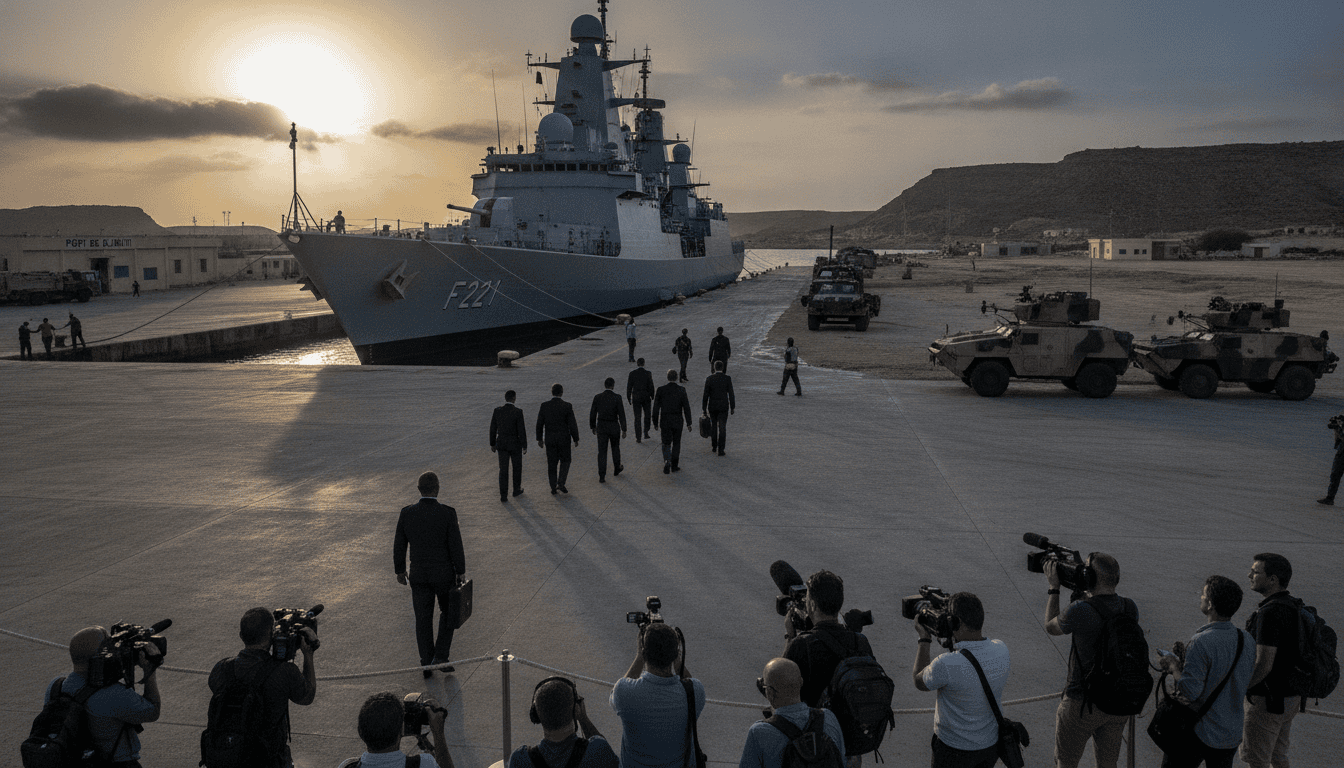
Pistorius weighs summer withdrawal of German ships in Djibouti as Hormuz mine plan stalls
Pistorius may withdraw German ships in Djibouti this summer after Iran’s refusal and legal hurdles stall plans for a mine-clearing mission in Hormuz region.
Germany’s defence minister signalled on Wednesday that the two Bundeswehr vessels sent to the region could be brought home this summer if diplomatic and legal conditions for a mine‑clearing operation in the Strait of Hormuz do not materialize. The statement, made during a press conference in Berlin attended by Chancellor Friedrich Merz and Dutch Prime Minister Mark Rutte, made clear that the government no longer expects the mission to proceed in the near term. The presence of German ships in Djibouti was intended as a standby measure to support potential mine‑clearing operations in Hormuz, but officials now say the window for deployment is closing.
Pistorius signals possible summer withdrawal
Defence Minister Boris Pistorius told reporters the vessels “will not wait indefinitely,” indicating a decision point before autumn. He said there was currently no scenario in the coming days or weeks that would allow for immediate entry into the Strait of Hormuz to clear mines.
Pistorius framed the potential pullback as a practical and humane choice for personnel, noting that soldiers should not remain on station under prolonged uncertainty. He contrasted the prospect of extremes of heat on deployment with the option of troops spending the summer at home.
Fulda and Mosel sent for mine‑clearing readiness
Berlin dispatched the minehunter Fulda and the support ship Mosel several weeks ago to position Germany as a contributor to a potential international effort to clear mines and secure a key international trade route. The ships were described by the Ministry of Defence as being prepared to support a clearance mission, providing specialised capabilities and logistical backing.
The German contingent has been operating in the Gulf of Aden and adjacent waters under rules that allow them to remain on standby while political and legal clearances are negotiated. Officials emphasise that the deployment was precautionary and intended to provide options rather than signal an imminent operation.
Diplomatic and regional permissions remain unresolved
Multiple preconditions must be met before any mine‑clearing operation can proceed, officials say, including a durable end to hostilities by regional combatants and the consent of immediate littoral states such as Iran and Oman. Without those permissions, an international force entering the Strait of Hormuz would face significant legal and geopolitical obstacles.
German policymakers have also underscored the need for clear legal authority at home, including parliamentary approval, before any combat or clearance operations are authorised. Those domestic requirements add an additional timeline that Berlin must respect.
France rebuffed and Iran’s stance complicates plans
Pistorius referenced a recent diplomatic setback in which Iran reportedly rejected a French proposal to lead or participate in a clearance mission, a development that dimmed prospects for a wider European effort. German officials interpret that refusal as evidence that Tehran is not prepared to approve an externally led clearance operation at this time.
The rebuff has heightened concerns among NATO and EU partners about the feasibility of executing a mine‑clearing mission without risking escalation. It also increases pressure on diplomatic channels to secure regional buy‑in before any operational planning proceeds.
Legal and parliamentary hurdles in Berlin
Even if regional consent were obtained, German law requires a parliamentary mandate for armed operations abroad, a threshold that lawmakers in the Bundestag historically treat with caution. Defence ministry sources say legal vetting and debate could be lengthy, making a swift Bundestag authorisation unlikely.
Ministers and legal advisers have been preparing possible briefing materials for parliament, but Pistorius indicated that the lack of a realistic operational timeline makes seeking an expedited mandate impractical. That calculus is contributing to the possibility of withdrawing the vessels from their current positions.
Operational and personnel considerations
Beyond political questions, commanders have highlighted practical issues of sustaining a small contingent far from home for an extended period while awaiting a mission decision. Logistics, crew endurance and equipment maintenance are cited as reasons to avoid an open‑ended standby posture in a tropical deployment zone.
Pistorius framed the choice in human terms, saying troops should not be left waiting in extreme heat “in case something happens.” He suggested that a summer return would allow personnel to recuperate and preserve readiness for future contingencies.
Germany’s decision will be watched closely by European partners and Gulf states, which have urged coordinated action to keep the Strait of Hormuz secure for global trade. For now, the combination of Iran’s refusal to accept proposed operations, the need for regional permissions and the requirement of a clear legal mandate at home has shifted the balance away from an imminent deployment. The defence ministry has signalled it will make a final call in the coming months, with a likely announcement before autumn if conditions remain unchanged.
