
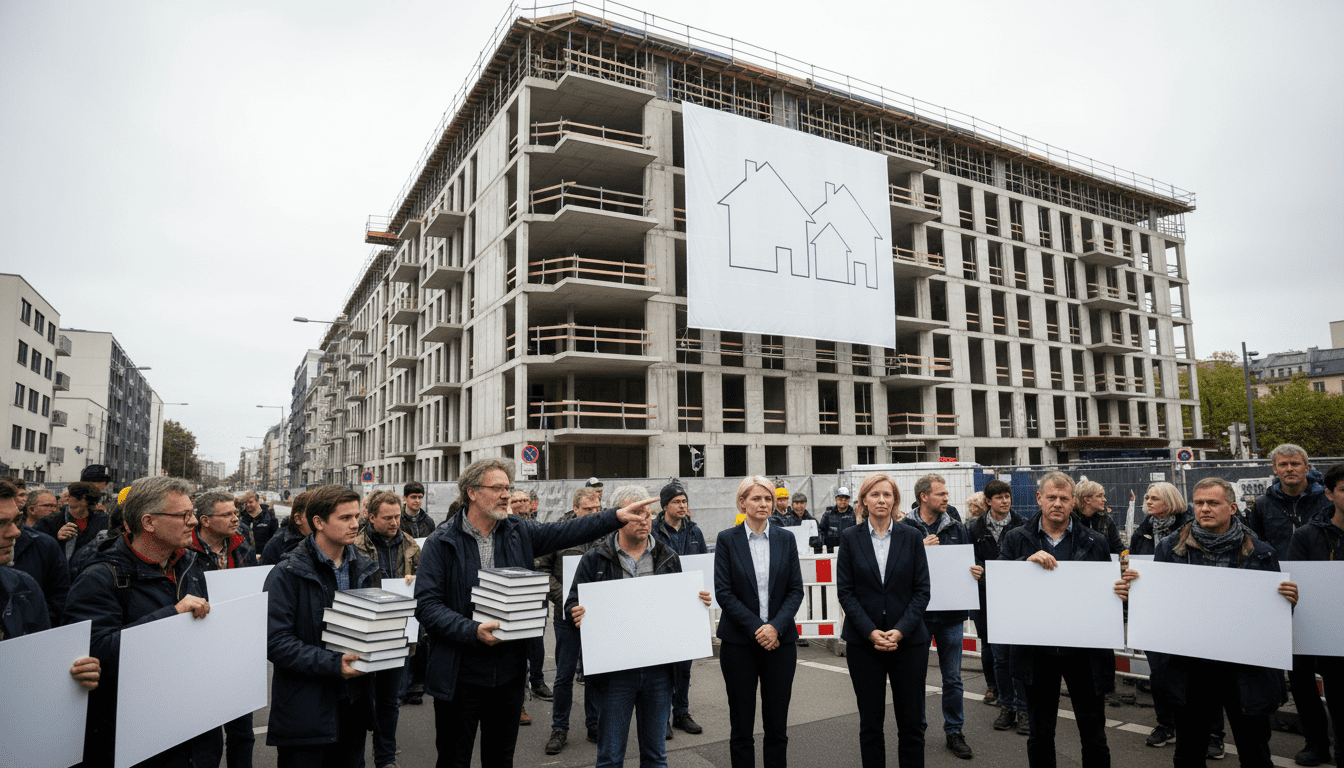
Housing shortage in Germany widens: 1.4 million homes missing and 900,000 social units short
Germany faces a housing shortage of about 1.4 million homes and a 900,000 social housing gap, while construction lags targets, new analysis shows in 2026.
Germany is facing a deepening housing shortage in 2026, with an estimated 1.4 million homes lacking and an acute gap in affordable units. The housing shortage in Germany is driven by a persistent shortfall in new construction, with annual builds far below needs. A newly released analysis by political scientist Alexander Reisenbichler highlights the scale of the deficit and compares Germany’s trajectory with policy choices in the United States.
Shortfall of 1.4 Million Homes
The gap between supply and demand is now estimated at roughly 1.4 million dwellings nationwide. Analysts say that to close that gap within a reasonable horizon, Germany would need to build about 400,000 new homes annually, a pace not currently being met.
Current official and sector estimates put annual completions at around 200,000 to 250,000 units, leaving a persistent deficit that compounds each year. That shortfall has already translated into rising rents in many cities and longer search times for households seeking suitable housing.
Social Housing Deficit Widens
The shortage is most severe at the lower end of the market, where affordable housing is scarce and demand is growing. Estimates indicate that Germany is short by approximately 900,000 social-sector apartments, while the number of households eligible for subsidized housing has continued to rise.
The imbalance between eligibility and supply is forcing more low- and middle-income households into precarious housing arrangements or into spending a larger share of income on rent. Housing advocates warn that without a rapid increase in social housing construction, homelessness and housing insecurity will continue to climb.
Construction Rates Fall Short of Targets
Meeting the estimated need of 400,000 new homes per year would require a sustained and substantial scaling of building activity. But recent annual completions, at roughly half that pace, reflect bottlenecks in planning, rising construction costs and a constrained labor supply, analysts say.
Industry groups and municipal officials also point to land scarcity near urban centers and lengthy permitting procedures as impediments to accelerated delivery. The cumulative effect is a market that cannot adapt quickly enough to demographic shifts and affordability pressures.
Germany and the United States: Divergent Policy Paths
In his new book Through the Roof, University of Toronto political scientist Alexander Reisenbichler contrasts Germany’s housing trajectory with that of the United States to explain how different policy choices shaped supply and affordability. Reisenbichler’s analysis traces a century of decisions—on regulation, public investment and subsidy design—that produced distinct housing landscapes in each country.
He argues that historical commitments to social housing, tenant protections and municipal planning in Germany have produced different market outcomes than the U.S. reliance on market-led mortgage finance and less extensive public housing. However, Reisenbichler cautions that past advantages for affordability have eroded as construction lags and demand has intensified in Germany.
Political Pressure and Policy Options
The widening gap has intensified political pressure on federal and local governments to accelerate housing delivery and to preserve affordable units. Policymakers are debating a mix of measures, including increased public funding for social housing, incentives for affordable development in private projects, and reforms to speed up permitting.
Economic analysts say a combination of supply-side measures and targeted subsidies will be necessary to address both the overall shortage and the social housing deficit. Implementing such policies at scale will require coordination across federal, state and municipal levels and sustained fiscal commitment.
Germany’s housing shortage has shifted from a market concern to a looming public policy challenge that affects wages, mobility and social cohesion. The interplay between supply constraints and growing affordability pressures means that remedies will need to be large, sustained and carefully targeted to reverse the current trajectory.
