
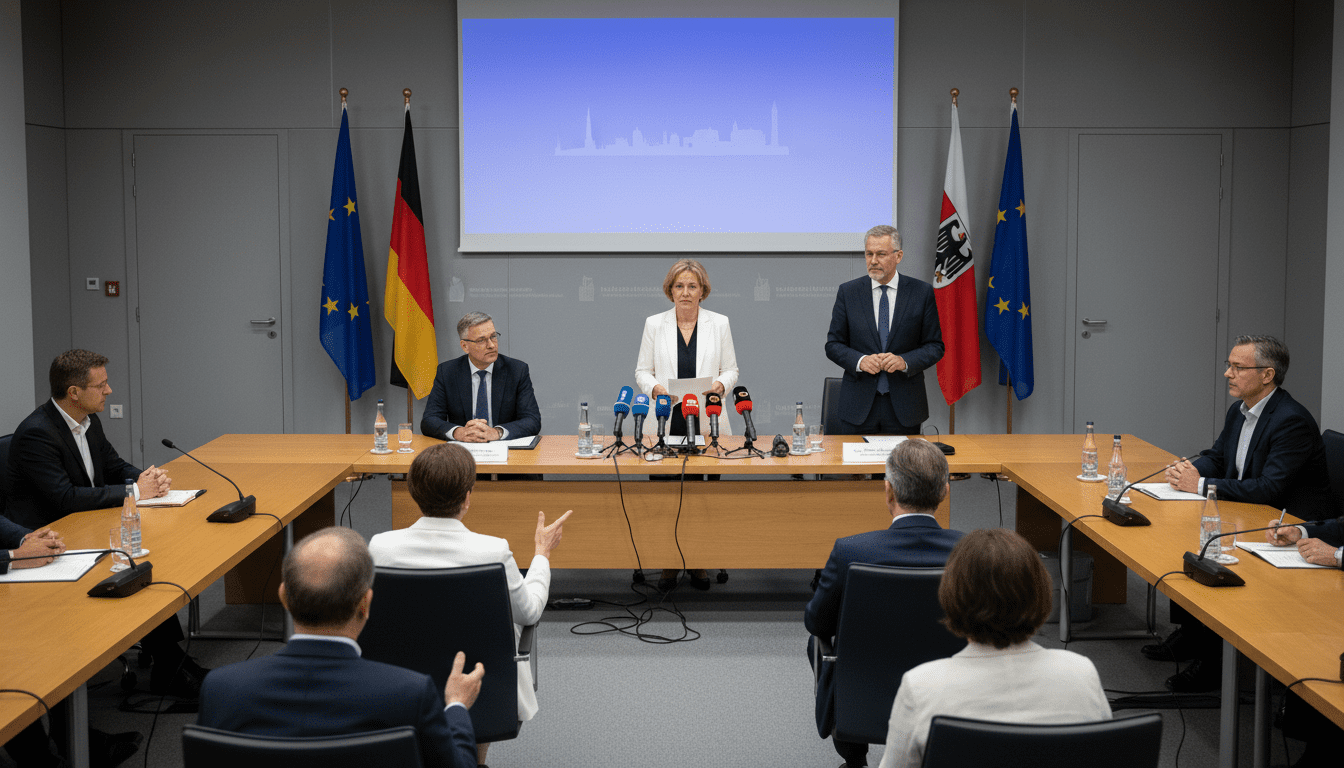
Declining birth rates force Dresden to cut 33 day-care centres as Germany confronts historic baby slump
Declining birth rates in Germany force daycare cuts and threaten long-term growth; experts cite pandemic, war, inflation and changing family plans today.
The city of Dresden has proposed closing 33 day‑care centres, including the Grüne Insel facility in Prohlis, as a sharp fall in child numbers forces municipalities to rethink childcare capacity. The local plan would eliminate places equivalent to roughly 2,500 children, a visible sign of a broader national trend of declining birth rates that is reshaping public services. Officials and demographers warn the contraction will ripple through schools, labour markets and local economies in the years ahead.
Dresden proposals reflect immediate capacity shifts
Dresden’s municipal administration says lower demand, not budget cuts, is driving the proposals to close multiple kindergartens and alter planned new builds. City officials have told parents and staff that empty classrooms and unused facilities make maintaining the existing network unsustainable. Educators who once competed for placements now face job uncertainty as enrolment falls.
Nationwide fertility indicators and recent statistics
Germany’s total fertility rate has dropped markedly since 2021, when it stood near 1.58 children per woman, moving toward an estimated 1.35 by 2024, according to recent demographic summaries. The Federal Statistical Office reported an unprecedented low in 2025 with roughly 650,000 births, leaving births trailing deaths by several hundred thousand that year. Demographers emphasize that a rate well below the replacement level of about 2.1 children per woman will keep population decline pressure in place unless offset by migration.
Eastern states and cohort effects amplify the decline
The fall in births has not been evenly distributed. Saxony, which recorded fertility above the federal average before the pandemic, has seen a drop of more than a quarter in expected children per woman since 2016 and now registers closer to 1.2. Analysts point to demographic cohorts: smaller birth cohorts born in the 1990s have reached prime childbearing age, creating a structural limit on potential mothers even if individual fertility were to rise again.
Europe‑wide pattern complicates policy responses
This downturn is not unique to Germany; many European countries registered peaks or plateaus around 2021 followed by swift declines. Nations with contrasting family policies—from Scandinavia’s comprehensive services to Hungary’s pronatalist incentives—have seen similar falls, undercutting hope that a single policy model can restore previous birth levels. As a result, policymakers across the continent are grappling with the same dilemma: how to sustain family support while economic and geopolitical uncertainty weighs on decisions to have children.
Experts link slump to cascading crises and changing life courses
Researchers attribute much of the recent collapse to a succession of shocks over the last five years: the Covid‑19 pandemic, the war in Ukraine, energy and inflation crises, and concerns about climate and economic stability. Leaders at the Federal Institute for Population Research (BIB) caution that these factors have pushed some couples to delay or abandon plans for children. Studies from nearby countries suggest that perceived hardships from inflation and conflict correlate with reductions in planned family size or postponed pregnancies.
Shifts in intentions and social behaviour deepen the challenge
Survey panels tracking intended family size show a decline in the number of children people say they plan to have; figures that hovered near 1.8 have fallen to about 1.67 for women and 1.63 for men in the most recent rounds. Demographers warn that postponement alone can translate into permanently fewer births because biological limits and later-life choices make it harder to achieve earlier targets. Sociologists also point to rising singlehood and evolving gender and work roles as factors that make the decision to parent more contingent on career stability and housing costs.
Policy levers and long‑term outlook
Experts say there are two broad levers that would make it likelier for birth rates to rebound at scale: a return to geopolitical stability and sustained economic growth. Short of those conditions, targeted measures—affordable housing, reliable childcare, and predictable parental benefits—can mitigate declines but are unlikely on their own to restore pre‑pandemic fertility. Forecasts by national statisticians suggest that even with higher fertility scenarios, lower numbers of potential mothers for the coming decades will cap overall birth counts unless migration remains high.
The closures proposed in Dresden offer a concrete preview of how demographic shifts will play out locally: fewer children in day‑care rooms now, fewer pupils in classrooms later, and a gradually older population overall. City planners, family researchers and national statisticians agree that managing the transition requires adaptable public services and policies that acknowledge both the limits of short‑term incentives and the broader economic and social forces reshaping family formation.
