
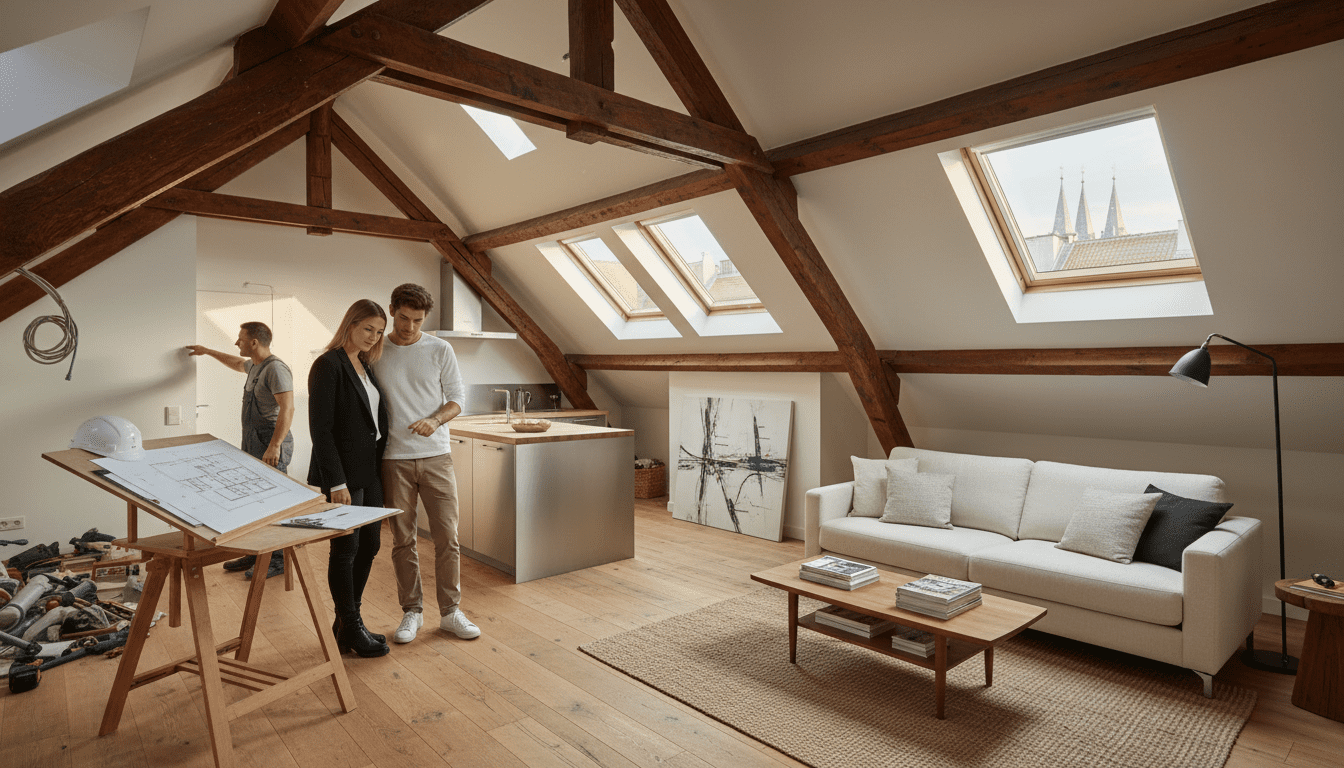
Attic living draws a premium as top-floor homes become costlier
Attic living now commands higher prices as buyers and renters pay a premium for top-floor apartments with light, views and privacy. The trend reflects changing demand in tight housing markets, but higher upfront and upkeep costs mean the economic case for living under the roof is more complex. Prospective residents and investors must weigh aesthetic and lifestyle gains against renovation, insulation and access challenges that often accompany attic conversions.
Top-floor premium reshapes housing choices
Recent market conversations show that attic living is increasingly positioned as a desirable, pricier option in many cities. Tenants and buyers cite natural light, skyline views and reduced street noise as reasons they are willing to pay more for the top-floor location. That willingness is reshaping how landlords, developers and estate agents price and market penthouse and converted attic units.
Demand for these units is also affecting supply-side decisions, with more property owners exploring attic conversions to capture higher rents or sales prices. Conversion projects that were once seen as niche are now part of mainstream urban strategies to increase housing stock and boost returns on existing buildings. However, the price uplift does not erase the structural and regulatory costs involved in creating habitable attic space.
Architecture and heritage limits add renovation costs
Older buildings often carry heritage protections or architectural constraints that complicate attic conversions. When a roof space sits within a listed or conservation-protected structure, owners face stricter rules on windows, materials and exterior changes. Those constraints can sharply raise the cost and timeline of work needed to make an attic livable.
Even where legal hurdles are absent, the geometry of sloping roofs, beams and low eaves reduces usable floor area and raises the expense of bespoke fixtures. Designers frequently need to craft built-in storage and custom furniture to make the most of cramped or angled spaces, which increases interior fit-out costs compared with standard apartments. These architectural peculiarities are a core reason attic living can be pricier overall.
Energy performance and seasonal running costs
Heat distribution and insulation are central issues for attic living, affecting both comfort and ongoing expenses. Roofs can lose heat quickly in winter and overheat in summer without proper insulation, ventilation and shading solutions. Retrofitting insulation or installing energy-efficient roof windows often requires significant investment to bring performance up to modern standards.
On the flip side, well-executed attic conversions can benefit from passive solar gain and installed rooftop technologies such as skylights or photovoltaic panels. Those measures can lower long-term energy bills, but the upfront cost is part of the financial calculus. Buyers and renters should consider expected seasonal running costs alongside purchase price or rent when assessing the value of attic living.
Access and daily-life trade-offs for residents
Living directly under the roof brings practical inconveniences that influence both lifestyle and market value. Limited elevator access in older buildings, narrow staircases and the difficulty of moving bulky furniture into attic apartments can deter some households. For families with young children, mobility issues or frequent visitors, these logistical factors weigh heavily against the appeal of quieter, brighter top-floor spaces.
Storage is another recurring concern: attic rooms often lack full-height closets or basements, prompting residents to adopt minimalist approaches or invest in custom solutions. Noise from rain or rooftop equipment can be more noticeable, too, creating trade-offs between solitude and exposure to weather sounds. These everyday realities temper the premium some are willing to place on attic living.
How the market and developers are responding
Developers and property managers are adapting to the appetite for attic living by offering finished, turnkey top-floor units and by marketing lifestyle features more aggressively. Where permitted, projects may include dormer windows, roof terraces and integrated storage to enhance usability and justify higher asking prices. Some conversions target niche buyers seeking unique character, while others aim for broader appeal with modern, efficient designs.
Investors are also selective, favoring conversions that minimize disruption and regulatory risk while offering a clear uplift in rental income or resale value. Municipal incentives or streamlined permitting for sympathetic attic conversions can accelerate projects, but those advantages vary widely by jurisdiction. As a result, the profitability of turning roof space into living space remains highly context dependent.
Attic living appeals to many for its light, privacy and character, but the premium attached to top-floor homes reflects real costs and compromises. Buyers, renters and developers should assess ceiling height, insulation, access and legal restrictions carefully, and factor in renovation and seasonal running costs before deciding whether the advantages of living under the roof outweigh the trade-offs.
