
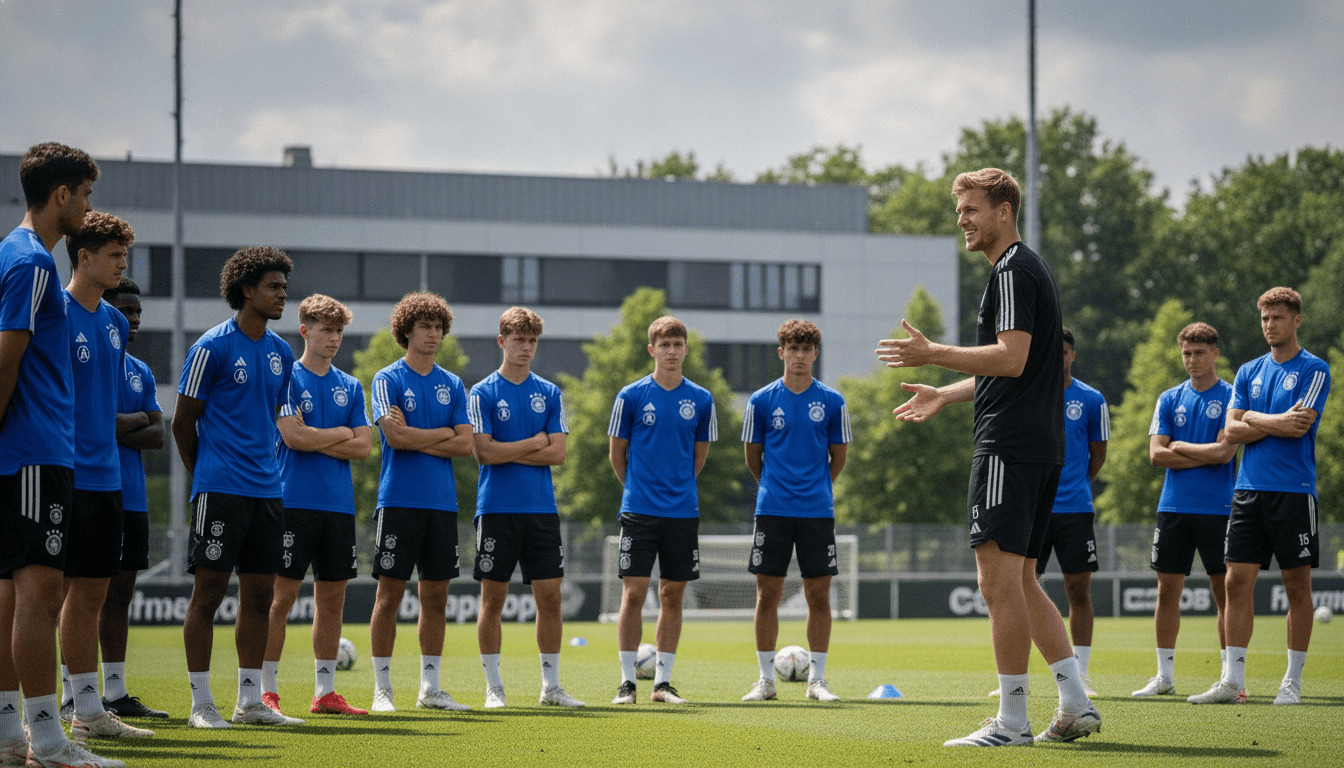
Germany squad mix under scrutiny as youth and veterans prepare for Ivory Coast test
Germany squad mix of youth and experience is shaping the team’s World Cup bid, with 17 of 26 players at their first finals and captain Joshua Kimmich highlighting a renewed hunger.
Germany’s World Cup squad mix is drawing attention as the national team prepares for its second group match, blending a youthful majority with a handful of high‑profile veterans. Captain Joshua Kimmich has spoken of a “special hunger” in a squad where 17 of 26 players are first‑time World Cup participants, while Manuel Neuer, at 40, remains the oldest and most experienced figure. The selection reflects deliberate choices by coach Julian Nagelsmann to marry rising talent with a steady core as Germany seeks to translate promise into consistent tournament performance.
Kimmich describes a renewed hunger in the squad
Joshua Kimmich has framed the current group around motivation rather than birthdays, arguing that desire can counterbalance relative inexperience. He pointed out that, aside from Neuer, most teammates have not previously won with the national side and that this absence of past triumphs creates a collective appetite. The captain also reflected on past failures, noting that a prior mix of players in 2018 did not deliver, and suggested lessons from that campaign have informed the present squad composition.
Age comparisons highlight changing profiles since 2010
Looking back, Germany’s age profile at World Cups has shifted notably. The 2010 squad averaged 24.8 years and featured a young core who would later form the backbone of the team, while the title‑winning 2014 side had an average of about 25.8 years, combining youthful energy with experienced leaders. By contrast, the average age rose to roughly 27.1 in 2018 and climbed to about 28 in 2022, showing a trend toward older squads that coincided with disappointing tournament exits.
Those numbers illustrate why the current selection has become a talking point. The present average sits closer to recent tournaments partly because of veteran presences like Neuer, but the higher count of first‑time participants signals an attempt to reintroduce developmental momentum reminiscent of earlier successful cycles.
Nagelsmann points to character over chronology
Coach Julian Nagelsmann has defended the balance in his squad by stressing the need for varied personalities as much as a range of ages. He identified a small group of central figures — including Kimmich, Neuer, Florian Wirtz, Jamal Musiala and Kai Havertz — who are expected to provide structure and leadership on the pitch. Nagelsmann insists a mixture of “positively eccentric” personalities and calmer presences helps navigate tournament pressures and maintain a healthy dressing‑room dynamic.
That philosophy has guided recent selections and tactical planning, with Nagelsmann banking on experienced anchors to accelerate the integration and confidence of younger players during the tournament.
On‑field blend visible in opening win
The starting lineup in Germany’s 7–1 opening victory against Curaçao showcased how the coaching staff are marrying established names with emerging talents. Kai Havertz, then 27, led a frontline supported by 23‑year‑olds Florian Wirtz and Jamal Musiala, while Felix Nmecha and Aleksandar Pavlović brought additional youth and energy from midfield and wide areas. The result and performance offered an early glimpse of the potential in a team many see as “in the making” rather than yet fully formed.
Despite the emphatic scoreline, coaches and players have cautioned against over‑reading a single result, emphasizing that competitive quality will be measured across the tougher fixtures that follow.
Veterans say youth keeps standards high
Senior players have publicly embraced the injection of young talent and described the mutual benefits it creates within the squad. Defender Antonio Rüdiger said the younger players “help us stay younger,” praising the athleticism and technical level of the newcomers. Oliver Baumann, a 36‑year‑old who is on his first World Cup roster, even offered to take part in shooting practice to push his teammates during downtime, underscoring a pragmatic and supportive veteran role.
These interactions suggest a dressing‑room culture geared toward mentorship, where experience is used to accelerate development rather than to slow opportunities for rising stars.
Legacy questions and the missed transitions after 2018
Kimmich has also acknowledged structural shortcomings that followed the 2014 triumph, noting that a number of players born around 1995–1996 did not mature into consistent pillars for the national team. Names such as Julian Brandt, Timo Werner and Niklas Süle have been cited as examples of a generation that failed to convert early promise into long‑term international dominance. That gap left Germany confronting several lean years and underscored the importance of deliberate succession planning.
The current group appears to be an attempt to repair that sequence by offering younger talents meaningful tournament exposure now, with the hope that they will form a durable spine for future competitions.
Germany leave their training base in Winston‑Salem this week to face the Ivory Coast in the second group match, scheduled on Saturday at 22:00 CEST. The coming fixtures will test whether the present squad mix can translate youthful momentum and veteran guidance into consistent results on football’s biggest stage. Only sustained performances over the tournament can show whether this blend is a foundation for growth or a stopgap before another generational reset.
