
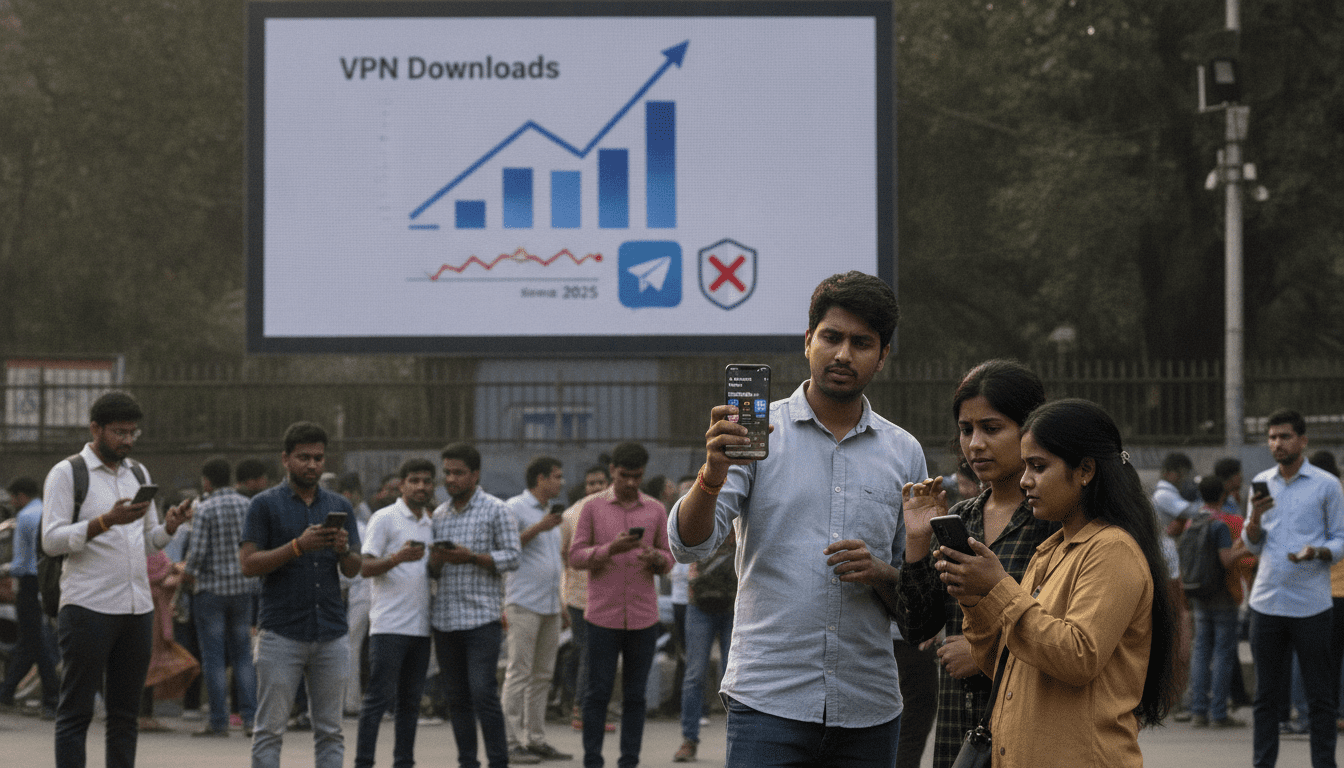
VPN downloads surge as Telegram restriction in India drives mass shift to proxies and rival apps
India’s temporary Telegram restriction ahead of the NEET re-test pushed VPN downloads up 49% and boosted Proton VPN, Signal and other apps as users sought access.
India’s decision to temporarily block Telegram on June 16, citing concerns that fraudsters were circulating fake exam material ahead of a National Eligibility cum Entrance Test re‑test, triggered a rapid shift in how users tried to reach the platform. The Telegram restriction in India coincided with an immediate and sustained surge in downloads for virtual private network services and rival messaging apps, according to app‑intelligence firms and service providers. The Delhi High Court heard arguments this week and reserved its order, with a verdict expected on Friday, June 19, 2026.
VPN downloads spike after June 16 restriction
App‑store data show a sharp rise in demand for VPNs on the day authorities announced the Telegram restriction. Appfigures reported downloads of major VPN apps in India climbed from an average of roughly 139,000 daily to about 208,000 on June 16, a 49% increase compared with recent baselines. Sensor Tower also noted a reversal of a prior two‑week decline, recording a 10% day‑over‑day increase in total VPN downloads in India on June 17.
The jump reflected both immediate attempts to regain access to Telegram and broader interest in tools that mask location and traffic. Providers and analysts said spikes typically appear when governments limit access to popular platforms, with users turning quickly to services that promise to bypass national restrictions.
Major providers report double‑digit gains
Several leading VPN vendors reported outsized growth following the restriction. Proton VPN’s App Store downloads in India more than doubled, rising 113% on Apple’s storefront, while Turbo VPN’s App Store uptake increased by about 85%. On Google Play, Proton’s downloads rose roughly 64% and Turbo’s by about 35%. Other services saw notable gains as well, with NordVPN’s App Store downloads up about 41% and ExpressVPN’s Google Play downloads increasing by roughly 31%.
Proton also disclosed registration metrics that underscored the demand spike, saying daily signups from India surged about 120% above baseline levels on Wednesday after hourly registrations spiked 150% on Tuesday evening. Canadian provider Windscribe reported first‑time downloads of its iOS app in India climbed about 89%, while signups peaked roughly 100% above typical levels.
App‑store rankings and category movement
The surge propelled several VPN apps up India’s app‑store charts within days of the restriction. Proton VPN climbed from 18th to fifth in Apple’s Utilities rankings between June 16 and June 18, and moved from eighth to second in Google Play’s Tools category over the same period, according to Appfigures. Other providers registered similar category advances as users sought quick solutions.
These ranking shifts reflect concentrated short‑term demand rather than long‑term market share changes, analysts cautioned, but they can influence app visibility and further downloads if sustained over several days.
Rivals to Telegram see rapid adoption
The Telegram restriction also produced a notable uptick in downloads for alternative messaging services. Appfigures reported Signal downloads in India rose by about 72% on the App Store and surged roughly 322% on Google Play in the immediate aftermath. Viber’s App Store downloads climbed by more than 200%, while smaller Telegram‑linked clients saw extreme spikes; iMe’s Google Play downloads jumped from an average of about 827 daily to roughly 50,900 on June 16.
Despite the migration to alternatives, some users focused primarily on regaining access to Telegram rather than switching platforms permanently, a pattern borne out by other access metrics.
Signs of continued attempts to reach Telegram
Multiple datasets indicated heightened efforts to access Telegram even after authorities applied the restriction. Sensor Tower reported that Telegram’s daily active users in India rose about 17% on the day the measure was announced, the largest one‑day increase since 2021 for the country. Cloudflare’s DNS traffic analysis showed sharp increases in queries for Telegram domains in the two days following the order, a sign users repeatedly attempted to reach the service.
Cloudflare’s lead on the Radar team cautioned that increased DNS traffic does not guarantee successful access, as it can reflect repeated connection attempts by clients trying to reach a blocked platform. Still, the combination of VPN signups, app downloads and DNS spikes paints a consistent picture of a population mobilizing to circumvent the restriction.
Court clash over scope and proportionality
Telegram has challenged the government order in the Delhi High Court, arguing regulators should target specific channels or content rather than impose a platform‑wide block that affects millions of users. The company told the court it had removed channels identified by authorities and questioned the necessity of a country‑level restriction that impacts over 150 million users in India, based on platform estimates.
Government lawyers defended the temporary, event‑linked measure as proportionate to the objective of preventing the spread of fake NEET papers and related scams. Solicitor General Tushar Mehta argued a permanent ban could raise proportionality concerns but said the current restriction has a “logical nexus” to the government’s stated aim. After hearings this week the court reserved its order and is expected to issue a decision on Friday, June 19, 2026.
The rapid market response in India underscores how platform restrictions can have immediate and measurable effects on digital behavior. For now, app‑store rankings, VPN registrations and DNS traffic suggest many users are prepared to adopt technical workarounds and alternative services while the legal process unfolds.
