
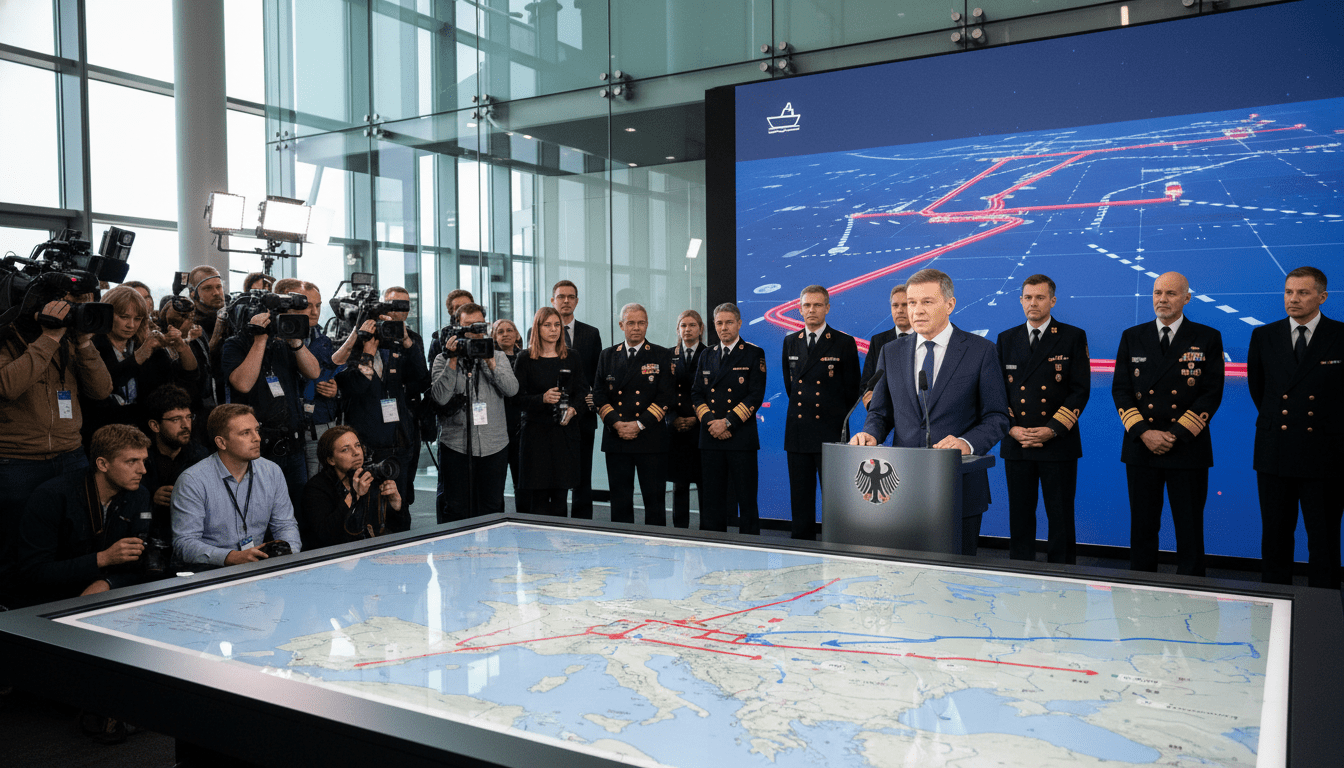
Germany’s National Security Council orders tougher action against Russian shadow fleet
Germany’s National Security Council has approved stronger measures targeting the Russian shadow fleet to prevent sanctions evasion and protect energy supplies.
The German federal government’s National Security Council on Tuesday approved a set of tougher measures aimed at curbing the activities of the Russian shadow fleet, officials said. The decision, taken at the cabinet-level security forum, focused on interrupting maritime practices that enable Moscow to disguise energy exports and skirt international sanctions. Government spokespeople described the move as a coordinated response that balances enforcement with the need to sustain critical energy deliveries.
Council cited risks to sanctions regime and energy security
The National Security Council concluded that operations by the Russian shadow fleet posed an immediate risk to the integrity of Western sanctions, according to senior officials. Members argued that deceptive vessel practices — including frequent reflagging, AIS manipulation and clandestine ship-to-ship transfers — have become more sophisticated and threaten enforcement efforts. Officials said the new measures are intended to close loopholes that allow sanctioned cargoes to be disguised and reintroduced into global markets.
Targeted tools to disrupt vessel-based evasion
The measures announced include tighter restrictions on documentation, faster blacklisting of vessels implicated in sanctions evasion, and enhanced port-screening protocols, officials said. Authorities plan to expand the use of maritime intelligence, satellite tracking and cross-border data sharing to identify patterns consistent with shadow fleet activity. Government sources emphasized that the approach prioritizes targeted actions against specific ships and companies rather than broad trade blockades.
Energy supply concerns shaped the decision
Energy security was a central factor in the council’s deliberations, according to participants who briefed officials after the meeting. Lawmakers and ministers reportedly weighed the risk that abrupt or indiscriminate measures could disrupt fuel deliveries and domestic energy markets, opting instead for calibrated actions designed to maintain supply stability. Officials framed the policy as an effort to ensure sanctions are effective without creating unintended shortages for German households and industry.
Coordination with European and international partners
Berlin plans to coordinate enforcement with EU partners and allied maritime agencies to amplify the impact of its measures, government officials said. The National Security Council highlighted existing cooperation mechanisms and discussed strengthening information exchanges with maritime authorities, customs services and international sanctions monitors. Officials noted that multilateral coordination is essential because shadow fleet operations routinely cross multiple jurisdictions and exploit regulatory gaps.
Implications for shipping, insurers and commodity markets
Shipping companies, insurers and commodity traders are expected to face heightened scrutiny as authorities implement the new measures, analysts said. Insurers may tighten coverage terms for vessels engaged in high-risk routes, and port operators could face new compliance obligations tied to fuel and cargo inspections. Market participants warned that while the policy aims to limit illicit flows, increased administrative burdens could raise short-term costs and logistical friction for legitimate trade.
Enforcement challenges and monitoring ahead
Officials acknowledged enforcement will be technically complex and resource-intensive, requiring sustained investment in surveillance and legal processing. Authorities plan to expand analytical teams and leverage commercial satellite imagery and automatic identification system anomaly detection to build actionable cases. At the same time, legal experts within the government will review sanction designations and evidentiary standards to support robust enforcement that can withstand judicial scrutiny.
The National Security Council’s move signals Berlin’s intent to play a proactive role in stemming maritime evasion tactics that undermine sanctions regimes. While officials stress that energy supplies remain a priority, the new measures reflect a broader push to tighten controls, deepen international cooperation and adapt enforcement tools to ever-evolving maritime concealment tactics.
