
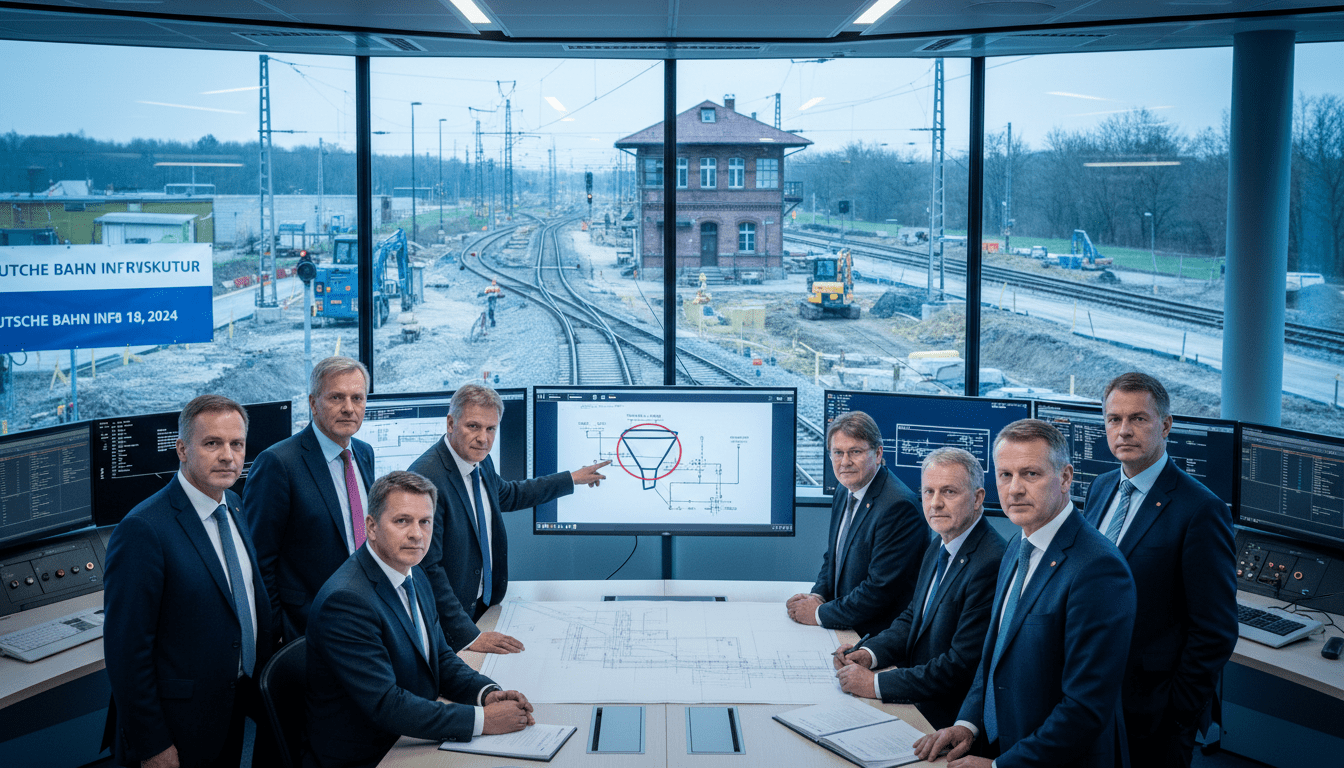
German rail infrastructure unchanged after nearly €20bn funding, DB Infrago report finds
DB Infrago report: German rail infrastructure shows no net improvement after nearly €20 billion in funding; aging signal boxes and points remain critical.
Germany’s rail infrastructure remains broadly unchanged despite almost €20 billion injected into the network last year, according to a new condition report from DB Infrago that highlights aging equipment as the primary bottleneck. The report, presented by Philipp Nagl, chief executive of Deutsche Bahn’s infrastructure unit, found stabilization rather than recovery in the system’s overall state. While some items such as noise protection structures received high marks, legacy components like interlockings and switches continue to limit performance across the network.
Key findings of the DB Infrago condition report
The report documents that large-scale funding did not produce a measurable improvement in overall infrastructure condition over the past year. Inspectors noted that many components are deteriorating faster than replacement programs can keep pace, leaving a persistent backlog of works. Notably, roughly 4,000 signal boxes — the interlocking systems that control track movements — were identified as the weakest element in the inventory despite a marginal uptick in their assessed condition.
How long-term underinvestment shaped today’s problems
Decades of underinvestment left the rail network with a high proportion of assets that have reached or passed their expected service life. That historical deficit means the maintenance and renewal task is now both larger and more complex than a simple spending increase can immediately resolve. Even sizable annual appropriations face limits imposed by planning processes, regulatory approvals and the physical availability of specialist contractors and materials.
Operational impact of failing signal boxes and points
Worn interlockings and aging turnouts are directly correlated with service disruption, the report shows, because failures in these systems trigger network-wide delays and cascading cancellations. Operators frequently contend with local technical faults that quickly propagate into timetable-wide effects, frustrating passengers and freight customers alike. Upgrading these systems requires coordinated track possessions and extensive testing, which further constrains the speed of renewals.
Why €20 billion did not translate to rapid improvement
The federal injection of nearly €20 billion bought throughput and capacity in procurement and planning, but it could not instantly expand the skilled workforce or the construction capacity needed on the ground. DB Infrago underscores that even with generous budgets, the sheer volume of replacement work and specialist nature of railway construction extend delivery timelines. Supply-chain bottlenecks and permitting delays also reduce the pace at which capital converts into measurable condition gains.
Where the network did show progress
Not all elements stalled: the report gives the highest ratings to noise protection structures, which have benefited from targeted investments and clearer project pipelines. Some modernization projects tied to trackside electrification and local renovation schemes also reported incremental success. These pockets of progress demonstrate that focused, well-coordinated programs can yield visible improvements within the current constraints.
Policy and industry steps needed to clear the backlog
DB Infrago and Deutsche Bahn officials argue that sustained multi-year planning, accelerated permitting, and stronger industry mobilization are required to close the investment gap. The report recommends scaling training and recruitment for specialist construction roles, standardizing renewal designs to shorten delivery times, and prioritizing the most network-critical assets. Officials say that resolving the backlog will require both steady funding and structural reforms to expand delivery capacity.
Public awareness of the problems, Nagl noted at the report’s presentation, is unusually high in Germany because commuters and freight customers experience the consequences directly. That popular attention adds political urgency but also raises expectations that cannot be met overnight.
The report’s findings suggest a long runway for recovery: stabilization has replaced decline, but the transition to durable improvement will depend on sustained effort across government, industry and Deutsche Bahn itself.
