
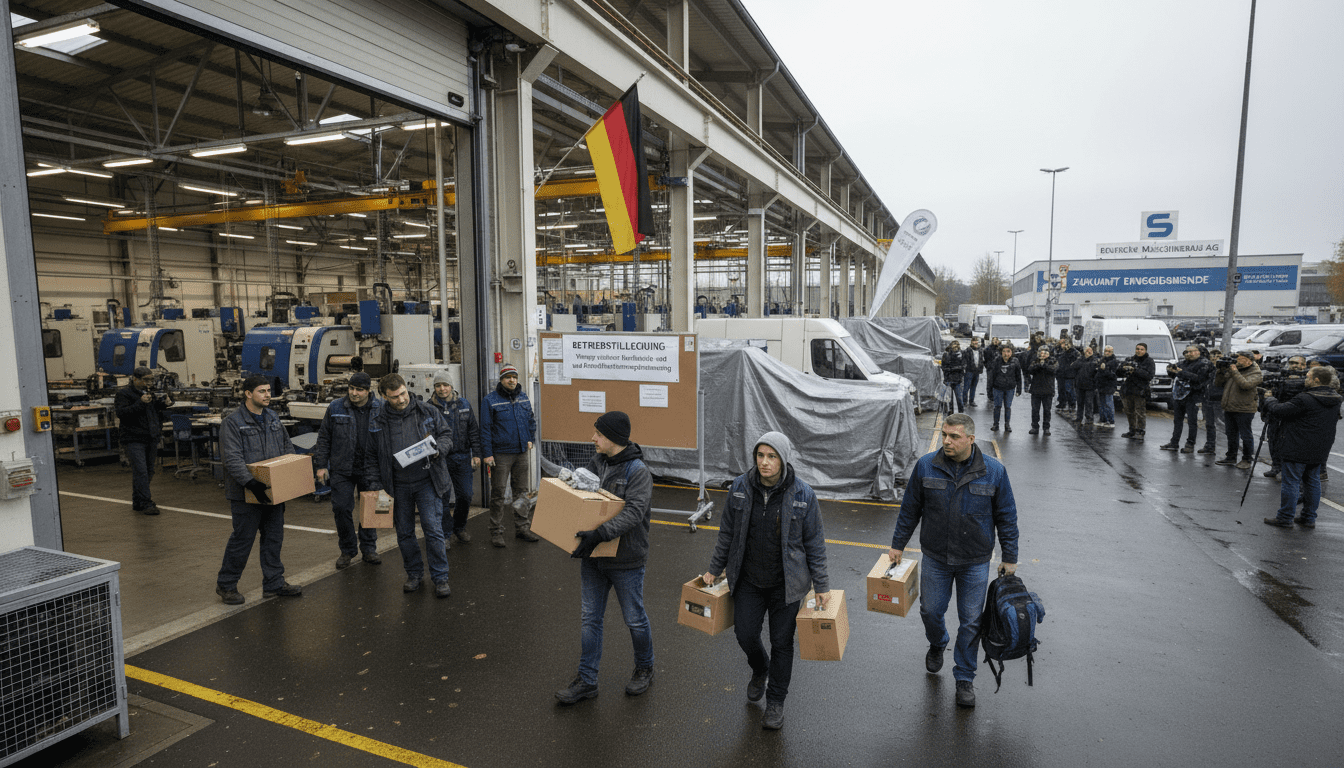
German industrial job cuts headline companies as fuel prices ease and rail demand rises
German industrial job cuts headline the latest business shake-up as manufacturers announce hundreds of layoffs, fuel prices fall to a two‑month low, and Deutsche Bahn reports rising long‑distance demand.
Major manufacturers across Germany and several Porsche subsidiaries announced plans this week that will lead to hundreds of job reductions, signaling fresh waves of cost‑cutting in the industrial sector. At the same time, retail fuel prices dipped to their lowest point in two months, offering short‑term relief to consumers and transport operators. Deutsche Bahn said demand for international long‑distance rail travel continues to grow, even as legal developments involving a high‑profile technology executive drew regulatory attention in France.
Manufacturers Announce Hundreds of Job Reductions
Several established industrial groups confirmed in corporate updates that they will reduce staffing levels across multiple sites, affecting production and administrative roles. Company statements cited the need to realign operations with market demand, improve efficiency, and adapt to shifting global supply chains.
Analysts said the moves reflect a broader recalibration in German manufacturing where legacy industries face pressure from rising input costs, slower order books in some segments, and the transition to electrified and automated processes. The announcements add to signs that German industrial job cuts are concentrated in firms managing structural change rather than temporary downturns.
Porsche Subsidiaries Target Operational Restructuring
Three Porsche‑owned units disclosed plans to trim headcount as part of targeted restructuring programs intended to streamline operations and focus investment on core activities. Management framed the measures as efforts to sharpen competitiveness and free resources for product development.
Industry observers cautioned that subcontractors and regional labor markets could feel immediate effects, particularly in areas with a high concentration of automotive suppliers. The company statements did not disclose precise site locations or final headcount figures, noting that negotiations with employee representatives are ongoing.
Festo and Wacker Chemie Cite Market and Supply Pressures
Automation specialist Festo and chemical producer Wacker Chemie confirmed they will shed roles across divisions, attributing decisions to changing order patterns and the need to accelerate cost optimization. Both companies described the reductions as difficult but necessary steps to preserve long‑term viability.
Executives emphasized efforts to manage the process with social safeguards where possible, including redeployment and targeted support programs for affected employees. Trade unions and local authorities have signaled they will seek to limit the scope of layoffs through talks and mitigation measures.
Fuel Prices Fall to Two‑Month Low
Retail fuel prices in Germany fell to their lowest level in two months, according to market monitoring figures cited in company briefings and consumer reports. The decline was attributed to easing crude oil benchmarks and moderated wholesale supply costs.
Lower pump prices could provide modest relief for households and logistics firms facing tight margins, but economists warned the drop may be temporary. Fuel cost improvements offer limited protection against broader economic headwinds that continue to influence corporate restructuring decisions.
Deutsche Bahn Sees Continued Growth in International Travel Demand
Deutsche Bahn reported that demand for international long‑distance rail services has risen steadily, reflecting a rebound in cross‑border travel and growing interest in rail alternatives to air travel. The carrier pointed to increased bookings on key European corridors as evidence of stronger passenger flows.
Rail operators argue that rising demand can support service investments and network improvements, yet they also face pressure from persistent cost inflation and the need to balance capacity with profitability. The uptick in rail travel presents a countervailing trend to workforce reductions in some industrial sectors, underlining uneven performance across the transport and manufacturing landscape.
French Authorities Signal Possible Legal Action Involving a Technology Executive
Reports from business correspondents indicated that French authorities have threatened an arrest warrant in connection with an ongoing inquiry involving a prominent technology executive. Official sources described the development as part of routine legal procedures tied to regulatory investigations in France.
Representatives for the executive and involved companies have not issued a detailed public response in all instances, and legal analysts stressed that such procedural steps do not equate to a conviction. Observers noted the episode underscores the wider regulatory scrutiny that global technology leaders can face while expanding operations across European markets.
The confluence of announcements this week — the string of German industrial job cuts, lower fuel prices, rising rail demand, and high‑profile legal developments — illustrates a complex, transitional moment for Europe’s economy. Companies are trimming costs and refocusing investments even as pockets of demand strengthen, leaving policymakers, unions and communities to weigh the social and economic consequences in the months ahead.
