
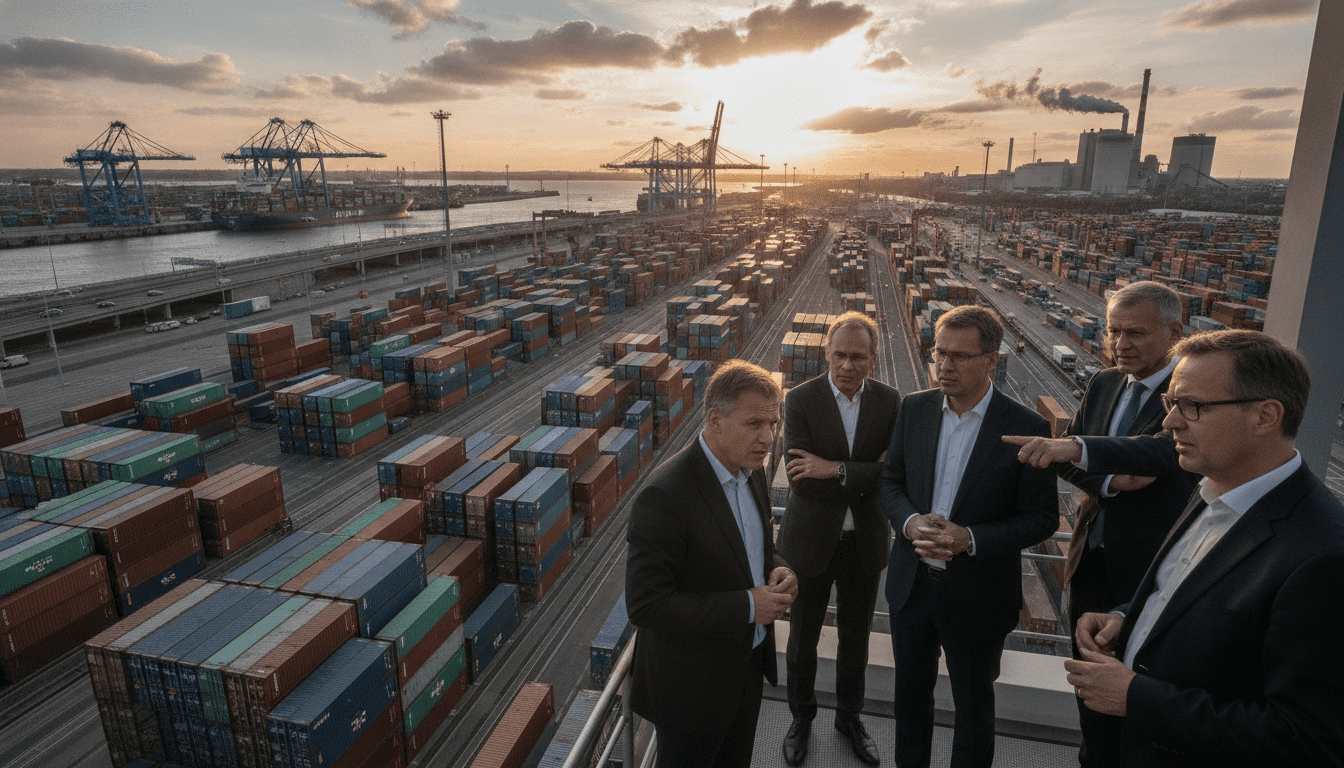
Survey: Geopolitical Risks to German Industry Threaten Transport Routes and Raw Materials
Survey finds geopolitical risks imperil German industry — transport corridors and raw-material supplies are vulnerable; industry urges Kanzleramt to set up early-warning systems.
Germany’s industrial sector is sounding an alarm after a recent survey showed mounting concern about geopolitical risks to German industry, with transport routes and deliveries of raw materials singled out as particularly vulnerable. Respondents said disruptions along shipping lanes, overland corridors and critical supplier networks could hit production and export capacities across key manufacturing sectors. Industry representatives are calling for faster risk detection and centralized coordination at the Kanzleramt to reduce the chance of cascading supply-chain failures.
Survey Signals Vulnerability of Transport Routes
A broad swath of industry groups told pollsters that transport corridors are a primary exposure point for geopolitical shocks, from blockades to sanctions and regional conflicts. Companies said that delays or rerouting of freight would raise costs and slow production lines, especially where single-route dependency exists. The survey highlighted both maritime and overland connections as areas where resilience is insufficient relative to current geopolitical tensions.
Raw-Material Deliveries Seen as High Risk
Beyond logistics, the survey identified raw-material flows as another major area of concern, with firms warning that shortages or interruptions could affect inputs ranging from metals to chemical feedstocks. Several respondents emphasized the strategic nature of certain imports and the limited number of alternative suppliers that could be mobilized quickly. Industry leaders argue that stockpiles and diversified sourcing are currently inadequate to offset a protracted supply disruption.
Industry Calls for Early-Warning Systems
Business associations pressed for creation of early-warning mechanisms that can detect and communicate emerging geopolitical threats to supply chains before they escalate. Proponents want automated monitoring of route disruptions, export controls, and geopolitical developments, paired with rapid risk assessments tailored to sectoral dependencies. They say such systems would give firms and policymakers crucial lead time to activate contingency plans and reduce costly stop-start cycles in production.
Demand for Coordination at the Kanzleramt
A recurring recommendation in the survey was stronger coordination from the Kanzleramt to unify government responses and liaise with industry in real time. Companies contend that fragmented responsibility across ministries slows decision-making and leaves firms to navigate complex export rules and crisis measures alone. Industry representatives are seeking a central clearinghouse that can synchronize intelligence, trade policy adjustments and logistical support during cross-border incidents.
Economic and Security Implications Outlined by Firms
Respondents warned that unchecked geopolitical risks could translate into measurable economic losses and strategic vulnerabilities, particularly for export-dependent manufacturers. The potential knock-on effects include higher production costs, reduced competitiveness, and longer-term shifts in investment decisions away from exposed regions. Some businesses also flagged national security considerations where critical technologies or materials could be jeopardized by foreign policy disputes.
Options for Strengthening Resilience
Industry proposals set out in the survey range from practical supply-chain mapping and stockpiling of key inputs to diplomatic and multilateral measures aimed at keeping trade lanes open. Firms also suggested public-private partnerships to develop interoperable data platforms and stress-test scenarios that inform both corporate contingency plans and government policy. While these measures carry costs, respondents argued they are preferable to the steeper economic fallout of unanticipated disruptions.
The survey’s findings underscore a broad consensus among German industry leaders that geopolitical dynamics are no longer a distant policy issue but a present-day operational risk for manufacturers and exporters. Firms are urging the federal government to translate those warnings into concrete structures and resources, including an early-warning architecture and stronger Kanzleramt-led coordination, to shield production networks and sustain economic stability.
