
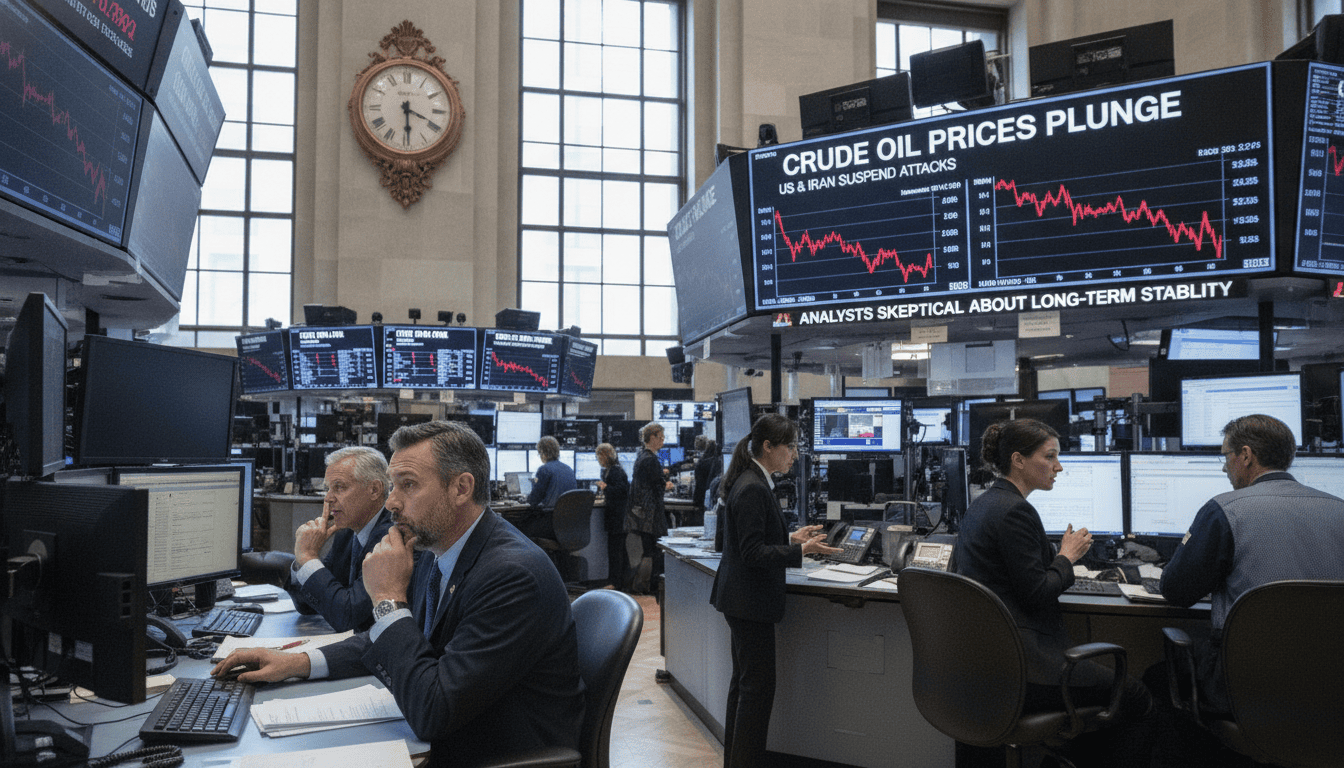
Oil prices tumble after US and Iran pause mutual attacks
Oil prices plunged after the US and Iran paused mutual strikes, the largest one‑day drop since May; analysts warn geopolitical risks could push prices up.
The prospect of resumed talks between the United States and Iran sent oil prices sharply lower this week, provoking the biggest single‑day decline in more than two months. Brent crude fell close to 8 percent to about $89.12 a barrel, while US West Texas Intermediate slipped nearly 7 percent to roughly $83.21 per barrel. Traders on global floors priced in a sudden reduction in geopolitical risk, but market participants and analysts cautioned that the move may be temporary rather than a sustained downshift.
Price moves on Brent and WTI
Brent, the benchmark for much of the world’s traded crude, registered an intraday collapse that traders described as abrupt and liquidity‑sensitive. The drop to about $89 a barrel marks a sharp swing from the highs seen during earlier weeks of heightened regional tensions.
US WTI followed the same pattern, falling to roughly $83 per barrel as buyers stepped back to reassess immediate supply concerns. Both benchmarks remain well above levels seen before the spring surge, underscoring the lingering premium attached to oil tied to geopolitical uncertainty.
Market reaction and trader behaviour
On trading desks, the initial response was fast and pronounced as algorithmic orders and stop‑losses amplified selling pressure. Many market participants interpreted the pause in attacks as a signal that an escalation could be averted, at least temporarily, prompting short‑term position adjustments.
However, traders cautioned that the move reflected sentiment swings rather than structural change. Market liquidity and headline‑driven flows were cited by brokers as key factors magnifying the one‑day decline, with buy‑and‑hold investors largely staying on the sidelines until clearer indications emerge.
Analysts voice scepticism despite the drop
Several analysts warned that the fall may be a reflexive reaction to positive headlines rather than evidence of a durable trend. One oil brokerage noted that markets appeared to be clasping at any sign of de‑escalation, even where fundamentals remain fragile.
A team of regional analysts pointed to ongoing threats — including attacks in the Red Sea and assaults on shipping and energy infrastructure elsewhere — that could keep a risk premium attached to crude. Their assessment suggested that unless diplomatic progress is confirmed and sustained, prices could rebound quickly on the next wave of disruptions.
Geopolitical flashpoints still weigh on supply expectations
Beyond the headline of a pause in US‑Iran strikes, other theatres of instability continue to threaten trade routes and refining capacity. Notably, operations in and around the Red Sea have drawn international attention after militant and proxy attacks complicated commercial navigation.
Meanwhile, separate incidents targeting ships and facilities have persisted in other regions, creating a patchwork of possible supply interruptions. Such episodic disruptions raise the prospect that physical market tightness could return, supporting prices even after headline‑driven dips.
Implications for inventories, refining and consumers
Physical market indicators will be closely watched for confirmation that the price drop reflects genuine easing rather than short‑term sentiment. Inventory data, refinery runs and tanker positioning in coming weeks are likely to guide traders toward a fresh assessment of near‑term balances.
For consumers and industries, brief price falls can deliver immediate relief at the pump or for feedstock costs, but sustained benefits require a longer period of stable lower prices. Market participants noted that durable declines would need both a calming of geopolitical tensions and signs that global demand is not outstripping supply.
Short‑term volatility remains the most probable scenario as markets sort through conflicting signals from diplomacy and conflict. The rapid price correction highlights how sensitive oil markets are to political developments, and underlines the challenge of distinguishing between temporary sentiment moves and genuine shifts in supply fundamentals.
