
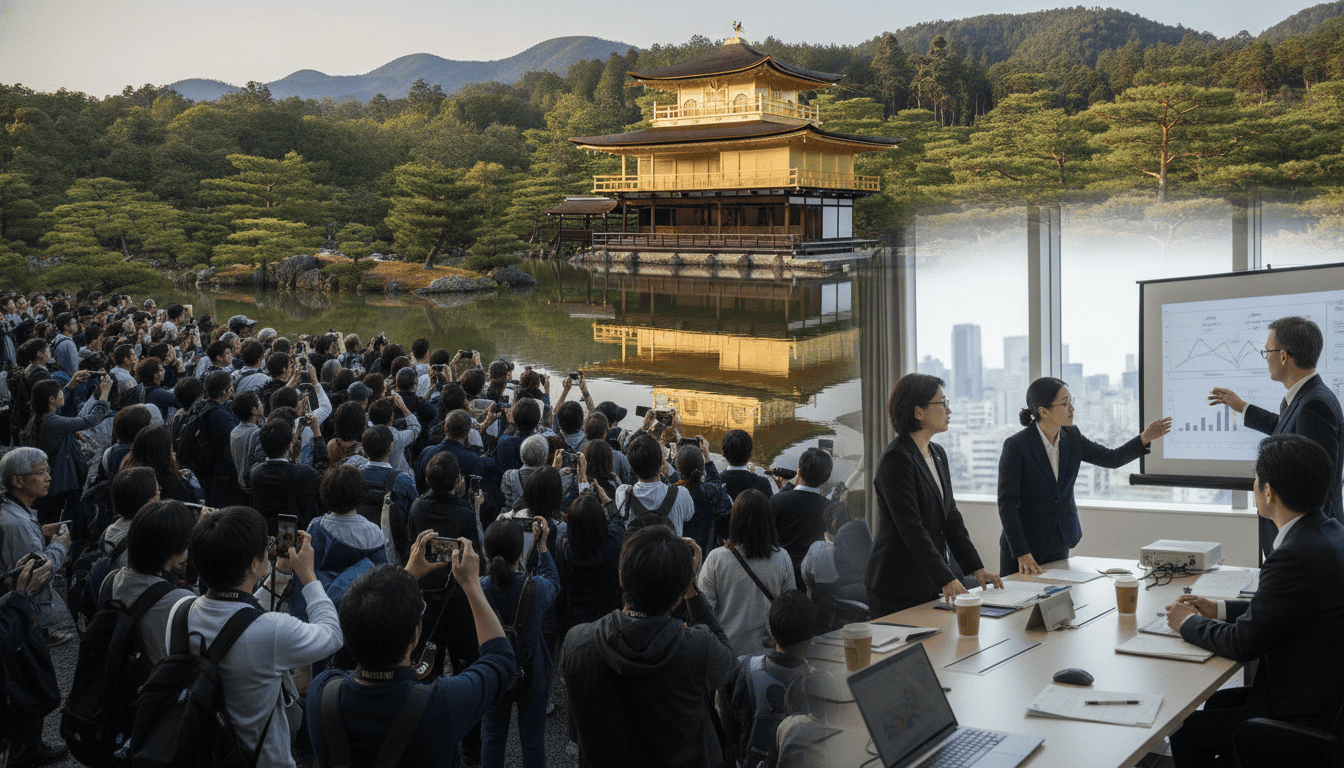
Overtourism in Kyoto Intensifies as Visitors Concentrate on the Golden Pavilion
Overtourism in Kyoto has sharpened debates about how to manage visitor flows as millions continue to concentrate on a handful of iconic sites. The phenomenon is most visible at Kinkaku-ji, the Golden Pavilion, where organized tours and social-media-driven demand create extreme daily peaks. City officials, economists and temple custodians are weighing market-based tools and real-time information systems alongside more traditional regulatory responses.
Bowie’s Favorite: Shoden-ji and a Quiet Alternative
David Bowie (1947–2016) famously admired Kyoto and singled out the northern Zen temple Shoden-ji for its karesansui dry garden framed by Mount Hiei. Visitors who bypass the city’s headline attractions sometimes find Shoden-ji nearly empty and experience a markedly different atmosphere than the crowded major sites. That contrast highlights how little-known places can offer high-value experiences if tourists are made aware of them.
Kinkaku-ji’s Crowds and Peak Pressure
Kinkaku-ji ranks as the single most visited attraction in Kyoto, routinely drawing coordinated coach tours that arrive predominantly between 10 a.m. and 3 p.m. Those synchronized arrivals produce hour-by-hour congestion that far exceeds the site’s comfortable carrying capacity. The result is not only longer waits for tourists but also heightened wear on paths, gardens and facilities.
Kyoto’s Religious Landscape and Rising Visitor Numbers
Kyoto is home to roughly 1,600 Buddhist temples and about 400 Shinto shrines, a density that could disperse tourist demand if visits were spread more evenly. Yet visitor patterns are highly concentrated: analysts note that a small group of ten to fifteen sites receives the lion’s share of attention. Official tallies indicate rapid growth in arrivals over recent decades, with figures rising from around 40 million visitors in 2000 to approximately 56 million by 2025, intensifying pressure on popular landmarks.
Overtourism Framed as a Coordination Problem
Experts argue that overtourism in Kyoto is less a problem of aggregate numbers and more a coordination failure that funnels visitors to the same attractions. Psychological forces, amplified by social platforms and travel marketing, create a bandwagon effect where seeing the “original” is valued more than viewing alternatives. This behavioral pattern, coupled with standardized tour itineraries, concentrates demand and produces the daily spikes that stress infrastructure.
Market Instruments: Pricing and Differentiation
One set of proposals favors market mechanisms to reallocate flows rather than blunt quantity caps. Charging entry at the busiest temples while keeping lesser-known sites free could incentivize visitors to explore more of Kyoto’s religious heritage. Differential pricing—lower fees for early-morning or late-afternoon visits, combined tickets and discounts for lesser-visited temples—could nudge visitors away from peak windows without an outright ban on travel.
Real-time Information and Digital Management
Complementary to pricing, digital tools could supply transparent, real-time information about crowding levels across temples and shrines. Apps that report live occupancy, show alternative sites and display user-submitted photos would help travelers make informed choices on the spot. Such platforms could also integrate ticketing to smooth demand, offering low-cost incentives for off-peak bookings and bundled itineraries that spotlight quieter cultural sites.
Equity Concerns and Unintended Consequences
Market-based solutions face political and social pushback. Critics warn that pricing access risks privileging wealthier visitors and commodifying public heritage, while fees can prompt displacement effects such as illegal parking or pressure on surrounding neighborhoods. There are also practical concerns: ticketed slots may spawn secondary markets and resales, and higher charges do not by themselves prevent vandalism or degradation.
Revenue Use and Policy Design
Proponents contend that fees modeled on Pigovian principles can do more than deter congestion; they can generate funds earmarked for conservation and infrastructure. Transparent allocation of revenue toward maintenance, visitor management and local community benefits would address fairness critiques and improve long-term site resilience. Policy design can further reduce inequity by including concessions, resident exemptions and targeted subsidies.
Overtourism in Kyoto presents a complex policy challenge that blends human behavior, cultural preservation and urban management. A combination of carefully designed pricing, smart digital tools and targeted investments may offer the best practical path to spread demand across the city’s rich temple and shrine landscape while protecting the experiences visitors seek. In the months ahead, choices by municipal leaders, temple authorities and tourism operators will determine whether Kyoto can temper peak pressures without losing the vitality that draws people from around the world.
