
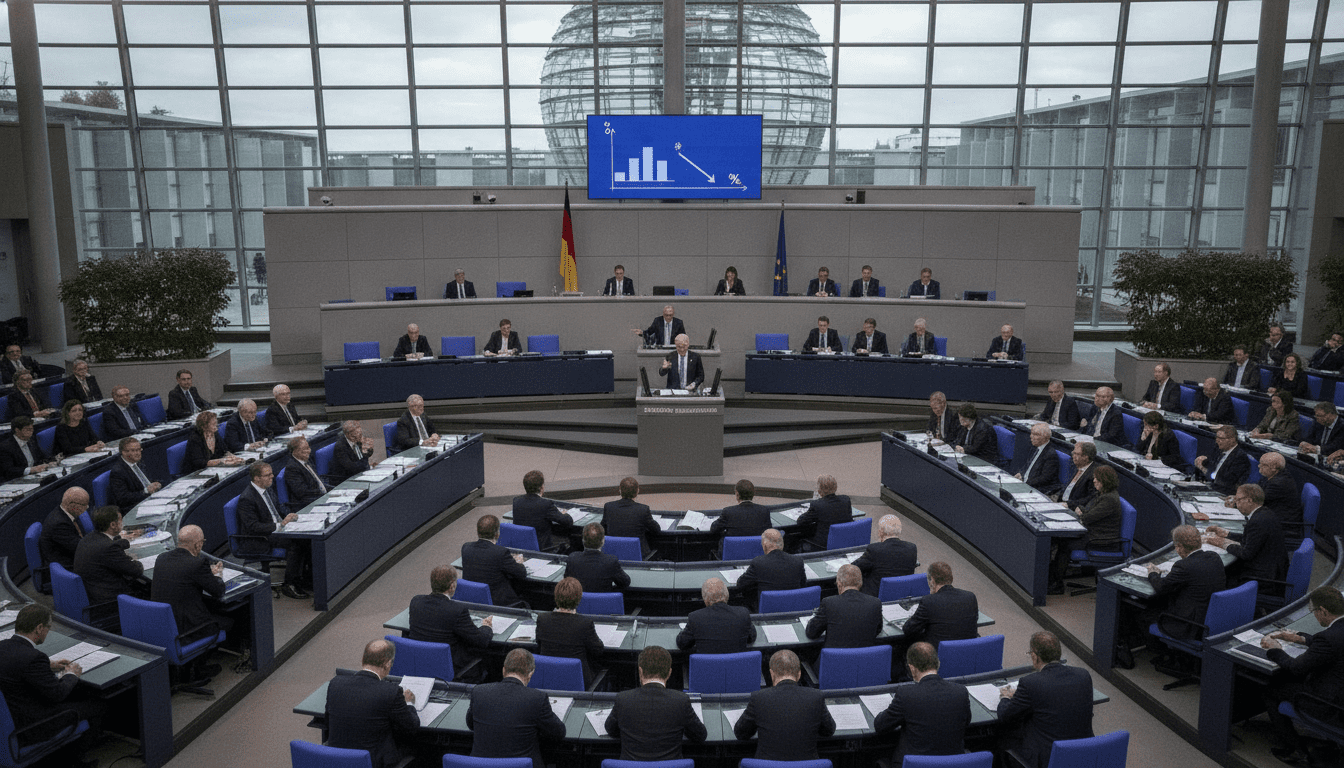
Parliament Set to Suspend Bundestag Pay Increase in June Vote
German MPs face a potential freeze as the Bundestag prepares to vote on June 11 to suspend the automatic Bundestag pay increase scheduled for July 1, 2026.
The Bundestag is due to vote on Thursday to suspend the automatic Bundestag pay increase that would have taken effect on July 1, 2026, leaving 630 members without the planned rise. The proposal, tabled by the Union and SPD, is presented as a cost-conscious measure intended to signal fiscal restraint amid broader economic pressures.
Motion and expected outcome
The draft law from the Union and SPD seeks to put this year’s automatic adjustment on hold and is expected to secure broad parliamentary support. Party representatives across the spectrum signalled opposition to the raise, and leaders have indicated they will back the suspension when the Bundestag votes on June 11.
Lawmakers say the move is intended to send a political signal about shared sacrifice while work proceeds on other fiscal reforms. Observers view the consensus as unusually wide, increasing the likelihood that the draft will pass without significant delay.
Who pushed for the freeze
The initiative was set in motion by Wilhelm Gebhard, a newly elected CDU member from Hesse and former mayor of Wanfried, who urged party leaders to suspend the increase in a March letter. His appeal stressed solidarity with citizens facing economic strain and framed a pause as a credible step before tougher reforms.
Support soon emerged from within the SPD ranks and from CDU figures including Secretary General Carsten Linnemann, who linked the suspension to wider demands such as MPs’ voluntary payments into the pension system or cuts to allowances. Even initially skeptical voices within the Union shifted to back the proposal, narrowing potential opposition.
Size of the planned rise and current entitlements
Currently, members of the Bundestag receive a taxable monthly salary of €11,833.47 plus a tax-free flat-rate allowance of €5,467.27 to cover office and travel expenses. Under the statutory automatic indexation tied to the Federal Statistical Office’s nominal wage index, a 4.2 percent adjustment would have increased the taxable salary to roughly €12,330 from July 1, 2026.
The automatic adjustment mechanism also governs pension entitlements and is designed to mirror the average nominal wage development of dependent employees across Germany. In practice, a suspension this year would mean the July payment system is affected administratively, with a subsequent reduction in payments planned for August and a return to the previous rate by September.
Legal and historical background of adjustments
The current adjustment framework dates back to reforms following a 1975 Federal Constitutional Court ruling that reshaped how parliamentary remuneration is classified and handled. In 2014, amid repeated public criticism of self-decided raises, legislators accepted recommendations from an expert commission to establish an automatic, rule-based mechanism.
That reform was implemented in law in 2016 so that, since then, raises and pension adjustments take effect automatically on July 1 each year unless Parliament intervenes within set procedures. The change was intended to depoliticize pay changes and reduce the spectacle of annual parliamentary votes on members’ own salaries.
Criticism of the automatic mechanism
Some constitutional scholars and critics argue the automatism undermines transparency and public accountability by removing regular debate over remuneration. Constitutional law expert Christian Pestalozza has described the automatic process as lacking in openness and effectively insulating MPs from the same wage pressures faced by workers and unions.
Critics further note that because the adjustment is formulaic, it can appear as a privileged benefit when broader economic conditions create hardship for many citizens. Those arguments resurfaced in the current debate and helped build momentum for a temporary suspension as a way to restore perceived public legitimacy.
Precedents and practical consequences if passed
This would not be the first time Parliament has imposed a null round: the Bundestag froze increases in 2020 during the pandemic, and in 2021 the statutory mechanism produced a 0.7 percent reduction. If the current draft becomes law, administrative timing means members will still receive the calculated July payment, but an August correction will reduce cumulative pay and payments are expected to return to the previous level by September.
Proponents say the measure allows lawmakers to demonstrate fiscal discipline without long-term changes to the legal framework, while opponents warn that repeated suspensions could erode the depoliticizing intent of the 2016 process and perpetuate uncertainty for members’ compensation.
The Bundestag vote on June 11 will determine whether this year’s automatic increase is formally set aside and will test whether political consensus around symbolic austerity holds as fiscal debates continue.
