
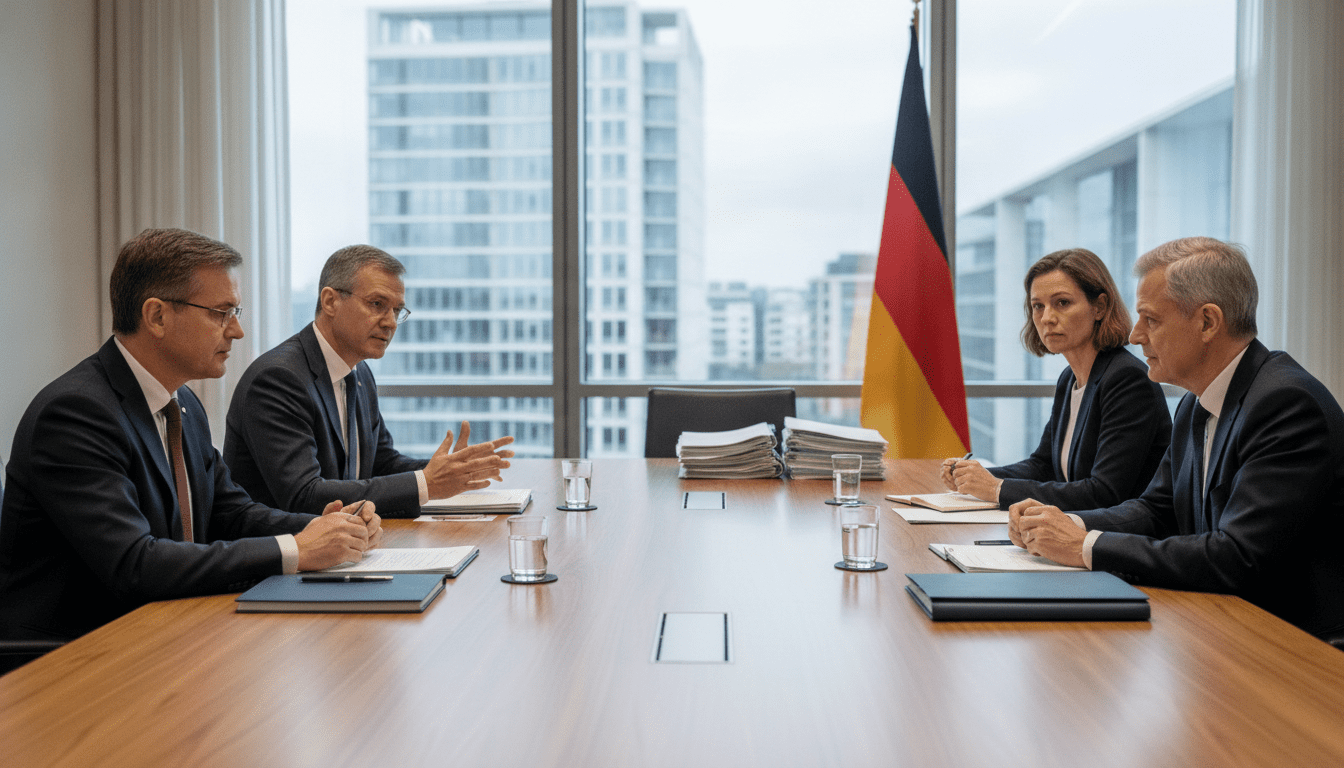
Business groups demand clear reform timetable from German government ahead of Kanzleramt talks
Top industry associations insist on a concrete reform timetable from the German government before the Kanzleramt meeting, seeking clarity on taxes, pensions and labour changes.
Industry leaders press for a reform timetable
The four major German business associations — the BDA, BDI, DIHK and ZDH — have publicly called on the federal government to present a detailed reform timetable ahead of talks at the Kanzleramt. Their joint statement, issued on the eve of a scheduled meeting, framed a binding calendar as essential for businesses to plan investments and adapt to policy shifts. The associations said they want the exchange to identify where political priorities align and where compromise will be necessary.
Kanzleramt meeting set for June 10, 2026
Representatives of the government, employers and trade unions are due to meet at the Kanzleramt on June 10, 2026 for a multi-hour discussion intended to map out potential reforms. The industry groups issued their demand one day before the scheduled roundtable, underlining the urgency they attach to timetable clarity. Officials have indicated the session is meant as a forum for exchanging positions rather than delivering immediate decisions.
Government signals no instant agreements
Senior party officials and the government spokesman have sought to temper expectations about concrete outcomes from the Kanzleramt meeting. CDU and SPD secretaries general described the gathering as a chance to stay in dialogue rather than to adopt binding measures, and the government characterized the event as an exchange of ideas. That cautious framing contrasts with the associations’ request for a precise sequencing of legislative steps and deadlines.
Reform package scope includes taxes, pensions and labour market
According to planning shared with stakeholders, the government aims to bundle measures on income tax, labour-market rules, pensions and bureaucracy reduction into a reform package. The agenda also touches on already proposed changes to statutory health insurance and the nursing-care insurance system. Berlin has signalled an intention to move the package through before the parliamentary summer recess, targeted for mid-July 2026, which heightens pressure on negotiators to set concrete timelines.
Employers push tax relief and social contribution limits
Business representatives have argued that slower economic growth requires measures to stimulate competitiveness and hiring, pressing for lower taxes, capped social contributions and reduced administrative burdens. They propose flexible working-time arrangements and streamlined regulation as practical levers to improve productivity. The associations said they are prepared to accept compromises within a broader package so long as the overarching focus remains on growth and jobs.
Unions and social groups caution against cuts
Trade unions and social organisations have pushed back against any reform approach that they say prioritises austerity over social protection. Labour leaders warned that narrowing public spending risks shifting burdens onto low- and middle-income households, and social advocates urged decisions that strengthen social security and equitable financing. Representatives called for reforms that deliver tangible relief for those with modest incomes rather than measures that primarily benefit higher earners.
The divergence between the sectors frames the immediate negotiation challenge: business groups want a clear, time-bound pathway to structural change, while unions and social organisations demand safeguards for social services and fair burden-sharing. With the Kanzleramt meeting scheduled for June 10, 2026 and a parliamentary summer recess looming in mid-July 2026, stakeholders say the coming weeks will be decisive for whether a coordinated approach to taxes, pensions, labour rules and social insurance emerges.
