
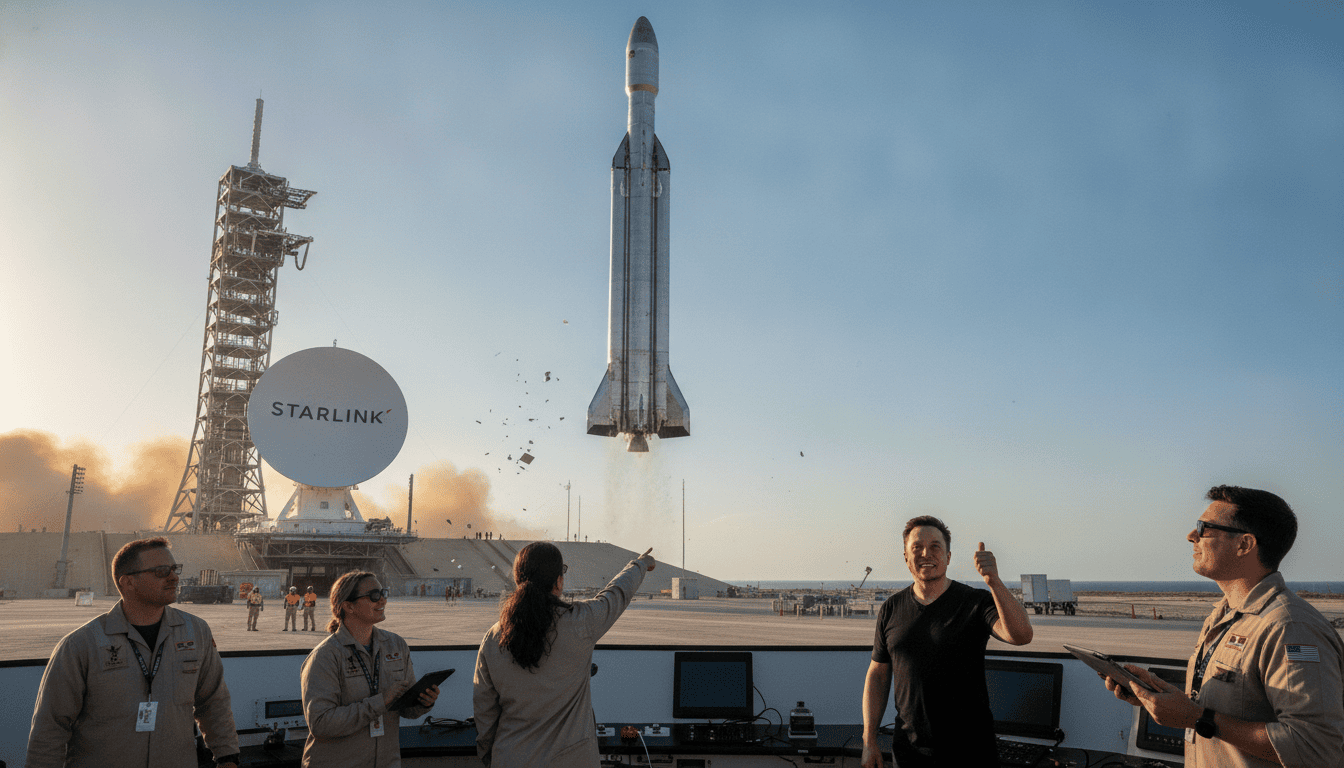
Starship completes largely successful 13th test flight, upper stage splashes down in Indian Ocean
Starship completed its 13th test flight with the Starship system largely performing to plan, including a controlled upper-stage splashdown and a simulated Starlink deployment.
Starship’s 13th test flight outcome
The Starship system launched from SpaceX’s Texas facility and carried out an uncrewed flight that met its primary objectives, the company reported. The lower Super Heavy booster separated and fell into the Gulf near the launch site as planned, while the upper Starship stage reentered and splashed down in the Indian Ocean about an hour after liftoff.
Onboard simulations included the release of 20 operational-style Starlink internet satellites; those payloads were expected to burn up on reentry and did so according to mission design. Overall, flight telemetry indicated the vehicle reached the intended altitudes and executed separation and deorbit sequences without major anomaly.
Launch delays and technical issues before liftoff
This test had been postponed several times in the run-up to launch. A launch attempt roughly a week earlier was scrubbed when several engines failed to ignite during final countdown procedures.
Following that abort, the mission faced additional weather-related holds before a successful liftoff. SpaceX engineers conducted checks and troubleshooting on the propulsion systems between attempts, citing the abort and environmental factors as the primary causes of the schedule slips.
Version 3 hardware and incremental changes
For the second time, the flight used the company’s Version 3 configuration of the Starship upper stage and booster. SpaceX describes Version 3 as a substantial redesign intended to improve structural performance and engine reliability compared with earlier iterations.
The V3 changes reflect lessons from prior flights, including modifications to propulsion plumbing, structural reinforcements and updated avionics. Company officials have said the iterative approach aims to close remaining performance gaps before operational missions are attempted.
Upper-stage recovery and payload handling
The controlled splashdown of the upper stage in the Indian Ocean was a planned element of the flight’s end-of-mission profile. Prior tests have seen the vehicle’s upper stage reach space and be intentionally deorbited for ocean recovery or data collection.
In this flight, the simulated deployment of Starlink satellites followed protocols designed to test release mechanisms and communications without placing functioning satellites into service. The deliberate atmospheric destruction of those satellites is part of SpaceX’s risk-managed approach during early operational-validation flights.
Design scale and reusability goals
Starship is the largest rocket system ever constructed, comprised of a roughly 70-meter Super Heavy booster and a roughly 50-meter upper-stage spacecraft also named Starship. The combined vehicle is taller than many iconic structures and is intended from the outset to be fully reusable.
Both stages are engineered to return to Earth for refurbishment and multiple flights, a capability that SpaceX says will dramatically lower the cost of access to space. Reuse remains a central technical and commercial challenge as engineers refine guidance, thermal protection and landing techniques.
Program history and safety lessons from earlier flights
The Starship program has followed a high-rate test cadence since its first integrated flight in April 2023, which ended in a rapid loss of the vehicle minutes after launch. Subsequent flights have achieved progressively longer durations, higher altitudes and more complex maneuvers, though several tests have fallen short of planned recovery objectives.
Those earlier failures have driven iterative design changes and procedural updates. SpaceX’s testing philosophy emphasizes rapid learning through flight, and the program’s recent successes reflect accumulated improvements across propulsion, avionics and structural systems.
Partnerships, ambitions and regulatory context
NASA has selected Starship to serve as a lunar lander for crewed Artemis missions, positioning the vehicle as a central element of upcoming human-return-to-the-Moon plans. SpaceX also maintains a long-term goal of supporting crewed missions to Mars, with Starship as the company’s primary vehicle for deep-space transport.
Those ambitions place Starship at the intersection of commercial and government space agendas and have prompted close regulatory scrutiny of flights, environmental impacts and range safety procedures. Future launches will continue under the oversight of U.S. launch authorities and international stakeholders as needed.
Commercial implications and recent market performance
SpaceX recently completed a high-profile public offering that was described as the company’s largest to date, marking a significant step in its transition to a publicly traded entity. Despite the magnitude of the listing, the company’s stock has traded below its initial offering price in recent sessions, reflecting investor caution amid aggressive capital needs for Starship development.
The commercial success of the vehicle — both for satellite launches and potential crewed missions — will factor heavily in future revenue forecasts and investor sentiment. Analysts note that operational reuse and reliable flight cadence are likely prerequisites for improving the program’s long-term commercial outlook.
The latest flight reinforces SpaceX’s iterative testing approach while highlighting persistent technical and business challenges as the company advances toward operational Starship missions and broader ambitions in lunar and interplanetary travel.
