
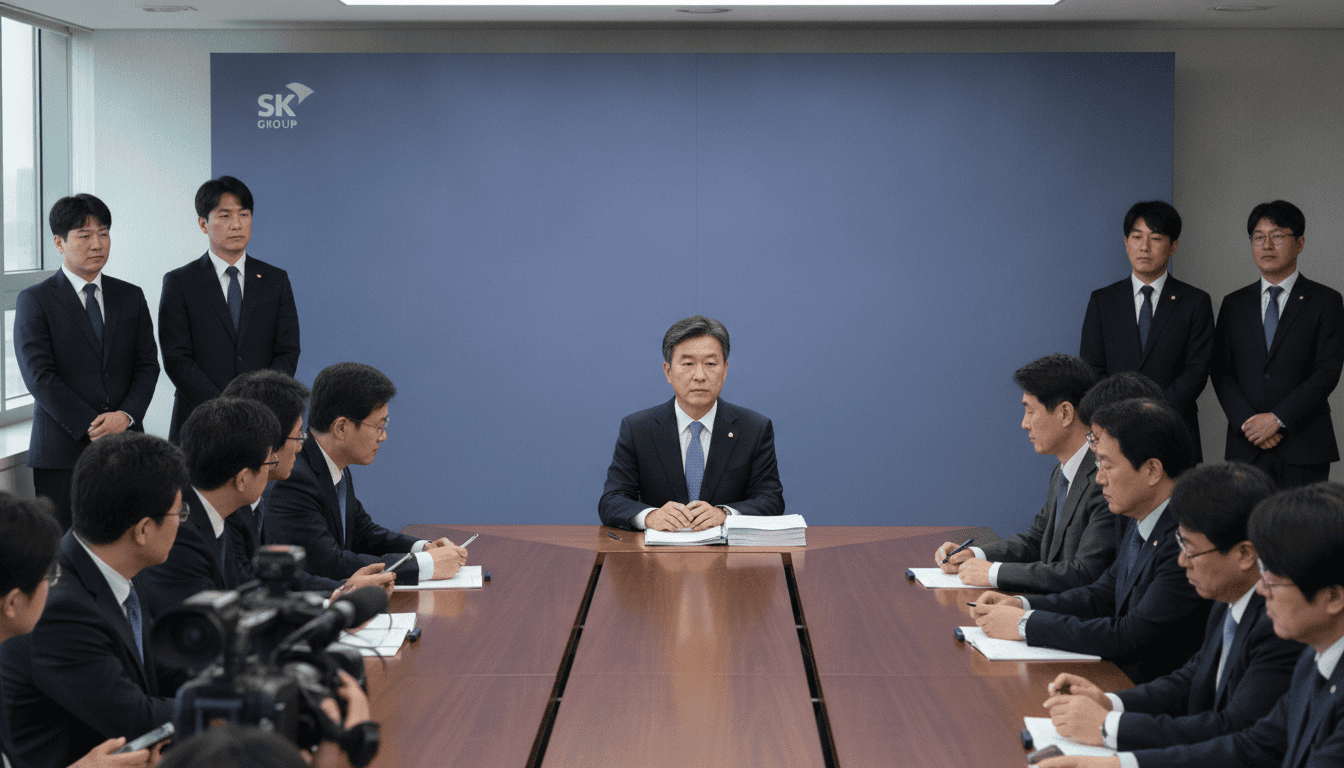
Chey Divorce Settlement Preserves Control of SK Inc. After Record $26.5B IPO
Chey divorce settlement preserves his control of SK Inc. after a record $26.5 billion U.S. IPO and an AI-driven chip boom, as the court factors in stock value.
South Korean business leader Chey reached a court-approved divorce settlement on Friday that keeps him in control of SK Inc. while resolving a high-profile dispute with his former spouse, Roh. The Chey divorce settlement follows a contentious legal battle over the value and division of assets tied to one of the country’s largest conglomerates. Market observers said the agreement reduces the immediate risk of forced share sales that had unsettled investors.
Settlement Details and Court Reasoning
The court said the agreed payment was lower than a prior 2024 judgment and explicitly accounted for the market value of Chey’s holdings in the corporate structure. Roh had initially sought a stake large enough to affect corporate control, then shifted to a cash claim; the final settlement reflects that change in posture. Judges weighed arguments about inherited shares and the appropriate way to value contributions that helped build the family enterprise.
Link to SK Hynix IPO and Wealth Surge
The timing of the settlement coincided with heightened attention on Chey after SK-affiliated companies raised roughly $26.5 billion in a U.S. offering earlier this month. That transaction, which underlined strong demand for memory chips amid an AI-driven technology surge, helped push Chey’s personal net worth sharply higher last year. Bloomberg’s billionaire tracking suggested Chey’s wealth more than doubled in the past year, driven largely by gains tied to SK-related holdings and the broader chip market rally.
Roh’s Claim and the Role of Political Support
Roh argued in court that her family’s political connections and support contributed materially to the company’s transformation from an energy-focused mid-sized firm into a diversified conglomerate. That contention formed a central pillar of her claim, and the court’s assessment of spousal contribution set the tone for the settlement. Legal analysts noted the case tested how Korean courts attribute value to non-financial factors — such as political and social capital — in dividing assets tied to family-run business groups.
Market Reaction and Investor Sentiment
SK Inc. shares fell amid volatile trading as investors digested the settlement and its implications for corporate governance. Analysts recorded a notable intraday decline, reflecting earlier fears that Chey might have to divest strategic holdings to satisfy a judgment. Market managers said much of the short-term uncertainty was removed by the court allowing Chey to retain operational control and use corporate dividends to meet payment obligations.
Potential Legal Precedent for Chaebol Disputes
Legal experts described the case as a potential reference point for future disputes over succession, divorce and inheritance within South Korea’s family-controlled conglomerates. Hae Jin Lim, a partner at the DongIn Law Group, said the ruling could influence how courts assess a spouse’s contribution to building corporate value, particularly where political influence and long-term stewardship are invoked. The decision may therefore shape settlement strategies and litigation outcomes in similar corporate-family conflicts.
What This Means for Corporate Control and Governance
Chey does not directly hold a significant stake in the chipmaker itself but is the largest shareholder of SK Inc., which controls SK Square Co., the largest stakeholder in the semiconductor unit. The court’s consideration of the shareholdings’ value, and its allowance for using dividend flows to satisfy payment, reduces the immediate pressure on capital markets and limits the prospect of a disruptive forced sale. Observers say the arrangement preserves a degree of continuity at the top of the group while providing Roh with a negotiated resolution.
The settlement closes a chapter in a split that first surfaced publicly when Chey disclosed a past extramarital relationship, triggering intense media scrutiny and a prolonged legal fight. Beyond the personal dimensions, the case highlights the complex intersection of family law, corporate ownership and national economic interest in companies that play outsized roles in export-led industries.
