
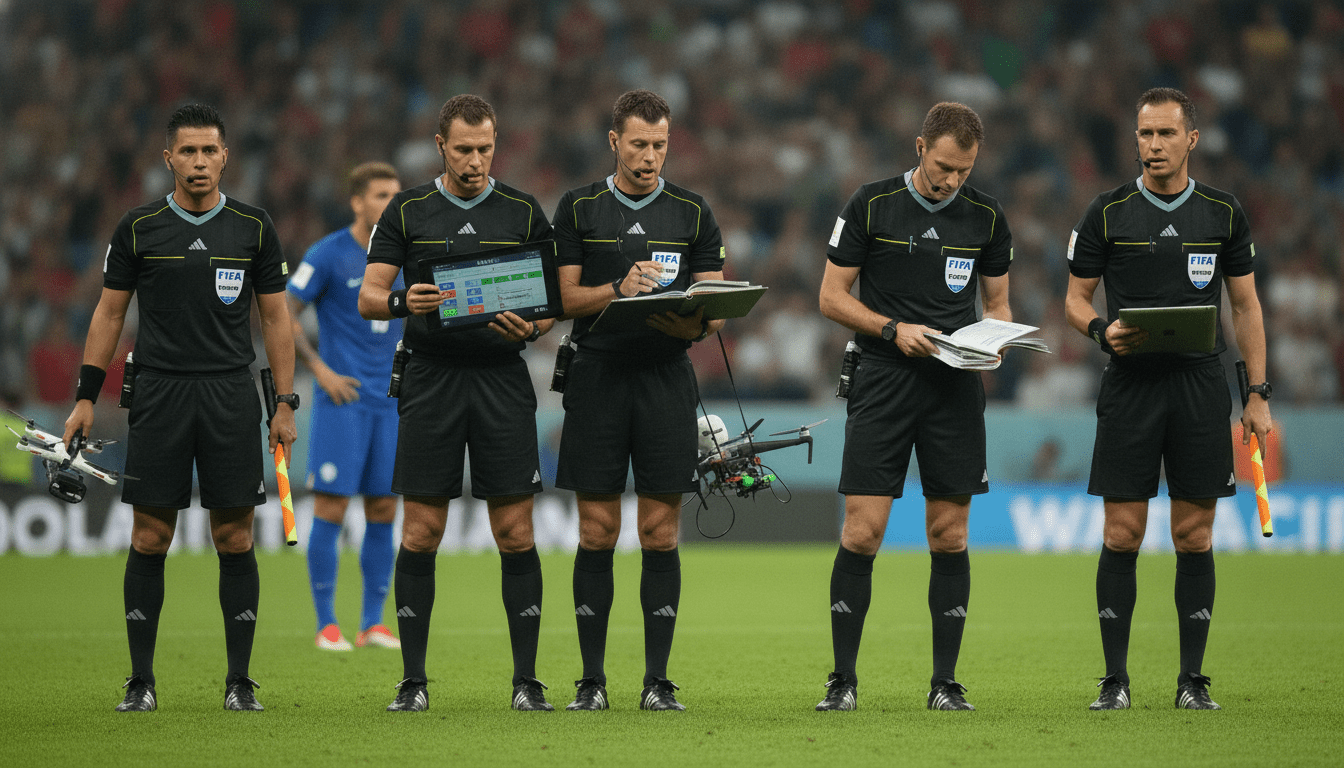
FIFA World Cup referees face growing burden as duties expand
FIFA World Cup referees face an expanding set of responsibilities that could weaken on-field authority and disrupt match flow, prompting debate among officials ahead of major tournaments.
The FIFA World Cup referees system has increasingly placed new tasks on match officials, a trend that observers say is changing how games are managed on the field. Competition organizers have layered additional protocols, technology interactions, and reporting duties onto referees already under intense scrutiny. Critics argue this accumulation of duties risks eroding referee authority and altering the rhythm of play at the highest level.
FIFA Expands Referee Responsibilities
FIFA has introduced measures over successive tournaments that require referees to manage more than immediate in-play decisions. These include enhanced pre-match protocols, expanded collaboration with the VAR team, and more post-match administrative reporting. Each added requirement raises the complexity of the role and increases the cognitive load on officials during games.
On-Field Authority Diminished
As referees are asked to perform a wider array of non-decision tasks, their position as the primary arbiter of the match can become blurred. Players and coaches may perceive officials as administrators rather than decisive leaders, which can undermine compliance with on-field rulings. That shift risks making it harder for referees to control games, particularly in tense or closely contested matches.
Decision Overload and Match Flow
The introduction of more procedures and technology checks has slowed some phases of play and interrupted momentum. Referees now balance split-second judgments with the need to consult off-field teams or follow multilayered protocols, which can extend stoppages and complicate game management. Match delegates and organizers must weigh whether the marginal benefits of additional oversight outweigh the costs to flow and spectator experience.
Referees and Officials Voice Concerns
Many match officials have privately and publicly signaled frustration with the cumulative demands placed on them. Referees cite longer preparation times, increased paperwork, and the psychological strain of being the focal point for multiple oversight channels. Officials’ associations and veteran referees have recommended clearer role definitions and limits on tasks that distract from live decision-making.
Impact on Game Integrity and Perception
When referees are seen primarily as conveyors of regulations rather than authoritative leaders, the perception of fairness can suffer. Fans and participants may question whether decisions are being made on the pitch or processed through a bureaucratic system, eroding trust in officiating. Maintaining the integrity of the match requires balancing oversight mechanisms with the need to preserve confident, immediate arbitration.
Operational Solutions Under Discussion
Proposals under consideration include redistributing administrative duties away from on-field referees, streamlining VAR interactions, and limiting the number of non-urgent protocols during play. Some stakeholders suggest reinforcing the match-day team with dedicated liaisons who handle documentation and off-field coordination. Others favor enhanced training and clearer lines of responsibility to enable referees to focus on live calls.
The debate about the role of FIFA World Cup referees reflects a broader tension in modern sport between technological oversight and the human authority that governs play. Finding an equilibrium will be crucial to ensure matches remain decisive, fair, and engaging for players and audiences alike.
