
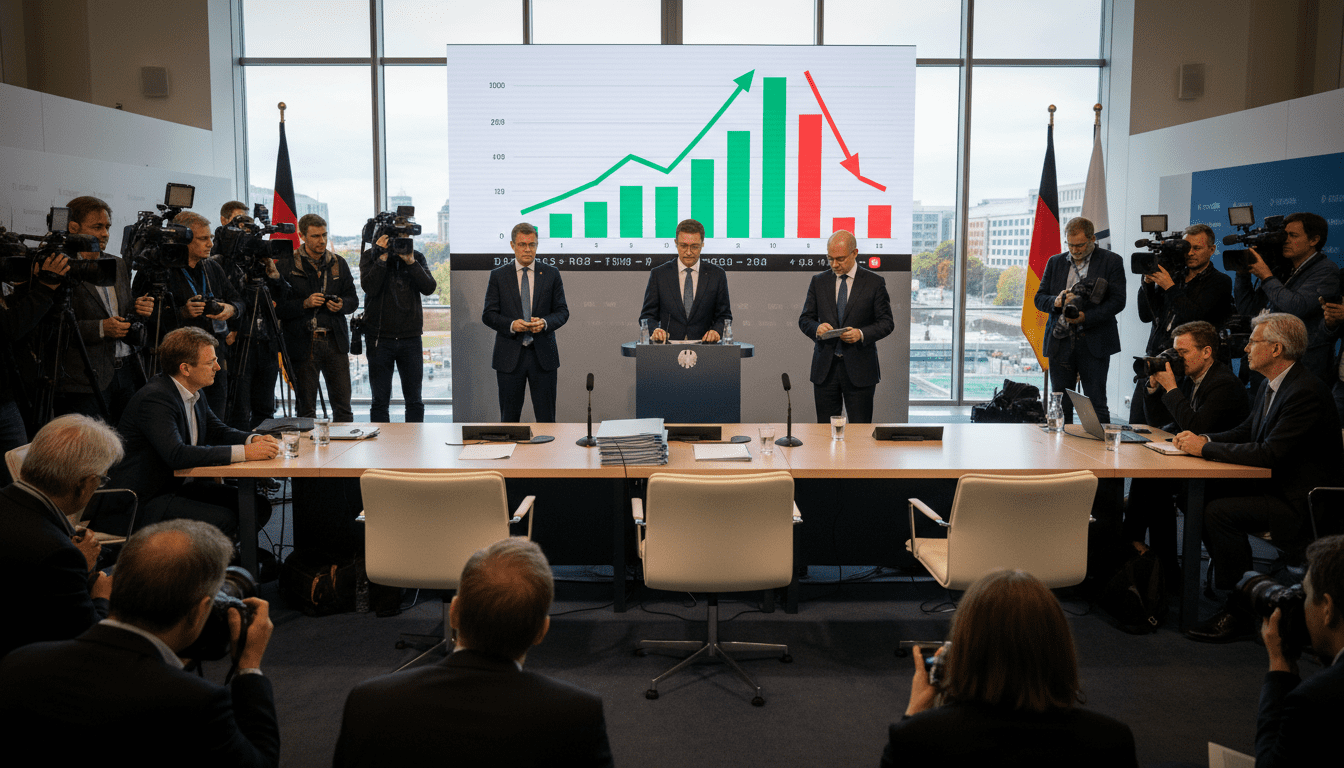
German economy posts 0.3% Q1 growth but outlook clouded by Iran war risks
German economy posts 0.3% quarter-on-quarter growth in Q1, but rising oil prices and supply uncertainty from the Iran war threaten momentum; orders spiked as firms stocked up.
The German economy recorded a surprising 0.3 percent expansion in the first quarter, offering a modest reprieve after months of weak activity. Policymakers and economists welcomed the result as a potential base for the year’s modest growth forecast, even as geopolitical tensions in the Middle East quickly altered the outlook. Rising fuel costs, supply-chain jitters and sharply softer business sentiment now point to a risk of contraction in the second quarter. Analysts warn that the early gains may be temporary if the situation at the Strait of Hormuz and oil markets remain volatile.
Q1 GDP surprise and immediate caveats
The 0.3 percent quarter-on-quarter increase in GDP contrasts with the prolonged malaise that preceded it and has been described by some analysts as “the calm before the storm.” Commerzbank’s chief economist Jörg Krämer and other observers emphasize that the number is small but meaningful for a crisis-hit economy. Official data show that gains in demand were uneven across sectors, and most forecasters expect the Iran conflict to weigh on growth in April through June. The headline figure thus holds promise only so long as energy and transport routes stabilize.
Manufacturing output reverses earlier uptick
Industrial production, which briefly revived between August and November last year, has slipped back into decline, falling for four consecutive months into March. Manufacturing output dropped 0.9 percent in March compared with February and was 1.4 percent below the fourth quarter of 2025 on a quarterly basis. Investment goods were especially weak, with a 2.2 percent quarterly decline, underlining ongoing weakness in capital spending. The downturn in production suggests that the sector remains vulnerable to both demand shortfalls and supply disruptions.
March order surge tied to precautionary stocking
Contrasting with weak output, order intake surged by 5 percent in March versus February, a rebound that industry analysts attribute to precautionary purchasing ahead of expected price rises and delivery delays. The rise was broad-based, affecting intermediate and consumer goods orders rather than being driven by a handful of large contracts. Officials at the economy ministry and some economists interpret the spike as short-term inventory rebuilding rather than a durable recovery in demand. If tensions ease, orders are likely to normalize; if not, firms may face higher costs that erode margins.
Trade flows and transport indicators show strain
External trade data for March painted a mixed picture: nominal exports rose modestly while imports jumped sharply, narrowing the trade surplus after price effects are accounted for. The truck-toll activity index fell 0.7 percent in April compared with the previous month, signaling weaker freight movement on highways and pointing to subdued industrial activity. These transport and trade indicators are consistent with a softening cycle in manufacturing and logistics that predates the recent geopolitical shock. Persistent disruptions in shipping lanes or sustained high energy prices would amplify the downward pressure on trade.
Construction output and investment remain muted
Construction activity did not provide a counterweight to manufacturing weakness, with real production in the sector down 1.8 percent in the first quarter versus the prior quarter. Despite sizable public infrastructure spending commitments, the data show stabilization rather than a clear upswing in building work. The muted performance in construction and investments signals that domestic demand has yet to strengthen sufficiently to offset export and industrial headwinds. Policymakers face limits in quickly translating spending pledges into broad-based growth amid rising costs.
Sentiment indicators deteriorate sharply
Survey data from businesses and consumers reveal a pronounced deterioration in mood since the outbreak of the Iran war more than two months ago. Service-sector firms report weaker activity and darker expectations, while consumer confidence has fallen as inflationary pressures persist; headline inflation accelerated to 2.9 percent in April. The Ifo employment expectations barometer slipped to 91.3 points in April, its lowest since May 2020, reflecting growing worries about layoffs and labor-market risks. Financial-market and expert surveys, including those by ZEW, show rising skepticism about near-term prospects.
The coming weeks will determine whether the modest growth recorded in Q1 marks a turning point or merely a temporary fluctuation. If the Strait of Hormuz remains blocked and oil prices hold near or above $100 a barrel, the probability of a recessionary return will rise and revisions to this year’s growth forecasts are likely. Conversely, an easing of tensions and a normalization of logistics could allow the smaller Q1 gain to underpin a mildly positive year for the economy.
Looking ahead, attention will focus on second-quarter data for production, trade and consumption, and on whether inflation and labor-market signals stabilize. For now, policymakers and businesses must balance contingency planning against the hope that the spring uptick will not be overtaken by geopolitical and energy shocks.
