
Germany Economic Meeting Ends with Cross-Sector Agreement on Mounting Challenges
Germany economic meeting ends with business, unions and coalition leaders agreeing the country faces major challenges, officials said after Wednesday talks.
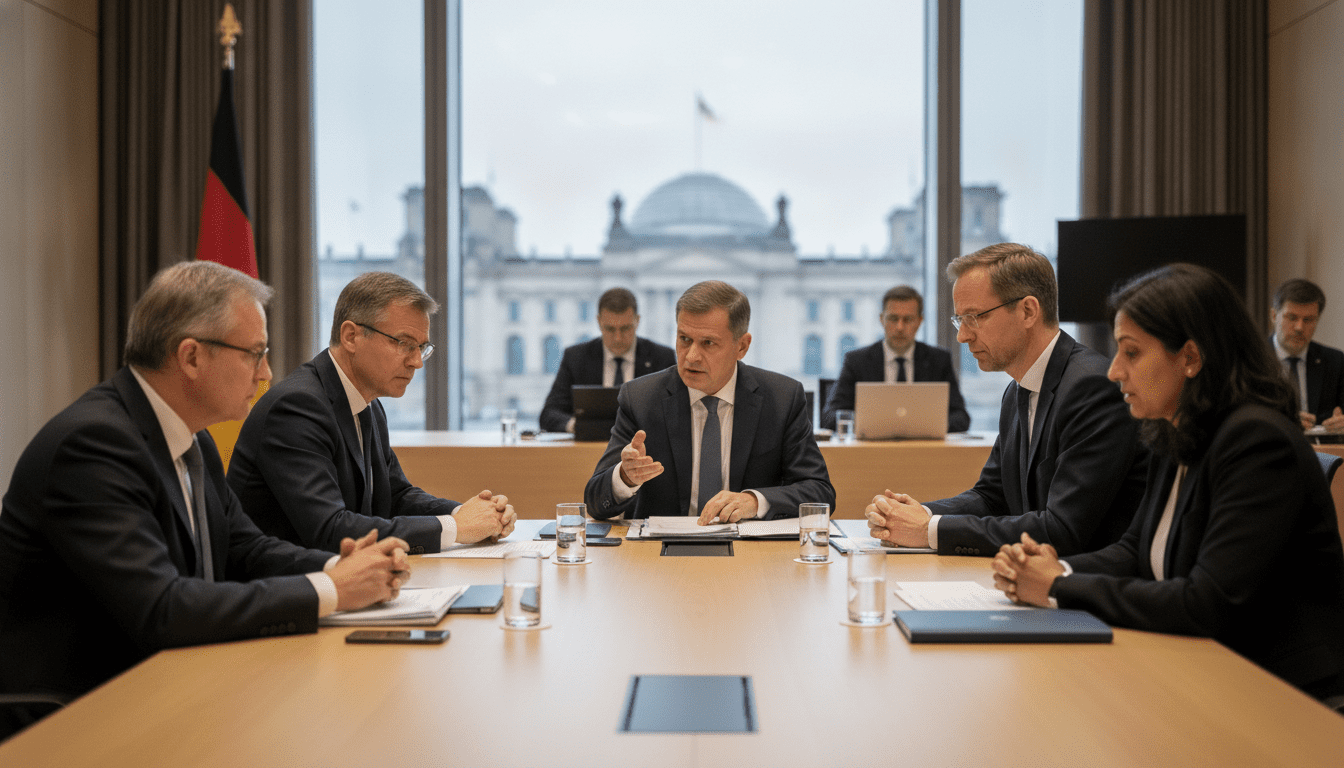
The Germany economic meeting that brought industry, labor unions and senior coalition officials together concluded with an unusually concise joint statement acknowledging significant economic headwinds. Government spokesperson Stefan Kornelius said participants agreed that the country’s economic position faces major challenges after the late Wednesday session. The terse communiqué followed a period of visible public disagreement and heightened expectations ahead of the talks.
Outcome of Wednesday’s Meeting
A brief joint message was the only public product of several hours of discussions, signaling limited consensus on concrete policy measures. Attendees presented a shared diagnosis of structural pressures but stopped short of announcing new, binding commitments. The statement’s narrow language reflected both the diversity of views around the table and an apparent desire to avoid fracturing the fragile political consensus.
Participants included representatives from major industry associations, union leaders and the coalition’s top figures, according to the statement circulated after the meeting. All sides reportedly emphasized the need to protect Germany’s competitiveness, but disagreements over sequencing and specifics of reforms appeared to constrain the final text. Observers noted that reaching any joint phrasing was treated as an operational success given the contentious public debate beforehand.
Points of Agreement Highlighted by Officials
Officials said there was unanimity that Germany faces economic challenges that require attention from government, employers and labor alike. The joint language focused on shared concern rather than detailed policy, reflecting common ground on the scale of the problem rather than on solutions. That approach allows each participant to signal cooperation while preserving flexibility on the policy pathways they favor.
The modest joint wording also aimed to calm markets and public opinion by demonstrating dialogue among the country’s major economic stakeholders. By agreeing on a diagnosis, the groups set the stage for further negotiation without committing to specific fiscal or regulatory measures. Analysts said that establishing consensus on the existence of problems is often a necessary precursor to negotiating concrete responses.
Industry and Unions’ Divergent Priorities
Business leaders attending the meeting pressed for reforms to boost investment, regulatory clarity and competitiveness, while union representatives emphasized protecting jobs, wages and social stability. Those contrasting priorities help explain why the final statement remained limited to generalities. Sources familiar with the talks described detailed debates over labor-market adjustments and investment incentives that did not translate into a common program.
Union officials reportedly warned that any rapid push toward deregulation could deepen social tensions, whereas industry voices cautioned that prolonged uncertainty would further weaken investment decisions. The coalition’s leaders found themselves mediating these competing pressures while trying to preserve political unity ahead of an uncertain economic outlook. The result was a cautious communiqué designed to acknowledge concerns without inflaming intra-government or industrial conflict.
Coalition Leaders’ Calculations and Political Constraints
For coalition leaders, the meeting served both a policy and a political purpose: to demonstrate engagement across societal pillars while managing intra-coalition differences. The restraint shown in the public message suggests political calculus that prioritizes cohesion over headline-grabbing reforms. Officials appear to have opted for a staged approach, keeping the door open to follow-up processes rather than locking in specific commitments on the spot.
The brief outcome can also be read as a signal that any major policy shifts will require further negotiation and preparation. Coalition figures must balance demands for structural change with the short-term political cost of domestic backlash. As a result, observers expect future sessions will focus on translating the agreed diagnosis into a workable timetable for measures that could win broader acceptance.
Next Steps and Possible Follow-Up Mechanisms
Participants indicated they would continue talks to turn shared concerns into actionable steps, though no immediate timeline was provided in the statement. Potential follow-up could include expert working groups, targeted committees, or sector-specific negotiation tracks designed to bridge differences between employers and unions. The choice of mechanism will determine how quickly any agreed measures can be developed and implemented.
Observers said the next phase will be decisive in assessing whether the meeting was a meaningful starting point or merely a symbolic exercise. Effective follow-up would require clear mandates, measurable targets and a willingness from all parties to compromise. Without such structures, the initial consensus on the scale of the challenge risks becoming the only substantive outcome.
The concise joint statement after the Germany economic meeting underscores both the urgency recognized by diverse actors and the complexity of forging shared policy responses. The real test will be whether subsequent rounds of dialogue produce concrete plans that can withstand political and economic scrutiny.
