
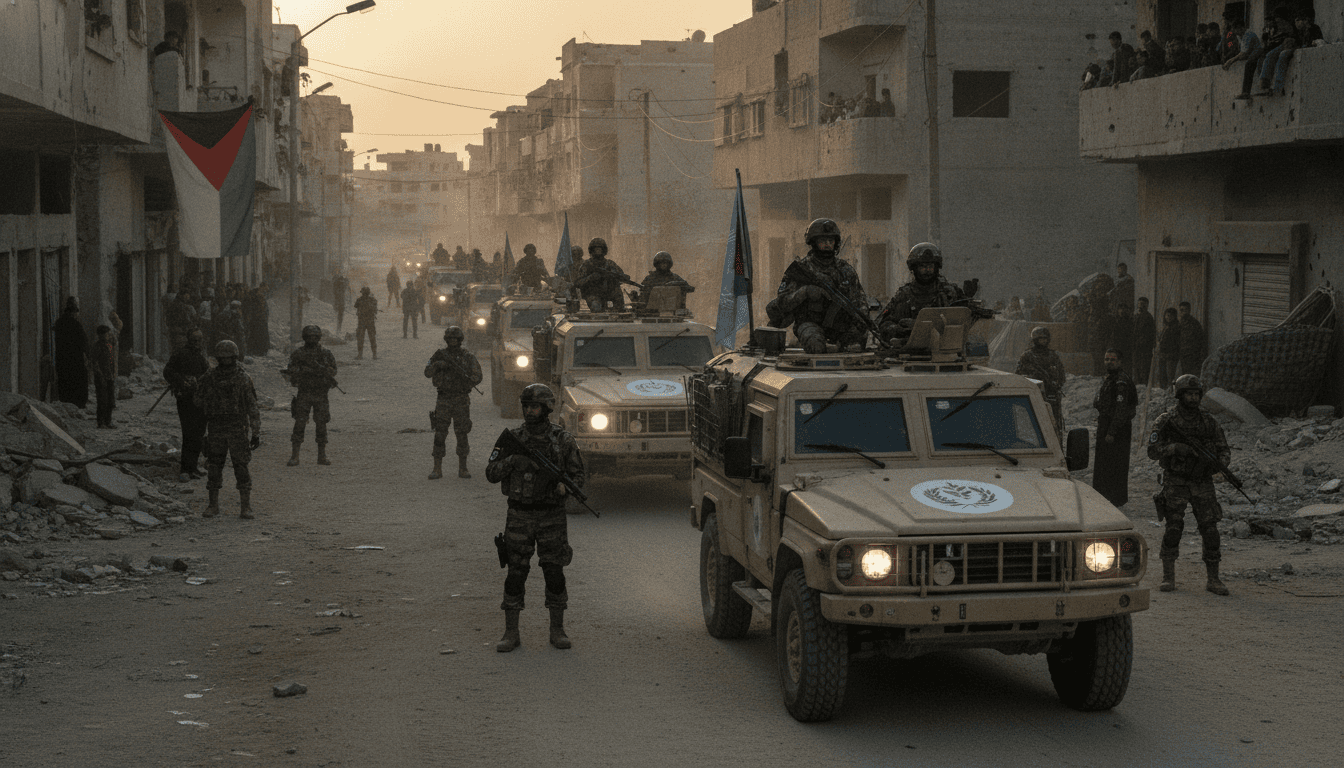
Israel’s Security Cabinet Approves Limited Entry of International Security Force for Gaza
Israel’s security cabinet approved on Sunday allowing a US‑backed international security force for Gaza to enter parts of the enclave that are not under Israeli control, an Israeli official said, marking a key step toward implementing the October plan. (streetinsider.com)
Security Cabinet Decision and Scope
The security cabinet’s vote authorizes the proposed International Security Force to operate in zones of Gaza that Israeli forces say are no longer under their direct control. The approval is limited and does not amount to an immediate deployment of foreign troops, according to Israeli officials. (timesofisrael.com)
The government described the step as a legal and political framework to permit future entry under strict conditions, rather than an automatic green light for units to cross into the strip. Senior ministers retained final say on which contingents, if any, will actually enter Gaza and when that would occur.
Conditions and Approval Process
Israeli officials said entry of any personnel will remain subject to further sign‑offs by the prime minister, defense minister and foreign minister, signaling continuing operational control over timing and placement. The cabinet also discussed vetting procedures, logistics and arrangements to prevent weapons flows or interference with Israeli security operations. (timesofisrael.com)
The decision includes provisions for coordination on humanitarian logistics and limitations on where international forces may be stationed, reflecting concerns about chain of command, intelligence sharing and the protection of Israeli citizens. Ministers opposing immediate deployment argued for tighter safeguards and clearer mandates before any foreign boots are committed.
US‑Backed October Plan That Envisions the Force
The International Security Force is part of a wider US‑backed plan unveiled in October to stabilize Gaza, reconstitute local civil services and help transition security responsibilities to vetted Palestinian forces. The proposal, presented at an international summit, envisaged a multinational stabilization force working alongside humanitarian and administrative pilots in the south of Gaza. (theguardian.com)
Planners have described the initial phase as a limited pilot intended to test arrangements for policing, aid distribution and administration before any broader roll‑out. That staged approach aims to reduce immediate friction while proving the concept to skeptical regional and domestic audiences.
Potential Contributors and Force Size
Several countries have been mentioned as possible contributors to the international security force, though formal commitments remain tentative and contingent on political approvals at home. Indonesia and a handful of other states have expressed readiness to participate in some form, highlighting the multinational character of the envisioned force. (apnews.com)
Israeli reports have suggested that early contributions would likely be modest in size — conceived as highly vetted and narrowly tasked units rather than a large-scale peacekeeping brigade. Donor and troop‑contributing nations are expected to negotiate specific mandates, rules of engagement and legal protections before any deployments.
Operational and Humanitarian Implications
Supporters of the plan say a limited international security presence could facilitate safer aid corridors, help restore basic services and provide a mechanism to monitor ceasefire lines without requiring long-term Israeli occupation. Opponents warn that any foreign presence risks escalation if its role overlaps with ongoing Israeli security operations or if command relationships are not crystal clear. (apnews.com)
Humanitarian agencies have argued that a reliable, visible security framework could speed delivery of food, medicine and shelter to hundreds of thousands of displaced civilians, but they also stress that aid must not be used for military ends. The debate underscores the tension between immediate relief needs and longer‑term political solutions for governance in Gaza.
Political Obstacles and Timeline
The cabinet’s move is likely to intensify political debate at home and abroad, as coalition partners and opposition figures weigh national security concerns against diplomatic pressures. Any broader implementation will depend on additional legal approvals, host‑country arrangements, and the willingness of troop‑contributing nations to accept the force’s mandate and constraints. (timesofisrael.com)
Analysts caution that a full‑scale international presence remains months away at best, with pilot projects and limited forward steps expected first. Domestic political calendars, regional sensitivities and the need for guarantees on hostages, border crossings and deconfliction mechanisms make swift deployment unlikely.
The security cabinet’s decision represents a measured step toward an international role in Gaza, but substantial legal, operational and political hurdles remain before multinational forces can be fielded at scale.
