
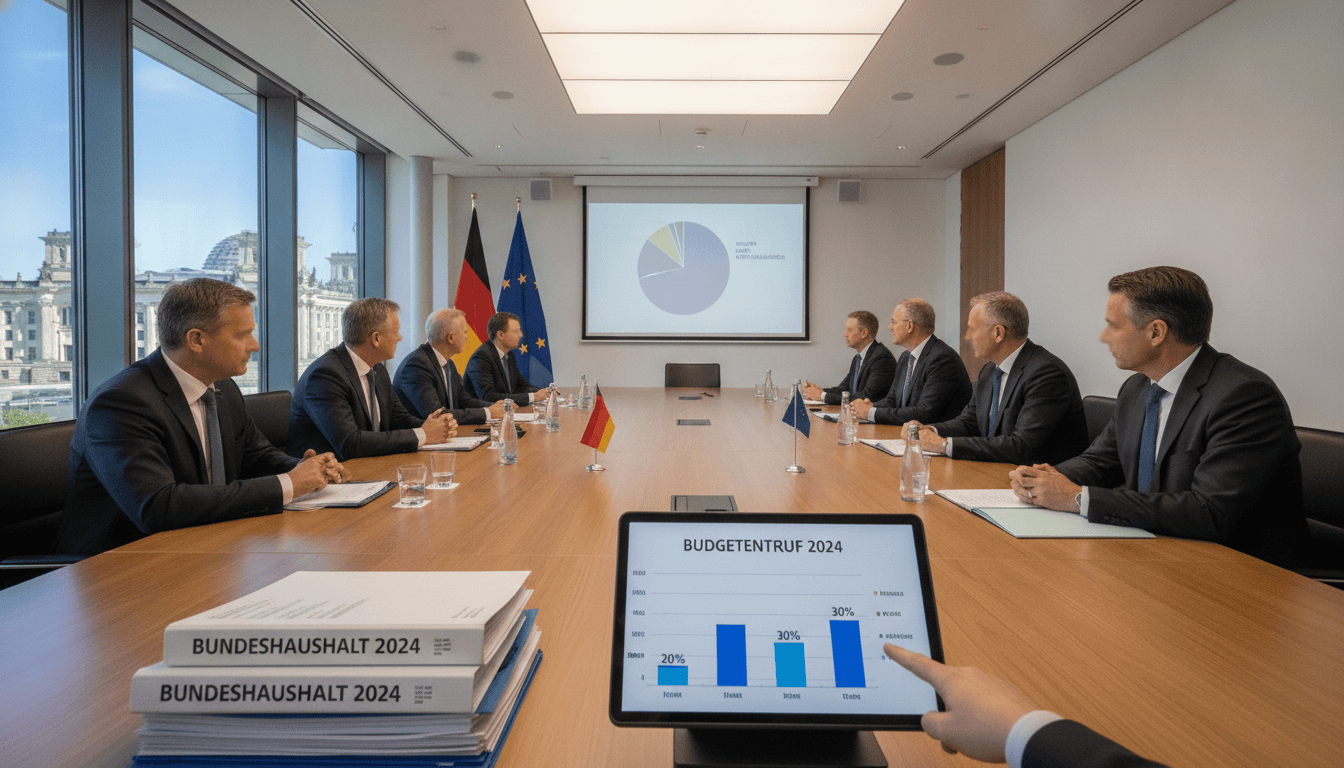
German federal budget draft directs nearly one-third of spending to military buildup
German federal budget draft allocates €607 billion to defence over four years; 2030 military spending would reach €183 billion—about 30% of total outlays.
The German federal budget draft unveiled by Finance Minister Lars Klingbeil channels an unprecedented share of public resources into defence, proposing €607 billion for the armed forces over the next four years. The plan would raise military spending in 2030 to approximately €183 billion, equal to roughly 30 percent of the projected federal budget, and sets the stage for heated debates over social priorities and public finances. The draft signals a clear shift in fiscal priorities that will shape Germany’s spending profile through the end of the decade.
Klingbeil’s budget prioritises defence
The budget document from the finance ministry frames the boost in defence outlays as a strategic response to evolving security pressures and alliance commitments. It shows consolidated figures that allocate the bulk of new discretionary spending to procurement, infrastructure and sustained operations for the Bundeswehr. Officials present the draft as a deliberate reorientation of the German federal budget toward preparedness and capability rebuilding.
Planned defence spending by 2030
Under the draft, annual defence spending would climb year by year, culminating in the €183 billion figure in 2030 against a total federal outlay of about €635 billion. The four-year envelope of €607 billion is concentrated on capital acquisition, systems modernization and expanding personnel capacity. Those numbers would make military outlays one of the single largest spending blocks in the German federal budget.
Social programmes and interest costs face cuts
The draft pairs higher defence spending with scale-backs in other areas and tighter fiscal room for new social measures, according to the ministry’s projections. Lawmakers and municipal authorities are warned that entitlements and services such as housing, education and local investments could face constrained budgets as resources are diverted. Rising interest costs on public debt are also singled out as a compounding pressure, with part of the package devoted to meeting borrowing costs rather than frontline services.
Financing strategy and debt implications
Finance ministry documents indicate the defence surge will be financed through a mix of reallocated appropriations, dedicated borrowing and longer-term fiscal adjustments. The plan effectively raises the projected cumulative borrowing need for the coming budget cycle and gives the ministry a record-level debt task to manage. Analysts say the financing choices will determine whether the defence build-up is sustainable without chronic cuts to other priorities.
Political reaction and parliamentary prospects
The draft has already provoked responses across the political spectrum, with opposition parties criticising the speed and scale of the shift and some coalition partners stressing the need to protect social spending. Parliament will now begin committee scrutiny followed by plenary debates, where amendments and trade-offs are likely. The timetable foresees further negotiation over the summer and autumn as legislators weigh the fiscal trade-offs implied by the German federal budget draft.
Public debate and economic trade-offs
Public advocacy groups and labour organisations have framed the proposal as a classic “guns versus social services” dilemma, warning that households and vulnerable groups could bear the cost of rearmament. Business and defence industry voices, by contrast, point to procurement contracts and industrial investment that could support employment and innovation. Economists caution that shifting a large share of the German federal budget toward defence could crowd out private and public investment elsewhere unless balanced by revenue measures or efficiency gains.
Germany’s role in European and transatlantic security discussions is likely to inform parliamentary bargaining, but the fiscal picture will be decisive in shaping final outcomes. The draft offers a clear fiscal signal: defence is a centerpiece of the next multi-year budget cycle, and that choice will determine the shape of domestic policy.
The government will present the draft to parliament, where committee reviews and cross-party talks will test whether the proposed allocations can be reconciled with social priorities and long-term fiscal stability.
