
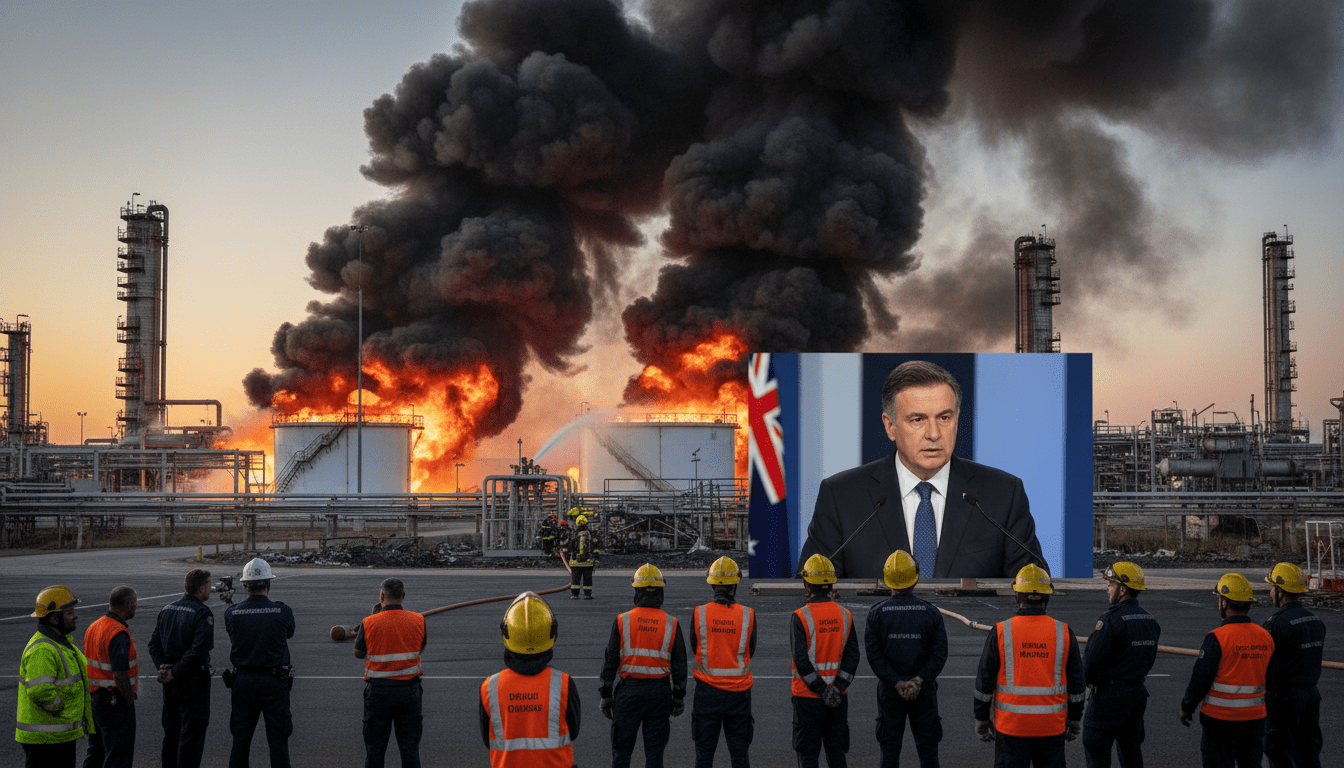
Australia fuel shortage deepens after Geelong refinery fire
Geelong refinery blaze slashed domestic output and forced PM Albanese to return as Australia faces fuel shortages, tax cuts and rising political pressure.
Australia is confronting a widening fuel shortage after a major blaze at the Geelong refinery, a disruption that has cut petrol output and forced Prime Minister Anthony Albanese to abandon an overseas trip to manage the crisis. The Geelong fire, which burned for roughly 13 hours before crews brought it under control, knocked one of the country’s two remaining large refining hubs offline and reduced petrol production by about 40 percent. The incident has exposed how dependent Australia’s domestic fuel supply is on a shrinking refining sector and on imported refining capacity in Asia, intensifying an already fraught energy security debate.
Geelong Refinery Blaze Cuts Output
The fire at the Geelong complex damaged distillation units and halted several production lines, officials said, and operators are racing to restore full capacity while assessing longer-term damage. Company statements indicate diesel and jet-fuel output has returned to roughly 80 percent of pre-fire levels, but petrol production remains sharply constrained and distribution bottlenecks are emerging across multiple states. With one of only two major domestic refineries affected, wholesalers and retailers are recalibrating supply plans and some service stations report intermittent outages.
Prime Minister Returns Amid Supply Disruption
Mr. Albanese cut short a diplomatic visit to Brunei, where he had been negotiating additional fuel shipments, and returned to Australia as the crisis unfolded, telling cameras that the government would seek urgent overseas supplies. The government has tasked domestic refiners, including owners of the Geelong site, to source crude and refined product on global markets, with Canberra signalling it may underwrite losses or provide financial support to secure emergency imports. The move has raised questions about how quickly international shipments can be rerouted and how long the shortfall will last as port schedules, shipping availability and refinery turnarounds are coordinated.
Heavy Reliance on Imported Refining Capacity
Australia now imports the vast majority of crude and relies heavily on refineries in Singapore, South Korea and Malaysia to process oil into petrol, diesel and jet fuel, a shift that has left domestic supply chains vulnerable to regional disruptions. Once home to multiple refineries, the country’s onshore refining footprint has shrunk dramatically since 2010, leaving only small-scale processing near Brisbane and the Geelong plant to handle local demand. That reliance on large, highly efficient Asian refining hubs—some facilities on Jurong Island process many times Geelong’s throughput—meant that when shipping routes were affected by tensions in the Middle East, the margin for error here narrowed sharply.
Emergency Fiscal Measures and Costs
To blunt the shock at the pumps the federal government halved the fuel excise at the start of the month to 26.3 cents per litre and temporarily waived a heavy vehicle road-user charge, measures designed to curb retail prices and ease business costs. Those relief steps are politically popular but expensive: Canberra estimates the three-month package will cost taxpayers in the order of billions of dollars and will only soften, not remove, underlying supply constraints. Analysts warn that while tax cuts lower consumer pain, they do not increase physical volumes of petrol and diesel available in the short term, leaving import logistics as the decisive factor.
Impact on Transport, Mining and Rural Australia
Long distances, extensive road freight and heavy use of diesel in mining and agriculture make Australia especially sensitive to fuel disruptions, and regional communities face the prospect of sharper local dislocations if deliveries falter. Trucking firms and mine operators already flagged concerns about higher operating costs and potential delays in output should shortages persist, and retailers in remote areas warn that intermittent supply could disrupt food and goods movement. For an economy that exports large volumes of iron ore and liquefied gas, constrained domestic fuel supplies add an awkward immediacy to logistics planning and contingency measures.
Political Debate Over Energy Transition Intensifies
The Geelong incident has sharpened a broader political fight over Australia’s energy transition, with critics arguing that the retrenchment of domestic refining and rapid moves toward renewables have weakened short-term resilience. Conservative commentators seized on the fuel squeeze to question investment choices and fiscal priorities, while proponents of the net-zero agenda and renewables defenders say the crisis underlines the need for diversified, resilient systems that include domestic capacity and strategic fuel reserves. Energy ministerial trips to international climate forums have been postponed as ministers focus on stabilising supplies, underscoring how a single industrial accident can quickly become a test of national energy policy.
The coming days will determine whether temporary imports and refinery repairs are sufficient to avoid sustained rationing at service stations and costly disruptions to industry, and the government faces mounting pressure to lay out both immediate logistics plans and longer-term steps to reduce vulnerability. Australia’s fuel shortage has transitioned from a local refinery emergency to a national policy challenge, forcing decisions that will shape the country’s energy security and industrial strategy well beyond the current crisis.
