
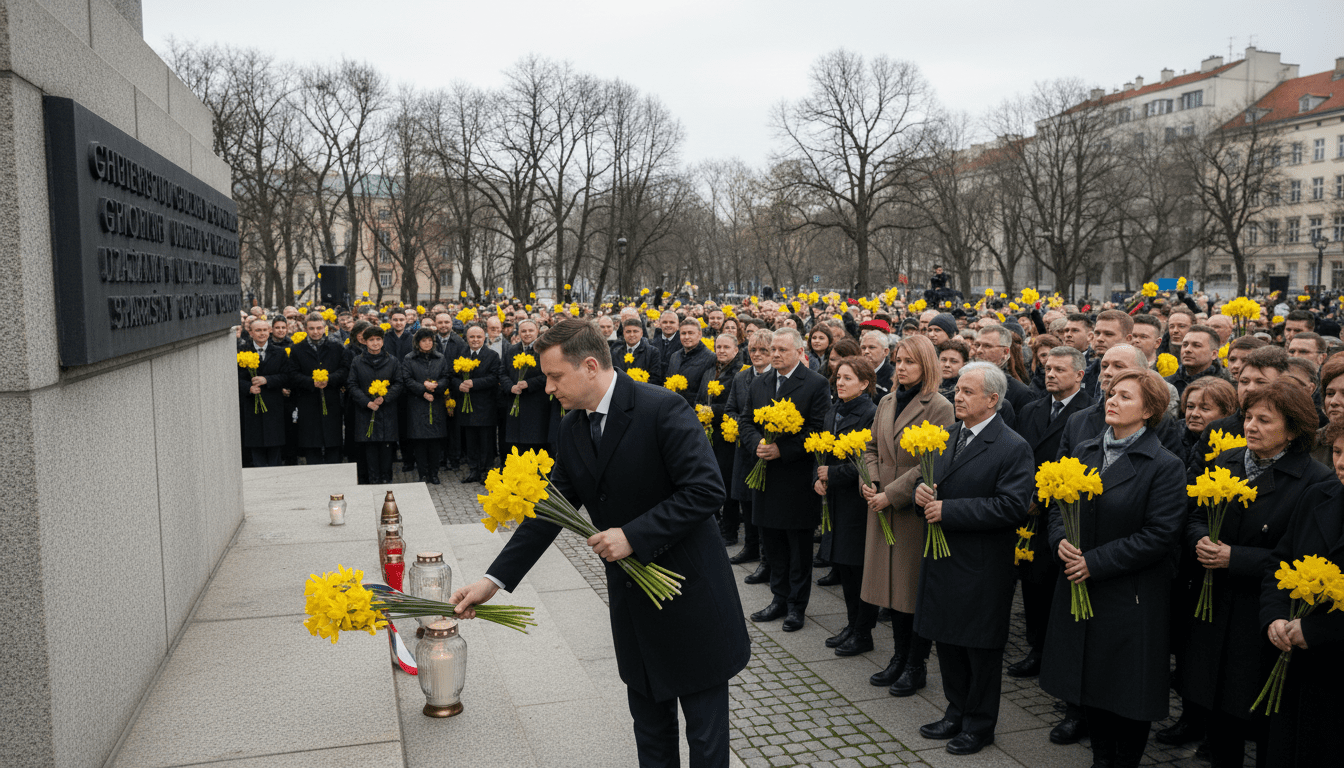
Warsaw Daffodils Bloom as City Remembers April 19, 1943 Uprising
Volunteers in the Polish capital pin yellow daffodils and hand out paper blooms marked 19 April 1943 to commemorate the start of the Warsaw Ghetto Uprising.
On Sunday, Warsaw daffodils appeared on coats and handbags across the city as volunteers handed out yellow paper flowers stamped with the date 19 April 1943. The simple blooms are a visible symbol of remembrance for the Jewish residents and fighters who rose against Nazi forces in the Warsaw Ghetto. Volunteers said the act of pinning a daffodil is intended to keep the memory of the uprising alive in public view.
Daffodils as a Symbol of Defiance
The yellow daffodil has become a widely recognized emblem of the Warsaw Ghetto Uprising and Jewish resistance in the city. Its bright color and modest form serve as a public, portable marker of commemoration that is easy for residents and visitors to wear.
Organizers and community groups choose the daffodil for its accessibility and visual impact, noting that a single paper flower pinned to a coat can prompt questions and conversation. The image of the bloom links contemporary acts of memory to the historical date printed on each petal.
Volunteers Hand Out Paper Flowers Across the City
Young volunteers circulated through markets, tram stops and public squares, affixing paper daffodils to clothing and distributing extras to passersby. The flowers bore the printed date “19 April 1943,” a reminder that the commemorative act points to a specific historical event.
Distributors described their work as both practical and symbolic: they sought to increase public awareness while creating a visible day of remembrance. Small volunteer teams coordinated routes to maximize coverage throughout central neighborhoods.
The Uprising That Began on 19 April 1943
The date on the daffodils marks the outbreak of the Warsaw Ghetto Uprising, when Jewish residents and resistance fighters launched an armed revolt against the German occupation. Fighters had secretly stockpiled weapons and explosives despite knowing their chances were small, choosing resistance over deportation and certain death.
Although the uprising was ultimately suppressed, historians and commemorative efforts emphasize the significance of the revolt as an act of agency and human dignity. Annual remembrances such as the daffodil distribution underscore the uprising’s place in both Polish and Jewish historical memory.
Municipal and Community Observances
City institutions, cultural organizations and grassroots groups typically stage ceremonies, educational programs and moments of silence around the anniversary each year. Public officials, religious leaders and representatives of Holocaust remembrance organizations often participate in formal events that accompany grassroots activities like the daffodil distribution.
In recent years, municipal signage, exhibitions and guided walks through historic sites of the ghetto have complemented the wearable symbols. Officials say such a mix of formal and informal observance helps reach a broader audience and supports ongoing public engagement.
Education, Memory Projects and Youth Involvement
Schools and youth organizations frequently use the anniversary to teach about the wartime history of Warsaw and the mechanics of resistance. Educational projects tie classroom lessons to public acts of remembrance, encouraging younger generations to ask questions and preserve testimonies.
Volunteer involvement, particularly by younger people, is a deliberate strategy to pass historical knowledge forward. By handing out daffodils and explaining their meaning, volunteers translate archival facts into a living act of civic memory.
The yellow daffodils in Warsaw are both a quiet tribute and a prompt for public conversation, linking everyday life to a pivotal moment on 19 April 1943. Wearing the paper bloom connects individuals to a shared act of remembrance and to the larger effort to keep the history of the Warsaw Ghetto Uprising present in the city’s public life.
