
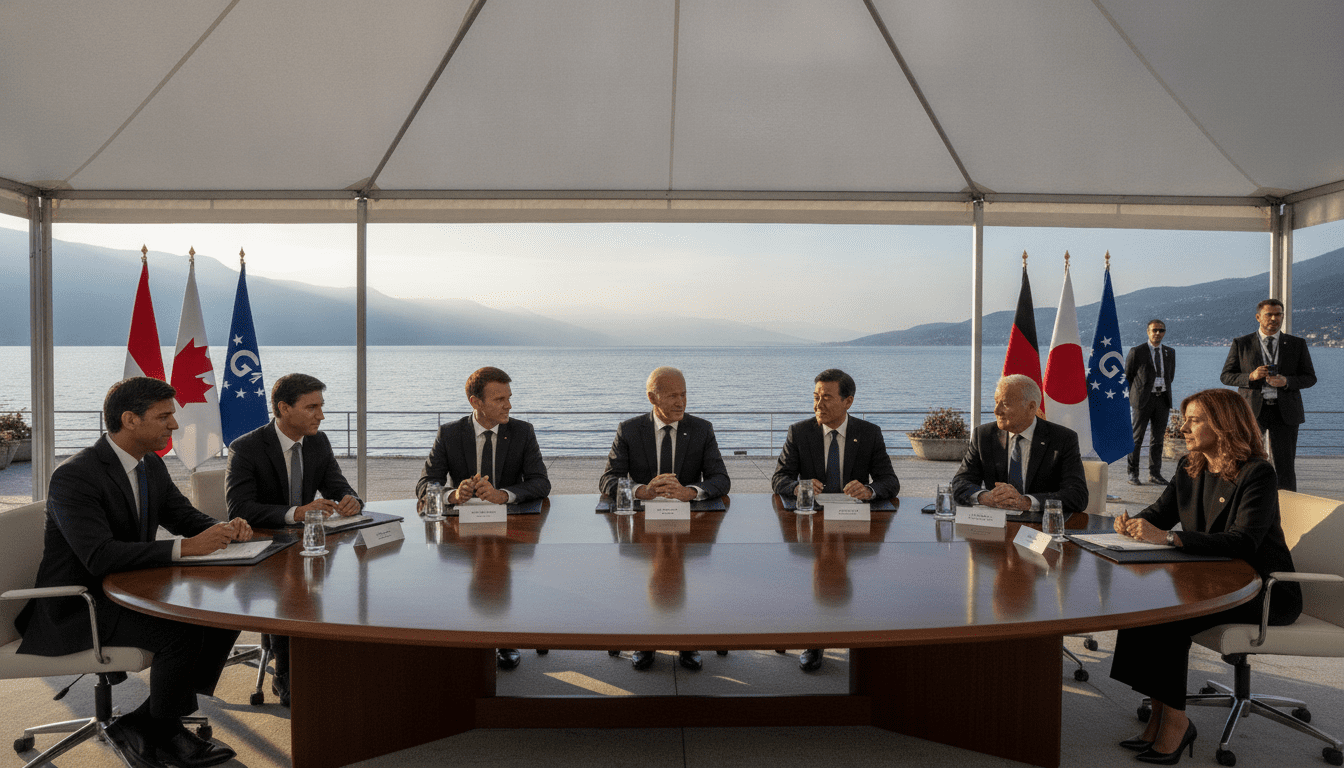
G7 summit in Évian ends with firm Ukraine support, tougher Russia sanctions and a leaked US‑Iran memorandum
At the G7 summit in Évian, leaders pledged firm support for Ukraine, agreed to tougher Russia sanctions and confronted fallout from an apparent leak of a US‑Iran memorandum. The summit produced commitments on military aid, diplomatic coordination and a mixed reception to a proposed Iran deal, while several unrelated international and domestic incidents added pressure on participants. Delegations left Évian with both concrete declarations and unresolved questions for coming weeks.
G7 leaders commit ‘unwavering’ support for Ukraine
G7 leaders issued a unified statement promising continued political and military support to Kyiv, emphasizing deterrence and assistance to sustain Ukrainian defenses. The communique included language about stepped-up weapons deliveries and tools to further isolate Moscow economically.
Officials framed the support as long-term and conditional on continued Ukrainian resistance and adherence to international law, with a view to both immediate battlefield needs and broader reconstruction planning. The pledge is likely to shape allied assistance packages in the coming months.
Leaked US‑Iran memorandum dominates headlines
A document widely circulated in media ahead of the summit indicated an impending memorandum of understanding between the United States and Iran, reportedly aimed at ending active hostilities and reopening the Strait of Hormuz. According to the leak, key disagreements over Iran’s nuclear program would be deferred and negotiated within 60 days after any signature.
The leak drew mixed responses from G7 capitals, complicating diplomatic messaging at Évian and prompting calls for clarification from Washington and Tehran. Diplomats cautioned that a preliminary memorandum would require careful legal and parliamentary review in several countries before being implemented.
Sanctions and arms pledges take center stage
Participants at Évian agreed to intensify economic pressure on Russia, signaling further targeted sanctions designed to limit Moscow’s military-industrial capacity and revenue streams. The package outlined measures to tighten existing restrictions and close gaps exploited by third-party intermediaries.
On military support, allies committed to expedited transfers of equipment and logistical aid to Ukraine, with an emphasis on interoperability and sustained supply chains. Summit officials stressed that delivery timelines and exact inventories would be managed through existing allied coordination mechanisms.
German role highlighted as Merz discusses mandate
German Chancellor Christian Merz used the summit platform to underscore Berlin’s alignment with allied positions, praising the common language on foreign policy and security. He also indicated that Germany may seek a Bundestag mandate to participate in a naval mission, reflecting a willingness to expand operational commitments.
Merz’s remarks signaled domestic political balancing: reinforcing support for Ukraine while preparing to justify any new deployment to his parliament and the public. Observers noted the timing of such statements as aimed at consolidating coalition consensus ahead of further parliamentary deliberations.
Channel incident and other security flashes discussed
Delegations raised concerns about a recent incident in the English Channel in which a small British vessel reported being targeted by warning shots from a warship. British officials described the episode as “extremely worrying,” and the matter was discussed in bilateral and multilateral exchanges at Évian.
Summit participants also reviewed regional risks tied to maritime security in the Strait of Hormuz and North African waters, linking those concerns to the broader discussion of trade routes and energy flows. Allies emphasized coordinated maritime surveillance and information sharing as short-term mitigations.
Domestic legal and cultural developments added pressure
Several high-profile developments at home intersected with the summit’s diplomatic agenda, including legal rulings and cultural controversies in Germany. A Bavarian court decision upheld continued observation of a major political party by domestic intelligence on grounds of suspected anti‑constitutional activity, a move that drew varied reactions across the political spectrum.
Separately, a regional savings bank successfully declined to open an account for a planned organization tied to a well‑known right‑wing activist, citing constitutional and human‑dignity concerns. Cultural tensions flared after the cancellation of a commemorative concert at a major festival, prompting public debate about historical memory and programming choices.
G7 hosts and delegations also noted an EU legislative shift that would ease labelling rules for certain gene‑edited produce from mid‑2028, a decision that has stirred parliamentary and consumer interest. Against this backdrop, attention to soft‑power issues and domestic legal questions added layers to summit discussions.
The Évian meeting took place against the wider context of global events, including the build‑up to major sporting fixtures and evolving electoral dynamics in several G7 countries. Delegations signalled an intent to convert summit language into specific policies, but many of the pledges will require follow‑through in capitals and parliaments.
The summit concluded with leaders agreeing to maintain unity on core security priorities while acknowledging that several complex dossiers, notably the US‑Iran memorandum and implementation details for sanctions and military aid, would require intensive diplomatic work in the weeks ahead.
