
French Navy Chief Mobilizes Fleet for Potential Strait of Hormuz Coalition Operation
Admiral Nicolas Vaujour directs the French Navy’s preparations for an international coalition to secure the Strait of Hormuz, deploying carriers, minesweepers and submarines to the region.
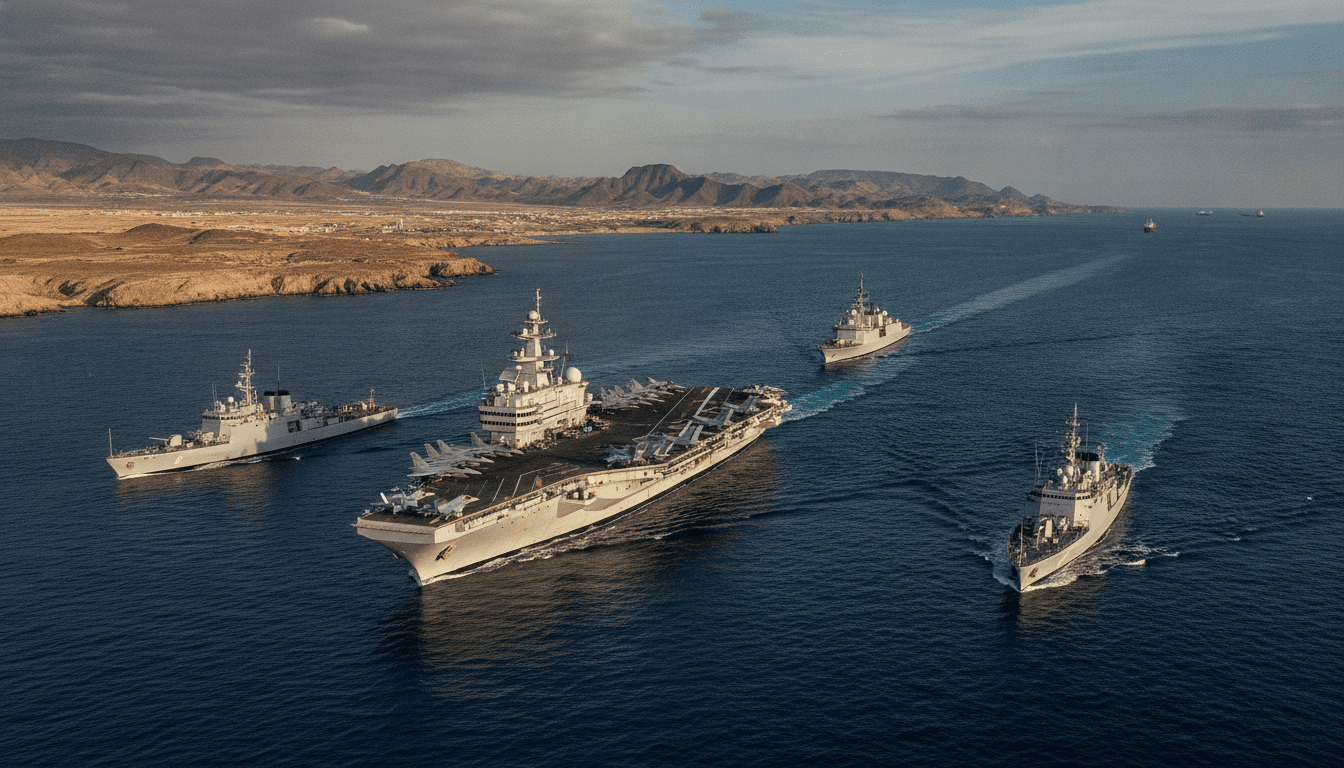
The French Navy has staged a sizeable portion of its fleet in the wider Red Sea and Arabian Gulf region as Admiral Nicolas Vaujour leads planning for a coalition mission to safeguard commercial shipping near the Strait of Hormuz. Vaujour has ordered two minesweepers, the Lyre and the Andromède, into the Red Sea and placed the carrier Charles de Gaulle and its escort group within a two-day sail of the strait, signaling readiness without announcing operational details. The move comes amid heightened global concern over the security of strategic maritime routes and follows an intensified public communications strategy by the navy.
Admiral Vaujour named operational lead
Admiral Nicolas Vaujour, who was appointed Chief of Staff of the French Navy in 2023, is coordinating closely with international partners, including his British counterpart, on the coalition planning for the Strait of Hormuz. Sources within the navy describe Vaujour as taking a forward-facing role in both operational planning and public messaging. He has emphasized the need to demonstrate capability and resolve while maintaining operational secrecy on specific deployment plans.
Vaujour’s leadership reflects decades-long service that began with his training at the École navale in 1989 and has since progressed through every rank of the service. The admiral combines operational experience with a public advocacy for increased naval investment and modernization programs aimed at sustaining France’s maritime influence.
Fleet posture and regional positioning
Two minesweepers, the Lyre and the Andromède, were dispatched early to the Red Sea to address the mine-threat environment and protect merchant transit corridors. Meanwhile, the nuclear-powered carrier Charles de Gaulle, accompanied by frigates and a submarine, remains positioned roughly two days’ sail from the Strait of Hormuz, available for rapid mission adjustment. Naval officials describe this posture as deliberately flexible: ships are close enough for rapid intervention but not positioned in a manner that would be described as combat engagement.
The navy’s deployment coincides with large-scale ceremonial operations marking the service’s 400th anniversary, a milestone that has coincided with an unusually visible flotilla presence at sea. Officials say the dual-purpose deployment supports both celebratory duties and real-world contingency preparedness.
New communications stance after tanker seizures
Under Vaujour’s direction, the French Navy has adopted a more assertive communications approach, releasing audio and video excerpts from operations such as the interdiction of vessels linked to suspected shadow fleets. The public dissemination of operational recordings is intended to build credibility and demonstrate determinate action against illicit maritime activity. Naval spokespeople argue that transparency about selected actions strengthens deterrence and public understanding, while sensitive operational details remain classified.
This communications shift is paired with an insistence on operational discretion: while visual and audio material may be released selectively, precise plans for securing the Strait of Hormuz and the timing of potential coalition actions are being withheld to preserve strategic surprise and safety.
Sea-based nuclear deterrence remains central
Vaujour has publicly reiterated the navy’s role in France’s strategic deterrent posture, noting that at least one of the nation’s nuclear-powered ballistic missile submarines is routinely at sea. He has also discussed the carrier-based component of strategic forces, explaining that Rafale fighters embarked on the Charles de Gaulle can be configured for a range of missions. The admiral underlines that the navy relies on strategic ambiguity about whether nuclear-capable systems are present at any given time, a policy he says is essential to maintaining deterrence.
Officials emphasize that this ambiguity is not intended to escalate tensions but to ensure national security through credible, distributed deterrent forces at sea. The navy maintains that its nuclear doctrine and conventional readiness are complementary elements of broader defense policy.
Recruitment, industrial ties and modernization plans
Vaujour has highlighted the navy’s human and industrial foundations, noting that some 4,000 young people enlist with the service each year. He has used public appearances to push for increased investment in shipbuilding, maintenance and personnel to sustain long-term maritime operations. Among the forward-looking projects he supervises is a next-generation aircraft carrier program, referred to by officials as France Libre, with participation from roughly 800 companies in the industrial base.
The admiral warns that sustaining continuous deployments and modern capabilities requires predictable funding and industrial capacity. He has framed procurement and shipbuilding as national priorities that link defense, employment and technological innovation.
Balancing visibility and operational secrecy
The current posture of the French Navy illustrates a calculated balance between showing force and preserving secrecy. Ships and submarines are visibly positioned within operational reach of the Strait of Hormuz while detailed tactical plans remain undisclosed. This approach, officials say, is designed to reassure commercial partners and coalition allies while minimizing escalation risk.
Analysts note that the combination of publicized seizures, forward deployments and repeated statements on deterrence serves a dual purpose: it signals resolve to potential adversaries and reassures maritime industry stakeholders of international efforts to protect vital shipping lanes.
As the coalition planning continues, naval authorities emphasize that the operation is intended as a security measure rather than an act of war. The admiral’s public-facing commentary and the navy’s deployments aim to deter disruptions to trade routes while preserving options for rapid, proportionate response should incidents occur.
