
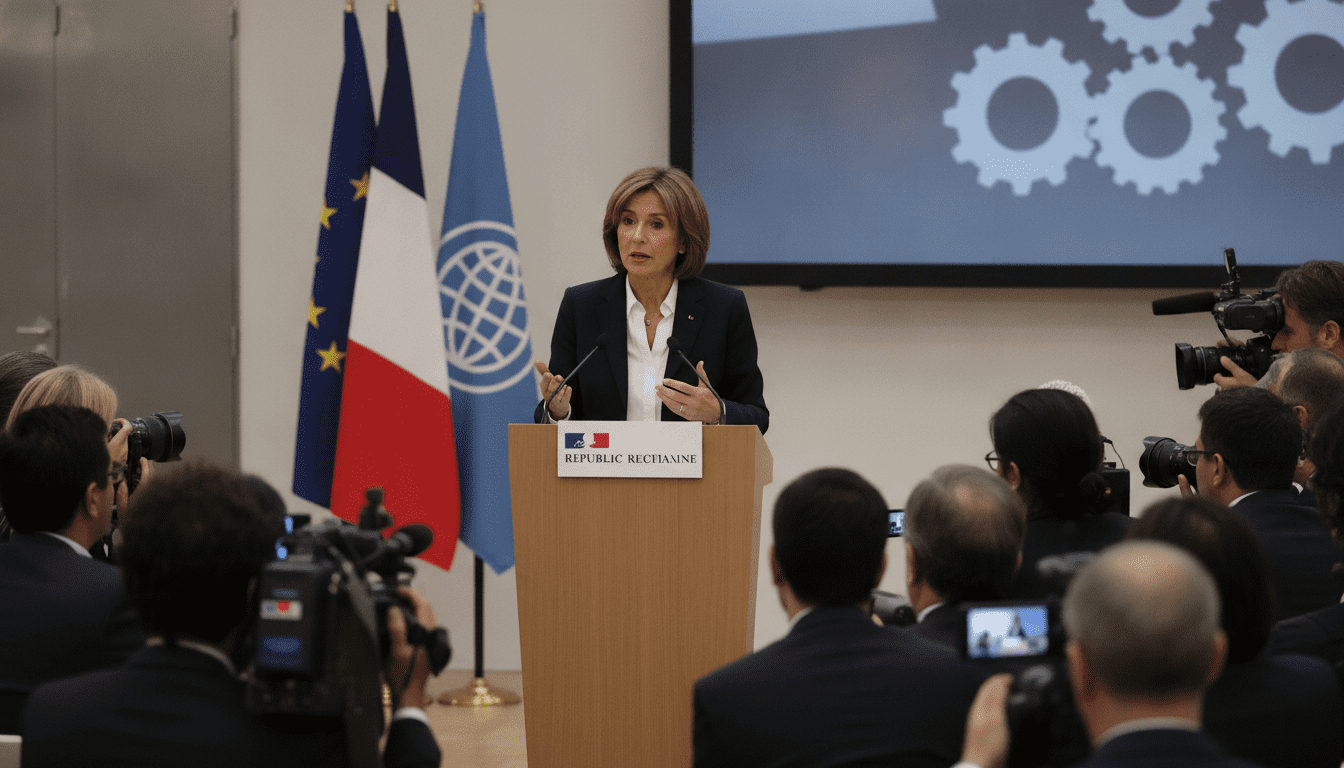
France urges momentum as ‘positive signs’ build toward US-Iran deal
French foreign minister Jean-Noel Barrot says ‘positive signs’ are accumulating toward a US-Iran deal and urged both sides to seize the diplomatic opportunity. (156 characters)
France calls for swift resolution after talks show promise
French Foreign Minister Jean-Noel Barrot said on Friday that he sees genuine willingness on both sides to reach a US-Iran deal, urging negotiators to seize what he described as a narrowing window for agreement. He told French outlet LCI that he had relayed the same message directly to his Iranian counterpart following talks earlier in the day. Barrot characterized the atmosphere as cautiously optimistic, saying positive signs were accumulating even as significant obstacles remain.
Barrot’s direct message to Tehran
Barrot told LCI that he had spoken with Iranian Foreign Minister Abbas Araghchi and delivered France’s appeal for a compromise. He framed the outreach as a pragmatic push to end a situation he called “clearly untenable,” arguing that continued stalemate produces only losers.
Barrot’s comments underline Paris’s active diplomatic role and signal a desire for European intermediaries to help convert momentum into a formal agreement. His language sought to nudge both capitals to capitalize on what he sees as converging incentives.
Cautious optimism from French diplomacy
Barrot described his mood as cautious but encouraged, noting “positive signs are accumulating” while stopping short of declaring a breakthrough. His careful phrasing reflects the unpredictable history of US-Iran negotiations, where progress often proves fragile.
The French minister’s assessment suggests that recent contacts have produced enough movement to keep negotiations alive, but he avoided promising a near-term resolution. That restraint is consistent with a diplomatic strategy that emphasizes steady, incremental progress.
Diplomatic choreography behind the talks
Diplomats have repeatedly used discreet, high-level contacts to test whether core issues can be bridged without public posturing. Barrot’s phone call to Araghchi fits a pattern of direct exchanges designed to clarify red lines and identify trade-offs. France, working with other European partners, has sought to keep channels open and encourage reciprocal concessions.
Such behind-the-scenes diplomacy typically focuses on sequencing — what each side will do first, how sanctions relief might be verified, and what guarantees will accompany any rollback of nuclear restrictions. Barrot’s remarks reflect the low-key, patient approach favored by mediators who fear that loud pronouncements could derail fragile progress.
Key issues likely to shape a US-Iran deal
Any deal would need to address sanctions relief and nuclear constraints, while creating credible verification mechanisms to satisfy both sides. For Tehran, meaningful sanctions relief is often a central demand, while the United States has traditionally emphasized robust monitoring and enforceable limits. Those core elements remain the most difficult to negotiate.
Confidence-building measures, phased implementation, and third-party verification are common tools negotiators consider to bridge gaps. Barrot’s call for both sides to “seize this opportunity” implicitly acknowledges that complex technical arrangements will be necessary to turn diplomatic intentions into durable commitments.
Risks and obstacles on the path to agreement
Longstanding mutual mistrust and domestic political pressures on both sides can quickly complicate negotiations. Opponents of compromise in each capital have in the past leveraged setbacks to block agreements or impose conditions that are hard to meet. That dynamic makes even positive signals volatile.
External events or tactical brinkmanship could also stall talks, especially if either side perceives domestic advantage in postponing concessions. Barrot’s caution underscores how negotiators must balance urgency with the need to build a robust, enforceable framework that survives political shifts.
Implications if a deal is reached
A credible US-Iran deal could revive elements of the 2015 nuclear framework and open the door to phased sanctions relief tied to specific, verifiable nuclear constraints. Such an outcome would reshape regional diplomacy and affect energy markets, sanctions regimes, and international oversight arrangements. It would also test whether incremental confidence-building can produce longer-term stability.
Conversely, failure to reach agreement would likely prolong tensions and preserve the status quo of economic pressure and diplomatic isolation for Tehran, while leaving the wider region exposed to continued uncertainty. Barrot’s appeal to both sides to “seize this opportunity” reflects the wider international interest in avoiding that outcome.
The coming days and weeks will determine whether the cautious optimism expressed by Paris can be translated into concrete steps by Washington and Tehran. Negotiators face technical, political, and timing challenges, and success will depend on whether both sides are willing to convert goodwill into verifiable action.
