
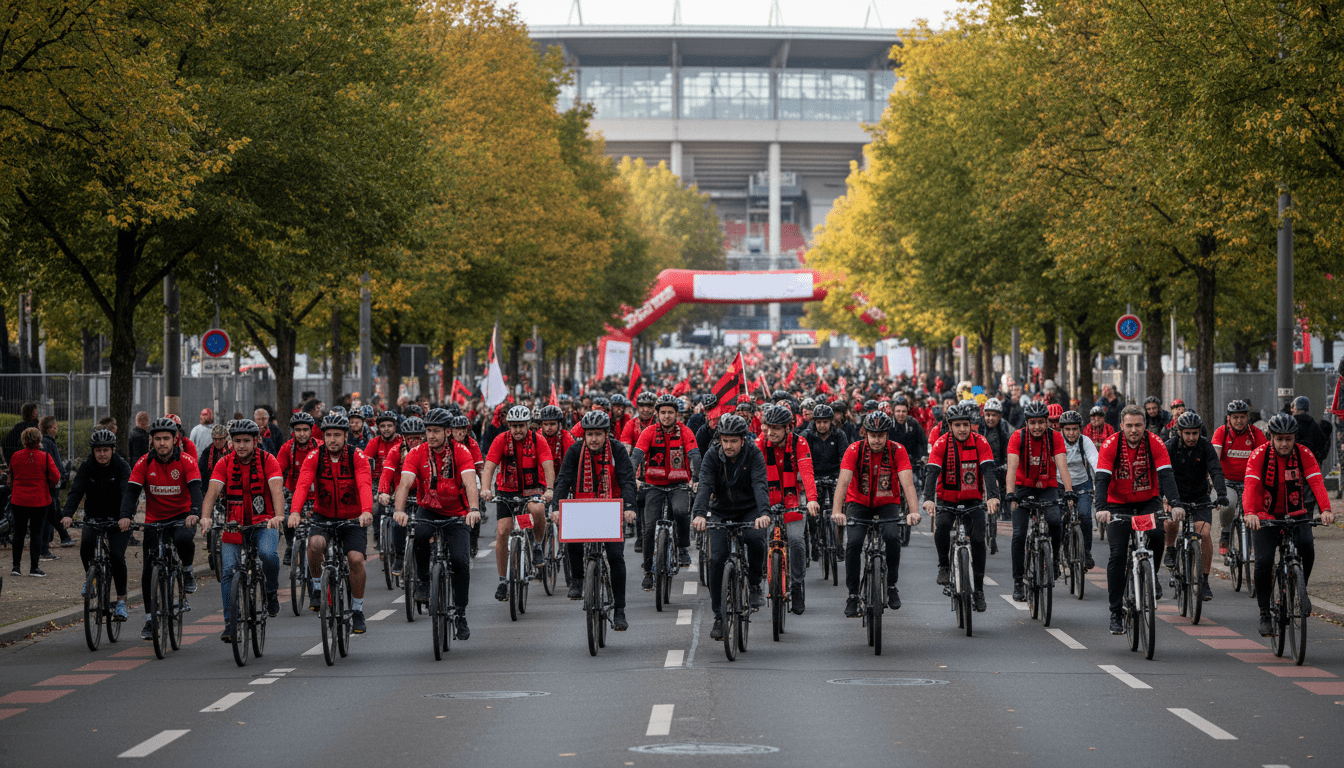
Freiburg Fans Cycle to Stadium as Sponsor Publishes Rider Counts and Donates to Charity
Freiburg fans cycle to stadium in large numbers; the club’s main sponsor posts daily rider counts and makes charitable donations tied to cycling participation.
Freiburg’s matchday ritual of fans arriving by bicycle has become a visible part of the city’s sporting identity, and the club’s principal sponsor now publishes the number of cyclists attending each match and converts that tally into a donation to local charities. The initiative blends public-relations visibility with a modest fundraising mechanism, drawing attention to sustainable transport choices while prompting mixed reactions among supporters and observers.
Sponsor Publishes Rider Counts and Pledges Donations
The sponsor releases a headline figure after each home game showing how many fans arrived on two wheels, and announces a corresponding financial contribution to a chosen nonprofit. Officials say the aim is twofold: to reward positive environmental behavior and to channel matchday attention into tangible community support. The public reporting of the count has also given the practice a ceremonious quality, turning everyday commuting into a visible civic gesture.
Cycling Numbers Reflect Longstanding Local Habits
The prominence of cycling among supporters reflects broader travel patterns in Freiburg, where bikes are a common mode of transport for short urban journeys. Proximity between residential neighborhoods and the stadium, compact city planning, and well-used bike lanes have made cycling a natural choice for many fans. Matchdays amplify these routine patterns into a striking visual: hundreds or thousands of bikes converging on the stadium precinct before kickoff.
Stadium Access and Bicycle Infrastructure on Matchdays
Local authorities and the club coordinate to manage the influx of cyclists, providing designated bike parking areas and stewards at key access points. Temporary measures, including additional signage and marshals, are sometimes deployed to keep bike routes clear and to prevent congestion at pedestrian crossings. The concentration of bikes on certain streets requires planning, and officials say regular dialogue between transport planners and the club helps smooth matchday logistics.
Charitable Impact and Corporate Responsibility
The sponsor’s donations are typically directed to local charities, social projects, or environmental organizations, with the amount tied to the published cyclist count. For community groups, even modest, recurring gifts can fund programming or provide operational support, and for the sponsor the approach frames corporate support as linked to behavioral outcomes. Observers note this model combines visible corporate citizenship with an element of gamification, incentivizing sustainable travel while securing publicity for the sponsor’s philanthropic role.
Fan Reactions Range from Enthusiastic to Skeptical
Many supporters treat cycling as a practical and enjoyable way to reach the stadium, appreciating the ease of parking and the social atmosphere among fellow riders. For those fans, the sponsor’s publicized counts are a point of local pride and a tangible recognition of a habit they already embraced. Conversely, some critics describe the initiative as a calculated PR move that simplifies complex transport choices into a headline metric, and they caution against over-interpreting the charitable impact without transparency on amounts and recipient selection.
Broader Implications for Urban Mobility and Sport Sponsorship
The Freiburg case spotlights how sports clubs and their commercial partners can influence travel behavior by amplifying existing norms and rewarding certain choices. When sponsors tie donations to measurable actions — in this case, cycle counts — they create a feedback loop that reinforces the promoted behavior. Urban planners and civic leaders watching the experiment may take lessons on how visibility and modest incentives can complement infrastructure investments to shift modal share.
The sponsorship-driven cycle count has become a recognizable element of Freiburg matchdays and a conversation starter about mobility, sustainability, and corporate-community ties. Whether viewed primarily as charitable giving, civic celebration, or marketing, the practice underlines how everyday practices — riding a bike to a game — can be reframed into a public signal of local identity and social responsibility.
