
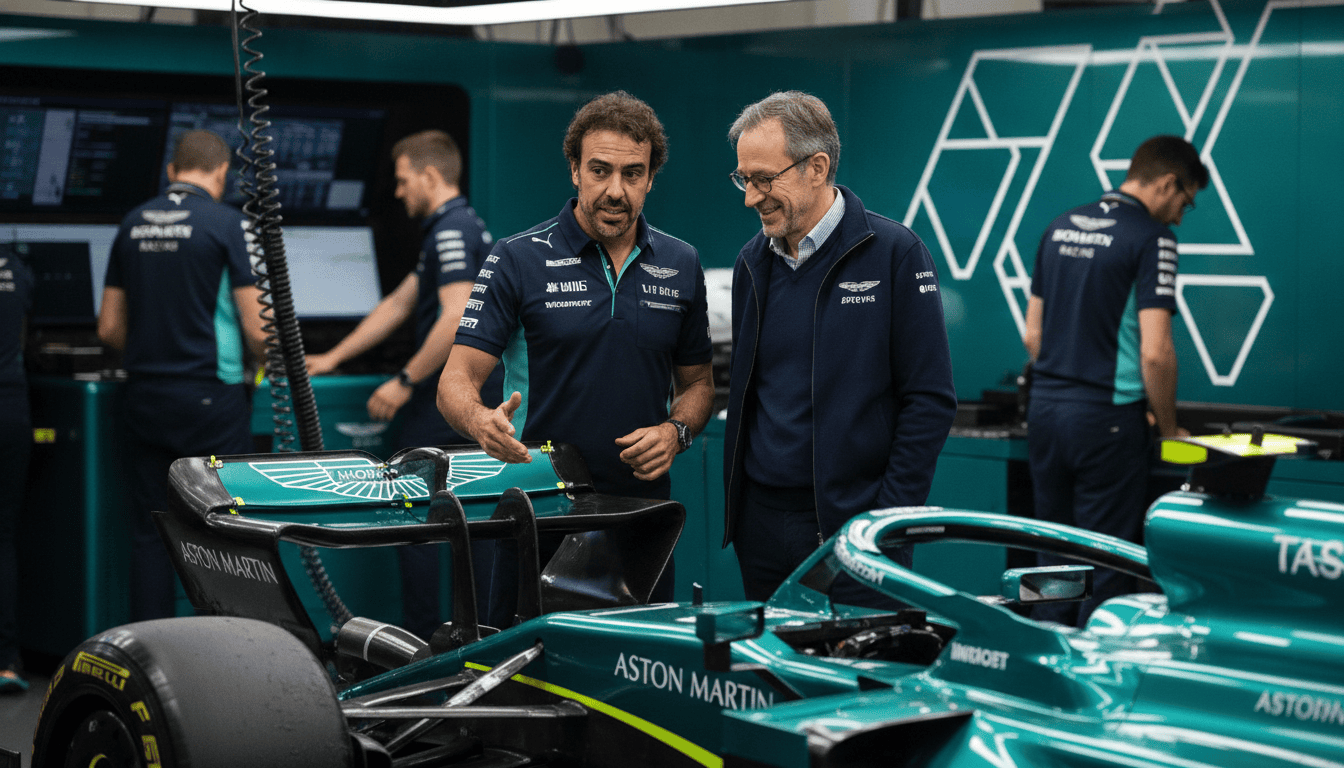
Fernando Alonso demands turnaround as Aston Martin brings major AMR26 upgrade for Budapest
Fernando Alonso faces a pivotal weekend as Aston Martin brings a reworked AMR26 to Budapest and plans a Honda engine swap to arrest a faltering season urgently.
Fernando Alonso arrived at the Hungarian Grand Prix under visible frustration and pressing questions about Aston Martin’s direction. The veteran driver has collected only a single point through ten races, leaving both his personal campaign and the team classification well below expectations. With a substantially revised AMR26 scheduled to debut at the Hungaroring and a planned Honda power-unit change after the summer break, Alonso and Aston Martin are betting on rapid recovery.
Alonso places short-term focus on results and morale
Fernando Alonso has been candid about his priorities as the season reaches its midpoint, stressing the need to salvage weekends and regain motivation. He has signalled that immediate improvements in performance are essential to restore the enjoyment he still finds in racing. That pragmatic stance reflects a driver balancing long-term belief in the programme with short-term urgency to stop the slide.
The lack of competitive pace has chipped away at confidence across the team, and Alonso’s measured public remarks are intended to steady a tense environment. His emphasis is not merely on podiums but on returning to competitive wheel-to-wheel racing where he can feel the adrenaline that has driven his career.
Aston Martin to run a heavily revised AMR26 in Budapest
Aston Martin will present what team engineers have described as a near-new car in Budapest, featuring a lighter chassis and a comprehensive reworking of key systems. The upgrade aims to correct aerodynamic and balance deficits that have left the AMR26 off the pace in the season’s first half. Team sources say the original chassis will remain available at the circuit as a precautionary measure.
The package is the first of a two-step recovery plan intended to buy time for further developments. If the Budapest iteration delivers measurable gains, Aston Martin will press forward with additional aerodynamic changes and set the stage for a power-unit swap later in the season.
Adrian Newey accepts responsibility for development choices
Adrian Newey, the design lead brought in with high expectations, has acknowledged responsibility for the car’s current shortcomings and the aggressive direction the team adopted. He has explained that time constraints forced a single development path rather than parallel concept testing, a decision he now recognises contributed to the lack of competitiveness. Newey’s admission has shifted internal focus toward rapid iteration rather than blame.
Despite the setback, members of the team continue to place confidence in Newey’s track record and technical judgement. Conversations across the garage now centre on translating his corrective guidance into tangible on-track improvements as quickly as possible.
Honda power-unit issues and the planned change in Zandvoort
Aston Martin has also identified the existing power unit as a significant contributor to poor performance and harsh vibrations that affected driver comfort and car stability. Those vibrations were severe enough that team engineers raised concerns about potential nerve effects on the drivers’ hands and feet. The package’s drivability deficits compounded aerodynamic weaknesses and made the AMR26 difficult to exploit on race weekends.
To address the problem, Aston Martin intends to introduce a new Honda engine after the summer break, with the Zandvoort race earmarked for the unit’s track debut. The swap is intended not only to reclaim performance but also to resolve reliability and drivability issues that have undermined the drivers’ ability to extract pace.
Chief Trackside Officer Mike Krack calls for patience and rapid learning
Mike Krack has framed the team’s immediate task as a learning exercise under pressure, urging realistic expectations while committing to swift corrective action. Speaking ahead of the Budapest race, Krack said the objective is simple: finish races and rebuild the capacity to fight for position. He acknowledged the complexity added by recent technical regulations but emphasised process and incremental progress.
Krack’s message to stakeholders, sponsors and the paddock was pragmatic — Aston Martin must stabilise both cars and then develop performance through a disciplined run of improvements. The leadership has publicly committed resources, including wind-tunnel and factory upgrades, to support that recovery effort.
Aston Martin’s leadership is acutely aware the coming races are a test of execution rather than intent. The team’s heavy investment and high-profile personnel had raised expectations for immediate results, and the current recovery plan will be judged on the speed and clarity of its impact.
Fernando Alonso has remained outwardly supportive of the team’s roadmap while signalling that his own patience has limits. He reiterated confidence in the technical team’s ability to eventually produce a front-running car but emphasised that tangible progress must follow promises. With his contract running through the end of the season, Alonso’s statements underline a twofold imperative: restore competitiveness for 2026 and keep open the option of a future path that matches his ambitions.
How quickly Aston Martin converts upgrades into consistent race pace will determine whether Alonso’s belief in the project is vindicated, and whether the team can arrest a season that has so far fallen well short of its public goals.
