
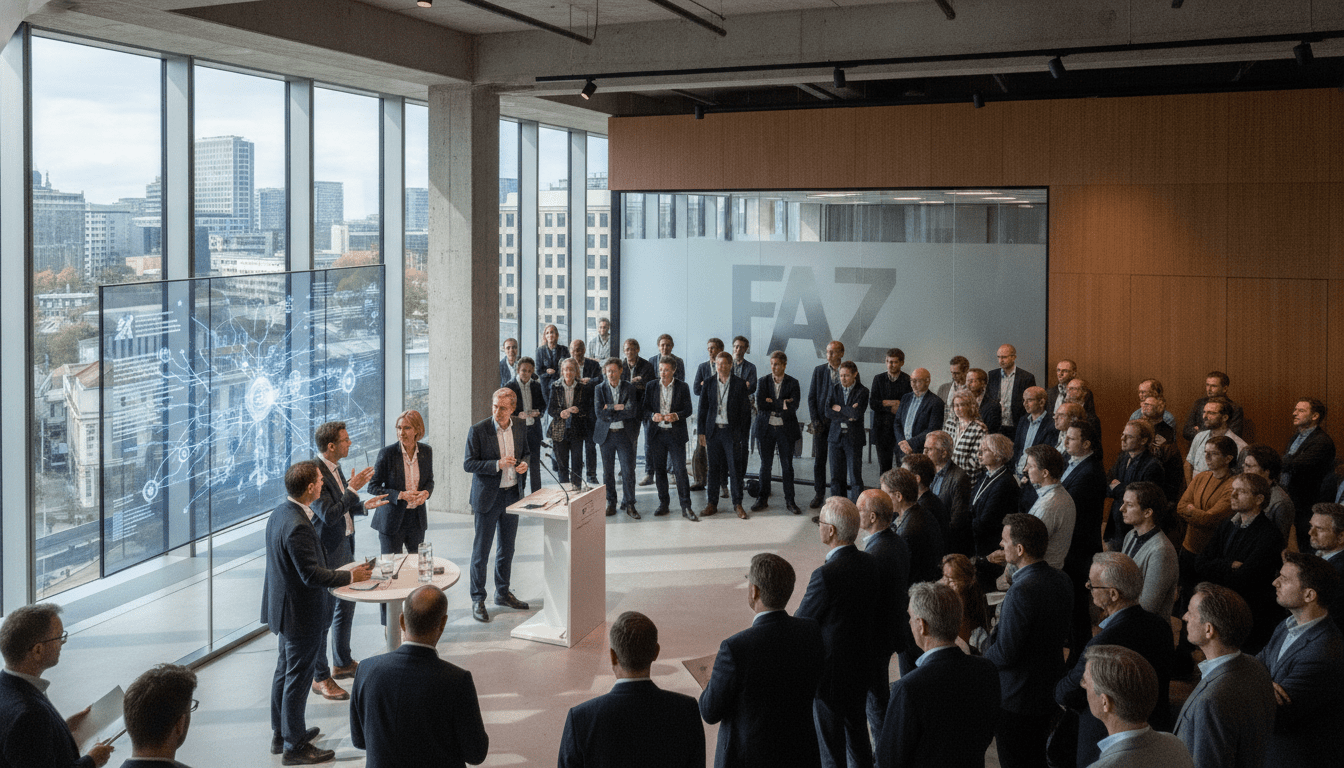
F.A.Z. Open House in Berlin Draws Readers, Shows How Journalists Verify Sources
F.A.Z. open house in Berlin invited readers into the newsroom, explaining reporting methods and hosting panels on transparency, AI, and coalition politics plus tours.
Open doors and a live explanation of reporting
The Frankfurter Allgemeine Zeitung opened its Berlin editorial offices to the public on Saturday, offering readers a firsthand look at newsroom work during its open house. The event foregrounded questions of sourcing, verification and transparency, with reporters explaining how stories reach print and why readers should trust what they read. Hundreds of visitors attended panels, tours and a live podcast recorded in the capital newsroom.
Editors face reader questions on sourcing
Eckart Lohse, head of the paper’s parliamentary desk in Berlin, and correspondent Mona Jaeger answered audience questions about where reporters obtain information and how they corroborate it. They described typical practices for confirming accounts from political sources and the editorial judgment involved in weighing conflicting accounts. The session aimed to bridge the gap between public curiosity about reporting and the practical, sometimes confidential, methods journalists use.
Live podcast probes coalition dynamics and credibility
A live podcast moderated by Corinna Budras, the newspaper’s economics correspondent, focused on the current dynamics within the governing coalition and public trust in journalism. Attendees asked specifically what tools Chancellor Friedrich Merz (CDU) might still use to accelerate reforms and whether a Union minority government was realistic. Panelists navigated those political questions while underscoring how reporters verify claims about secret meetings and intra-coalition disputes.
Panelists discuss AI, misinformation and editorial standards
The event highlighted the growing concern around artificial intelligence and disinformation, with guests seeking clarity on how newsrooms adapt verification processes in that environment. Speakers addressed the added pressure to vet digital sources and the newsroom’s responsibility to guard against amplified falsehoods. The conversation emphasized the importance of editorial checks and multiple-source corroboration, especially when social platforms spread unverified reports.
Historic newsroom tours and editorial demonstrations
Visitors were offered guided tours through the more-than-century-old editorial building, which has housed a bank and publisher in earlier years. Guests sat in the Kaminzimmer at the same table where senior politicians have met with editors, and learned about the paper’s institutional history and daily workflow. Features of the tour included demonstrations of reporting routines, newsroom organization and archival materials that trace the publication’s development.
Event atmosphere and practical arrangements
Organizers said the building’s air-conditioning made the day comfortable despite the heat in the city, allowing small-group discussions and relaxed conversation over coffee. Attendees browsed the current Sunday paper, spoke with journalists and watched interview techniques explained by Bavaria correspondent Timo Frasch. Cultural reporting lead Julia Encke addressed changes in journalism over the past 25 years, adding perspective on how practice and audience expectations have evolved.
The open house ran in parallel with a government open day, which created a broader context for discussions about politics, transparency and civic engagement. That juxtaposition prompted visitors to compare how institutions present themselves to the public and to reflect on the role a quality newspaper plays in democratic debate. The event closed after a full day of panels, tours and audience exchanges that aimed to deepen mutual understanding between readers and the newsroom.
