
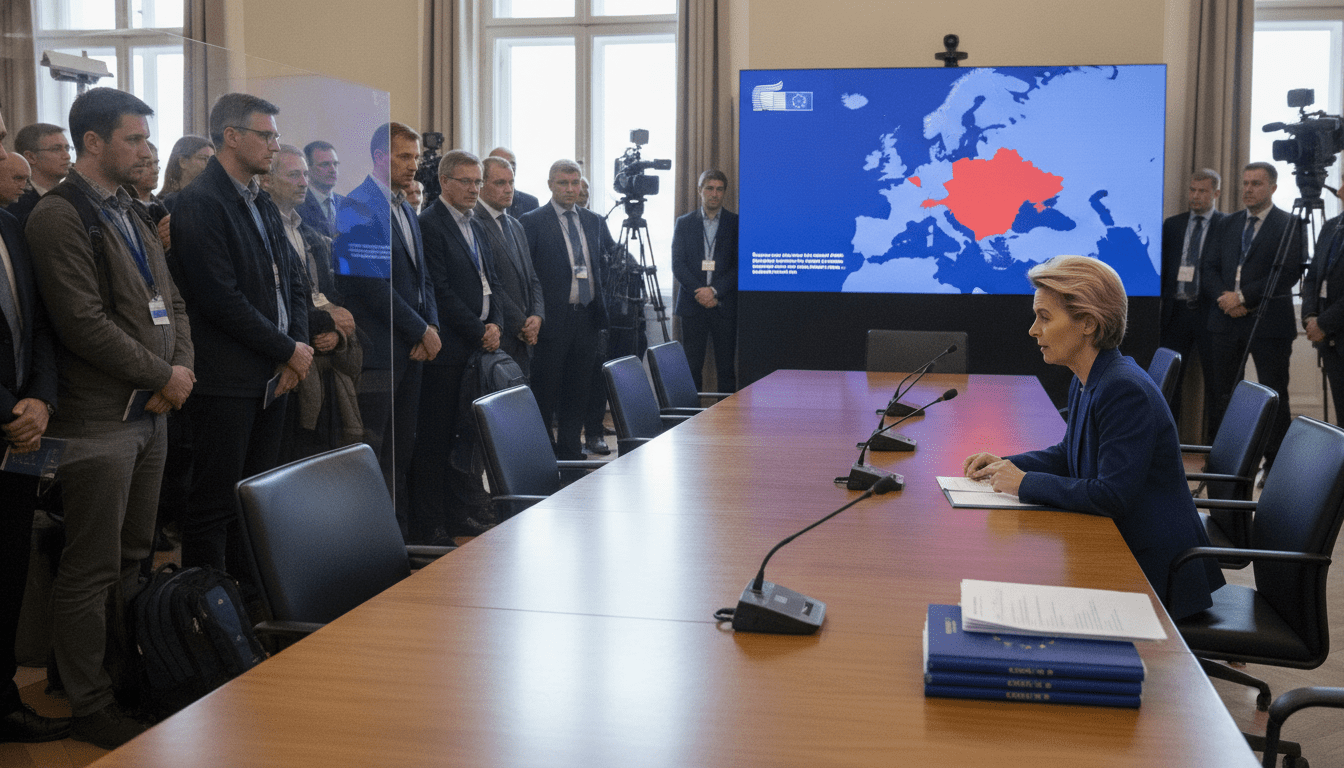
EU Commission proposes limiting simplified asylum for Ukrainian men aged 23–60
EU commission suggests excluding certain Ukrainian men from simplified asylum rules, requiring individual asylum claims and extending the Mass Influx Directive to March 2028.
The European Commission has proposed excluding Ukrainian men aged 23 to 60 from the EU’s simplified reception rules if they cannot secure an exit permit from Ukraine, a move that would force them to file individual asylum applications. The proposal, which would extend the bloc’s Mass Influx Directive for one year until March 2028, aims to narrow automatic protections that have so far applied to many people fleeing the conflict in Ukraine. If adopted, the change would mark a significant shift in how the EU treats war-related arrivals from Ukraine and could alter migrants’ legal prospects across member states.
Details of the Commission’s draft proposal
The draft text circulated by the Commission would carve out men of military age who are unable to leave Ukraine because their government does not grant exit permission. These individuals would no longer benefit from the expedited protection pathway established under the Mass Influx Directive, meaning their claims would be processed through regular national asylum systems.
Under the current framework, Ukrainians arriving in the EU during the mass arrivals have been granted temporary protection without individual refugee status adjudication. The proposed change targets a subset of arrivals, reflecting concerns among some member states about the fairness and manageability of blanket measures.
Extension of the Mass Influx Directive to March 2028
Brussels proposes to prolong the directive’s application for an additional year, setting a new expiry in March 2028. The extension is intended to give governments more time to manage ongoing displacement and to coordinate returns, relocations, or integration measures where appropriate.
Officials say the one-year extension would provide legal continuity for most displaced Ukrainians while enabling targeted adjustments like the proposed exclusion. Member states that support the measure argue that the extension coupled with a tailored exception can balance solidarity with practical migration management.
Support from Germany and several member states
Germany and a number of other EU capitals have signaled backing for limiting simplified reception for the affected age group in recent weeks. Supporters describe the move as a response to security and administrative concerns and as an attempt to ensure that temporary protection is applied equitably.
Governments advocating the exception have referenced cases in which Ukrainian authorities deny exit permits to men subject to mobilization, creating asymmetries in who is able to leave and who benefits from EU protections. Proponents maintain that requiring individual asylum applications in such situations would close a legal loophole and discourage abuses of the temporary mechanism.
Legal and human rights implications
Human rights organisations and refugee advocates warn that the proposed exclusion could leave vulnerable people without swift protection and increase pressure on national asylum systems. They argue that men denied exit by their own authorities may still face persecution, conscription, or other serious risks, and that individualized assessments under strained systems could fail to identify those needs promptly.
Legal experts also note that shifting large numbers of applicants into ordinary asylum procedures would likely lengthen processing times and heighten legal uncertainty for applicants. The change could affect eligibility for subsidiary protection, access to work, and social services during the pendency of claims.
Operational and social consequences for EU states
If implemented, the proposal would have immediate operational effects: member states would need to scale up asylum-adjudication capacity and possibly revise reception arrangements to handle a new cohort of individual claims. Authorities may face backlogs and higher legal costs as cases proceed through standard channels.
At the community level, the measure could separate families and complicate reunification. Men who remain outside the simplified regime might face prolonged uncertainty about residence status, affecting access to employment and integration programmes in host countries. Municipalities and NGOs that provide initial support could see demand shift from rapid, temporary-assistance models to longer-term case management.
Next steps in Brussels and national capitals
The Commission’s proposal now moves to discussions among EU governments and the European Parliament, where it must win approval to take effect. Debates in Brussels are expected to focus on legal safeguards, the precise definition of the exclusion, and mechanisms to protect those with demonstrable protection needs.
Member states will weigh operational readiness against political appetite for a targeted restriction. Negotiations could produce amendments on the age range, the conditions under which exit-denied status is verified, or exceptions for specific vulnerable groups.
The proposal to exclude certain Ukrainian men from simplified reception rules and to extend the Mass Influx Directive reflects a contested attempt to balance solidarity with migration control, and its progress through EU decision-making will shape the protection landscape for displaced Ukrainians for the coming year.
