
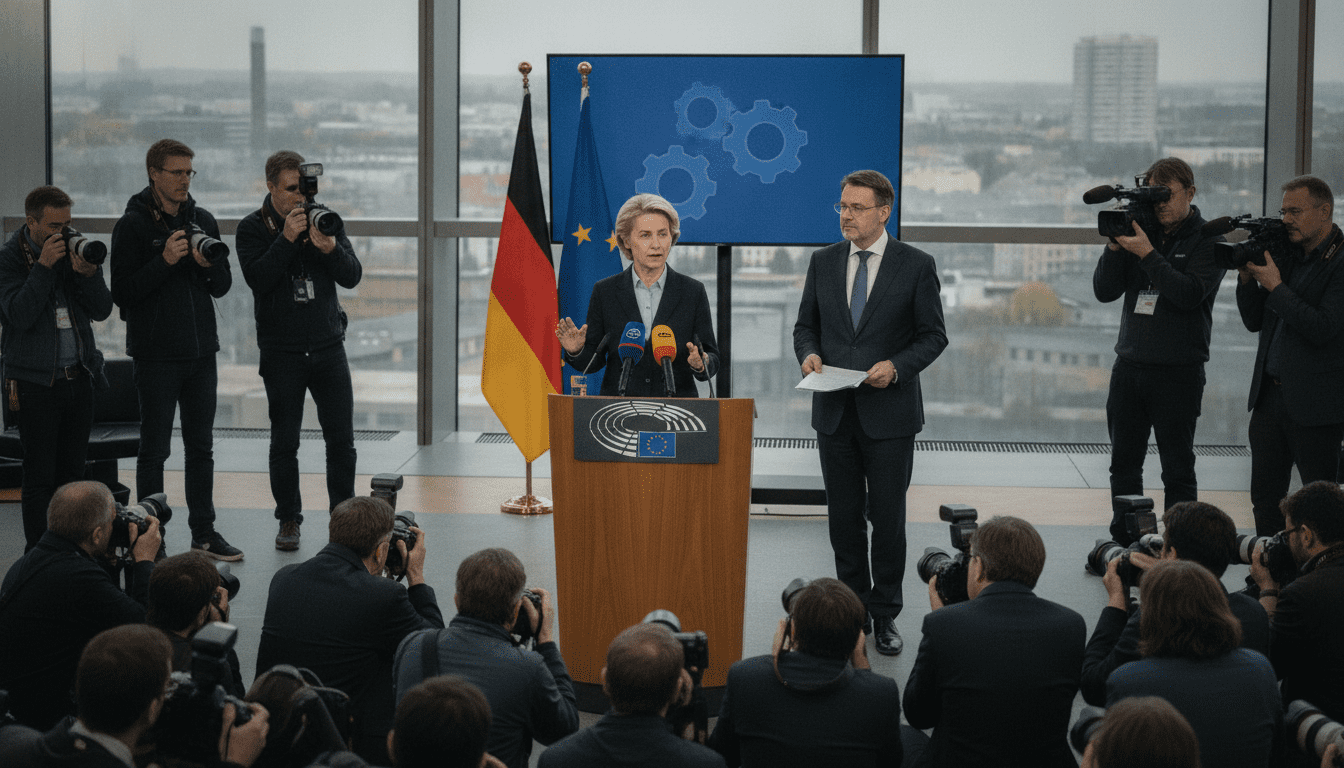
EU-China trade conflict looms as German criticism presses Brussels to act
EU-China trade conflict intensifies as German leaders, led by Friedrich Merz’s Bundestag remarks, push the European Commission to consider countermeasures. (154 characters)
The European Union is increasingly braced for an EU-China trade conflict after senior German political figures publicly criticized China’s trade practices, prompting calls for coordinated action in Brussels. Friedrich Merz singled out subsidies, industrial overcapacity and currency distortions as factors that create unfair competition, a critique that has sharpened debate over whether the bloc should escalate trade defenses. As discussions move from national capitals to EU institutions, policymakers face a fast-moving mix of economic, legal and diplomatic choices.
Merz’s criticism in the Bundestag
Friedrich Merz accused China of using subsidies, excess industrial capacity and a deliberately weak currency to undercut competitors in global markets.
In a speech to the Bundestag, Merz described those dynamics as unfair competition and urged Germany and its partners to press for remedies at the EU level. His remarks have intensified pressure on European policymakers to translate dissatisfaction into concrete trade measures.
Brussels is the center of decision-making
Under EU rules, the European Commission holds primary competence for trade policy, meaning any bloc-wide response to China will be shaped in Brussels.
That centralized role requires the Commission to weigh legal options, coordinate with member states and navigate World Trade Organization constraints before proposing measures. Member states, however, retain influence through the Council and by shaping political momentum behind Commission proposals.
Possible trade-defense tools under consideration
Officials and trade experts point to a range of instruments Brussels could deploy, from anti-subsidy and anti-dumping duties to stricter investment screening and measures targeting industrial overcapacity.
The EU can open formal investigations, impose provisional duties or adopt sector-specific safeguards, but each step carries legal thresholds and must be justified under EU and WTO law. Any move will likely be calibrated to avoid unnecessary disruption while aiming to level the playing field for European producers.
Economic sectors most exposed
Manufacturing sectors that compete directly with Chinese exports—steel, chemicals, advanced machinery and parts of the electronics supply chain—are among the most vulnerable to sustained price and capacity pressure.
German exporters and industrial suppliers in particular fear margin erosion and job risks if market distortions persist, a concern that fuels political calls for robust EU responses. At the same time, European companies dependent on Chinese inputs warn that aggressive measures could raise costs and complicate supply chains.
Diplomatic and retaliation risks
A tougher EU stance on Chinese trade practices risks prompting diplomatic friction and economic retaliation, which could include tariffs, quotas or limits on market access for European firms in China.
Brussels must balance defensive measures with channels for negotiation to avoid an escalating tit-for-tat that would hurt global trade flows. Officials are expected to weigh the short-term protection of strategic industries against the longer-term need for stable trade relations.
Political dynamics shaping the response
Member states differ in exposure and appetite for confrontation, with governments that host large export-oriented industries pushing harder for intervention.
Germany’s heightened public criticism has shifted political momentum, but any supranational step will require consensus-building in the Council and careful legal groundwork by the Commission. Meanwhile, business groups and unions will lobby intensively to shape measures so they protect jobs without unduly disrupting market access.
A combination of trade defense, diplomatic engagement and industrial policy is likely to form the EU’s approach, but the exact mix will reflect intergovernmental bargaining, legal constraints and the outcome of technical investigations.
European institutions now face a narrow window to craft responses that are legally defensible, economically targeted and diplomatically sustainable. Policymakers will have to reconcile member-state pressures, industry concerns and the complexities of global trade law as they decide whether and how to escalate the EU-China trade conflict.
