
EU sets October deadline in EU-China trade talks to address €360bn deficit
EU seeks concrete results in EU-China trade talks by October, launching four working groups and a traffic‑light system to address a €360 billion trade imbalance.
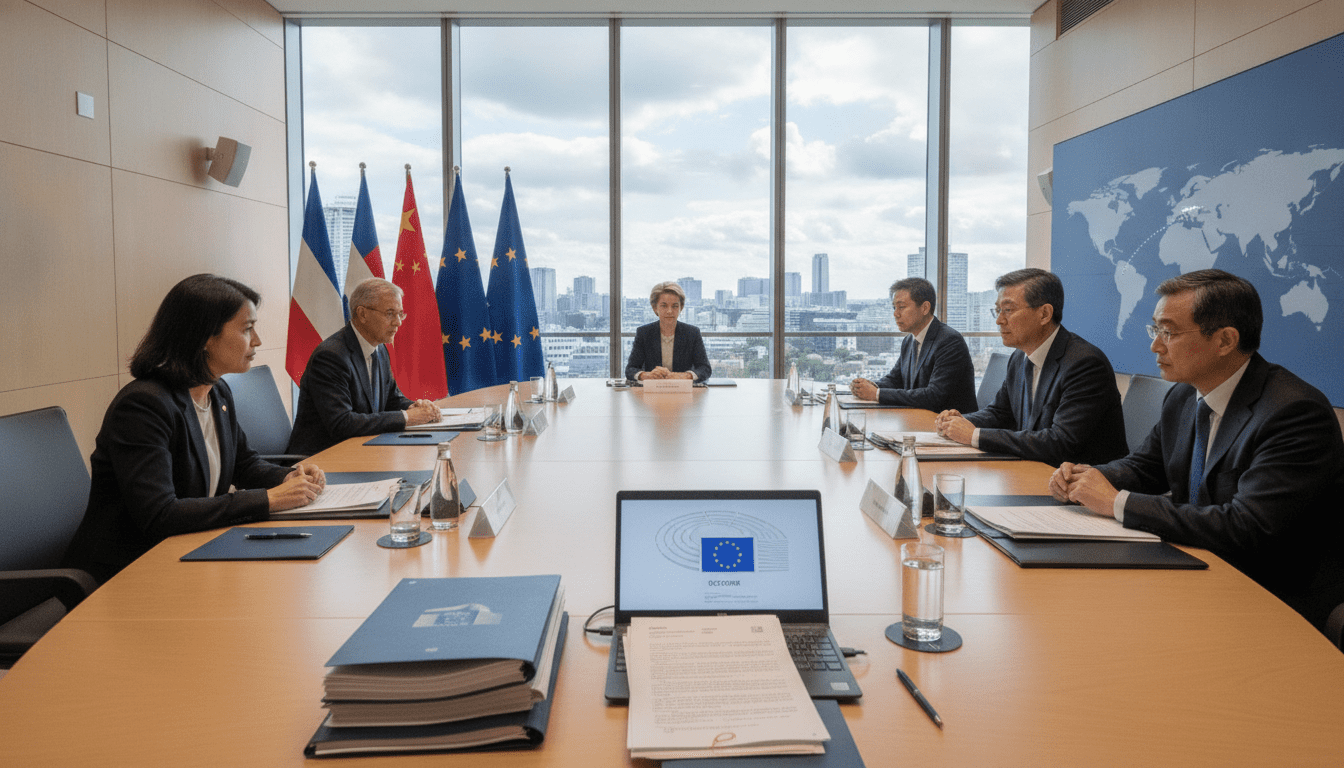
The European Commission has set an October deadline for the EU-China trade talks after high-level meetings in Brussels, pressing Beijing for tangible steps to reduce a widening trade imbalance. EU Vice-President and Trade Commissioner Maroš Šefčovič told reporters the bloc expects measurable progress from newly agreed workstreams and a monitoring mechanism aimed at the recently reported €360 billion deficit. The move follows a summit directive from EU leaders who signalled they want quicker results in ties with China.
EU sets October deadline after Brussels meeting
Maroš Šefčovič met Chinese Commerce Minister Wang Wentao in Brussels and said the two sides agreed to a clear timetable for talks that must produce concrete outcomes by October. Šefčovič framed the deadline as a response to pressure from EU heads of state and government at their recent summit, where leaders demanded accelerated action on trade imbalances. He was careful to say not all problems would be resolved immediately, but insisted the commission and joint teams have sufficient time to deliver tangible results.
Four working groups to tackle trade imbalance and controls
In a joint declaration, Brussels and Beijing agreed to establish four dedicated working groups. The first will focus on the balance of trade and investment — a priority for European policymakers concerned about persistent deficits. Other groups will examine export controls, protection of intellectual property, and reforms of the World Trade Organization, reflecting long‑standing EU concerns about market access and fair competition.
New traffic‑light mechanism to monitor trade flows
The two sides also agreed to a traffic‑light monitoring mechanism to track trade flows and flag sudden changes in export patterns to the EU. Officials described the system as a notable step forward because it is based on jointly agreed statistics and thresholds. If a spike in Chinese exports to the EU triggers a yellow or red alert, the mechanism will prompt immediate political-level discussions to assess and address the cause.
Timeline: September stocktake and October Beijing visit
Šefčovič said the European Commission will take stock of progress in September, after the summer break, and that he intends to travel to Beijing in October at Wang’s invitation. The September review is planned as an interim assessment of the working groups’ output and the operation of the monitoring tool. Šefčovič acknowledged that the term “concrete results” was deliberately open-ended, but said the commission expects deliverables substantial enough to justify continued engagement.
Deficit pressures and shifts in EU policy, including Germany
The talks come as the EU grows increasingly vocal about China’s export policies and their impact on European industry, including German exporters who have traditionally favoured a cautious approach. EU leaders at the summit avoided naming China directly in public communiqués, but privately pressed for instruments to counter persistent macroeconomic imbalances. German Chancellor Friedrich Merz indicated support for a firmer stance by arguing the EU needs effective tools to defend its interests globally, reinforcing pressure on Brussels to secure results.
Beijing’s warning and cautious diplomatic framing
Chinese state media warned ahead of the talks that Beijing could withstand a further deterioration in relations, even suggesting it would not shy away from a sharp downturn if necessary. At the same time, officials in both capitals emphasized common ground after the opening rounds, pointing to the joint declaration as the first such statement since 2019. Diplomats said summit language was calibrated to avoid escalation while still signalling that the EU has clear expectations for change.
The question of export controls has become particularly sensitive after Beijing restricted rare‑earth shipments in 2025, a move that hit European manufacturers and prompted industry groups to label such measures a long‑term risk. EU officials say addressing export restrictions and ensuring transparent, rules‑based trade are central to the working groups’ mandate and to restoring a more balanced relationship.
The coming weeks will test whether the technical workstreams can translate political intent into measurable shifts in trade patterns and policy behaviour. If the monitoring mechanism begins to show significant deviations, both sides have signalled an openness to rapid political engagement, suggesting Brussels and Beijing have at least created a framework to manage tensions without immediate confrontation.
