
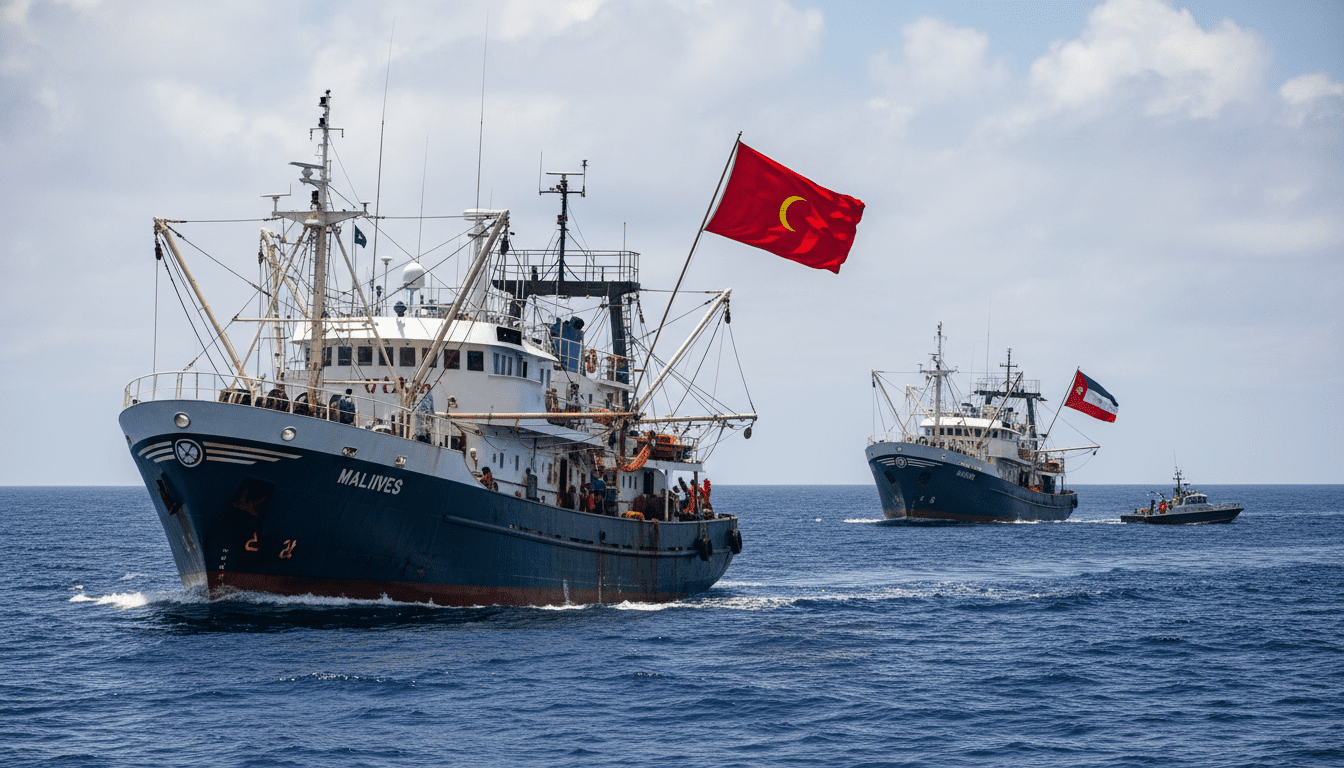
Report: EU tuna fleet reflagging moves one-third of Indian Ocean catch to European firms
Report finds EU tuna fleet reflagging moves one-third of Indian Ocean catch to European firms, raising concerns about quota avoidance and stock recovery.
The EU tuna fleet reflagging is allowing vessels linked to European companies to land roughly one-third of Indian Ocean tropical tuna catches under non‑EU flags, a new report by the Blue Marine Foundation and Kroll concludes. The study says the practice has expanded the effective reach of European purse seine vessels and supply ships in waters far from Europe. This development is amplifying scrutiny as regional managers and environmental groups assess whether quota reductions agreed under the Indian Ocean Tuna Commission are being undermined.
Report attributes one-third of catches to European-linked companies
The joint Blue Marine and Kroll report traces a significant share of yellowfin, bigeye and skipjack tuna taken in the Indian Ocean back to vessels tied to European interests. Investigators found owners and operators using registries and layered corporate structures to mask ultimate control, which often points to firms in Spain and France. Observers said that while reflagging itself is legal, the pattern raises questions about transparency and accountability in international fisheries governance.
The analysis highlights how supply chains and at‑sea support fleets amplify the impact of a relatively limited number of large purse seiners. Some of these vessels can take enormous loads in a single haul, and their capacity has made them central to industrial tuna supply for global canned and processed markets. Environmental groups argue that tracing beneficial ownership is essential to enforce conservation measures effectively.
Industry tactics: how reflagging and quota shopping work
According to investigators, companies seeking to maintain catch volumes have increasingly registered vessels in Indian Ocean states that offer higher or different quota allocations. By operating under those flags, vessels can access the quotas and regulatory regimes of their flag states rather than those of the companies’ countries of origin. The report documents the use of complex register chains and intermediary firms that obscure who ultimately benefits from the catch.
Experts warn that flag changes combined with permissive registries create incentives to sidestep the spirit of regional conservation decisions. While an EU Commission spokesperson emphasized that flagging decisions are commercial and fall under national jurisdictions, the report’s authors say the aggregate effect is a growing EU footprint operating beyond EU oversight. The distinction between legal ownership and beneficial control is a central challenge for regulators seeking to ensure quota compliance.
EU fleets remain dominant in distant‑water tuna fishing
European purse seine fleets, particularly from Spain and France, established operations in the Indian Ocean decades ago and remain prominent players. The report notes that the EU‑controlled fleet now includes more than 50 purse seiners and associated support vessels active in the region, a presence that belies the geographic distance. Those vessels target species that have experienced historical overfishing but are now showing tentative signs of recovery under stricter measures.
The concentration of industrial gear and the scale of individual hauls mean European‑linked operations can disproportionately influence stock trajectories. Fisheries scientists say management success depends not only on single‑country reductions but on transparent reporting and enforcement across all fleets that exploit the same stocks.
Regulatory context and responses at the IOTC meeting
The report was released days before the annual Indian Ocean Tuna Commission meeting in the Maldives, where delegates from the EU and 28 coastal and distant‑water states convene to set quotas and compliance rules. The IOTC has introduced measures in recent years intended to curb overfishing and promote recovery, and the EU has publicly committed to reductions for vessels flying its flag, including a reported 21 percent cut in yellowfin catch by EU‑flagged ships.
Nevertheless, negotiators at multilateral fora face the problem that conservation-minded quotas can be eroded if activity shifts to other flags without clear enforcement of beneficial ownership rules. Delegates are expected to debate transparency measures, observer coverage, and flag state responsibilities in order to close loopholes that allow quota displacement.
Supply chain and consumer market implications
The report underscores that much of the Indian Ocean catch ends up in global canned tuna supply chains that feed European supermarket shelves. When vessels reflag, the link between where fish are caught and whose quotas are used becomes blurred, complicating sustainability certifications and traceability systems. Retailers and brand owners are increasingly exposed to reputational risk if supply chains contain fish tied to opaque ownership or questionable compliance.
Advocates for stronger supply‑chain oversight say importers and processors must demand clearer documentation of vessel ownership and fishing authorization. They argue that buyers can help drive change by favoring suppliers that disclose beneficial ownership and demonstrate adherence to regional conservation measures.
The report’s findings add urgency to longstanding calls for stronger transparency and enforcement in high‑seas fisheries, and they set the stage for tougher scrutiny at the IOTC and in national ports. Observers say resolving the gap between legal flag states and the ultimate beneficiaries of large industrial fisheries will be central to ensuring that quota reductions translate into real stock recovery and sustainable supplies for consumers.
