
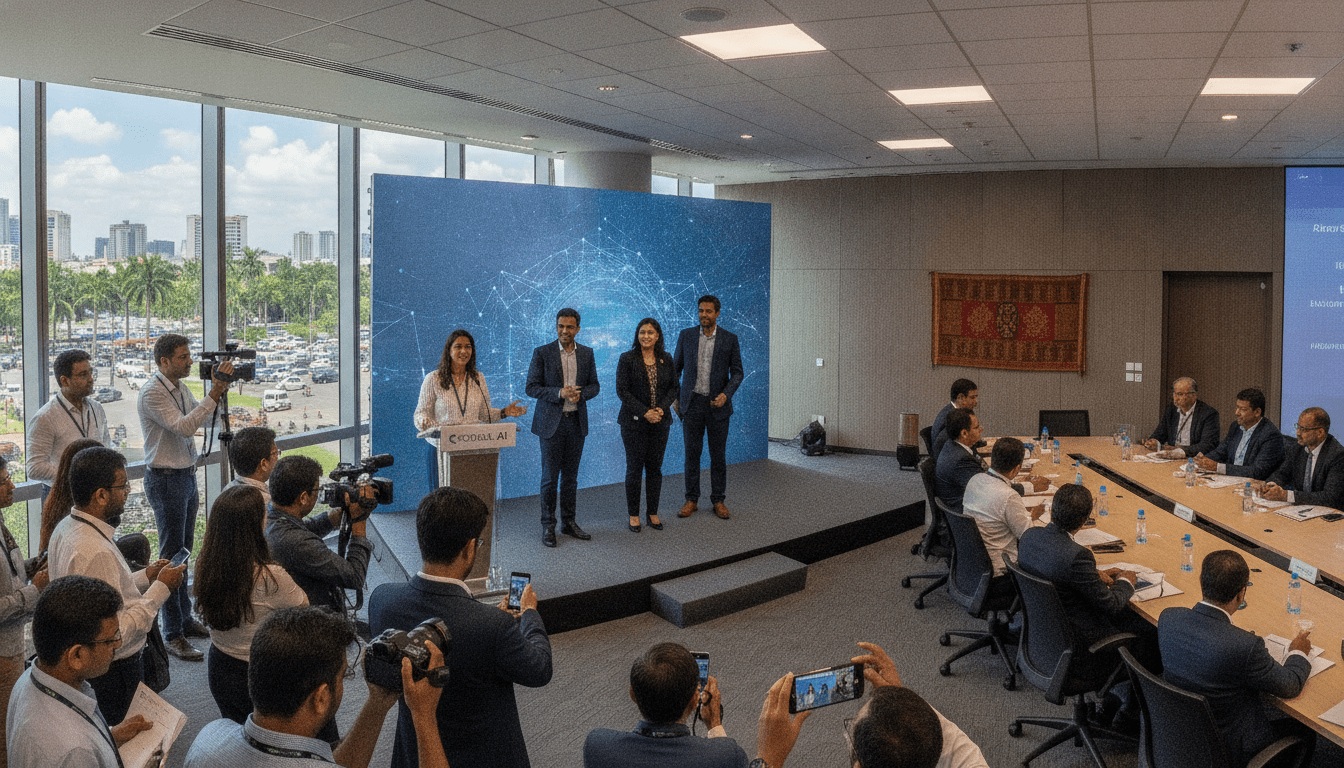
Equal AI call assistant raises $30M to expand call screening, transcription and multilingual replies
Equal AI raises $30M in Series B to scale its call assistant that screens unknown calls, transcribes conversations and replies in 10+ languages, reaching 1M+ monthly users this year.
Funding milestone and investor roster
Equal AI announced a $30 million Series B round led by Prosus Ventures and Tomales Bay Capital, with participation from Think Investments and Valiant Fund.
The round also attracted several individual backers, including founders and senior executives from prominent Indian and global technology and fintech companies.
With the new injection, the startup has now raised more than $42 million since its 2022 founding.
How the Equal AI call assistant functions
The company’s Android app screens incoming unknown calls and presents users with the caller’s stated reason for calling, along with quick reply choices.
When a user selects a response, the assistant reads that message aloud to the caller, and the app records and transcribes the interaction for later review.
Users can also craft custom messages for the assistant to speak, and the app generates concise summaries of recorded calls in the history view.
Product growth and usage metrics
Equal AI said the app has surpassed one million monthly active users and more than 300,000 daily active users since launching last year.
The traction has been driven largely by Indian consumers who receive frequent calls from delivery services, financial firms and recruiters.
The startup emphasizes that naming a caller is often insufficient, and the assistant aims to provide immediate context so users can decide how to respond.
Technical approach and language support
The startup combines automatic speech recognition, text-to-speech generation and an orchestration layer that routes and interprets caller intent.
Recognizing India’s linguistic diversity, Equal AI built support for over ten languages and models that handle code-mixed speech, where speakers blend multiple languages in one sentence.
The company says this multilingual capability is central to accurate screening and to reducing friction in everyday call handling.
Funding structure and valuation mechanics
Equal AI structured the Series B in three tranches with different valuations tied to performance milestones, allowing equity to be sold at varying prices within the same round.
That arrangement lets the company report the highest valuation achieved if later tranches close at elevated prices, though Equal AI declined to disclose the specific valuations for each tranche.
Prosus Ventures noted the appeal of local-market expertise when evaluating startups that build language-aware assistants for consumers.
Roadmap: features, platforms and monetization
Today the app screens only unknown numbers, but the company plans to extend screening to known contacts and to add proactive capabilities like messaging delivery personnel with a user’s address when authorized.
Equal AI is also developing an iOS version and a paid subscription tier that will bundle advanced features and expanded transcription or summary options.
The startup intends to broaden outbound actions the assistant can perform on behalf of users, such as booking appointments or coordinating service providers.
Equal AI enters a competitive field that includes built-in call-screening features from major platform owners and established standalone apps, but the company positions its local-language intelligence and call-focused design as differentiators.
The startup was founded by Keshav Reddy in 2022 and initially offered data services for financial analysis and KYC verification, before pivoting to a consumer-facing call assistant to address the volume of phone outreach Indians experience.
The new funding will be used to accelerate product development, scale language and speech models, expand to other platforms and pursue deeper integration with services that call users regularly.
Equal AI’s approach highlights a growing segment of AI applications that automate routine communication tasks while attempting to preserve user control and consent, particularly in markets where multilingual, code-mixed speech is the norm.
