
Elliot Anderson Emerges as England’s Engine After Record Manchester City Transfer
Elliot Anderson starred in England’s World Cup quarter-final, covering the most ground as he cements his role after a record £116m move to Manchester City.
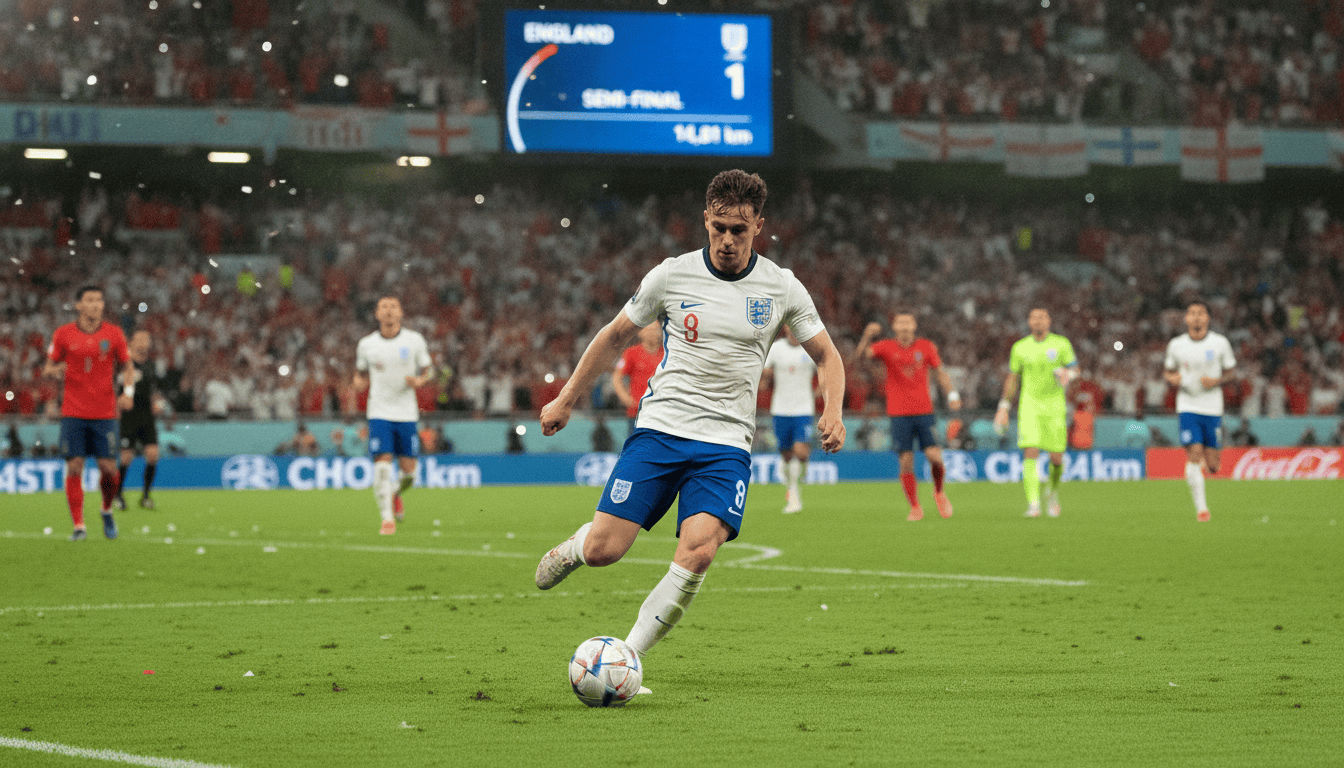
Elliot Anderson sprinted, intercepted and surged through 138 minutes of play to help England reach the World Cup semi-finals, a performance that underlined his rapid ascent and the logic behind his record transfer to Manchester City. The 23-year-old covered 14.81 kilometres in the 2-1 victory over Norway in Miami, outpacing every teammate despite extreme heat and humidity. His stamina and ball-winning capacity have made him a fixture in Thomas Tuchel’s starting eleven since his senior England debut in September last year.
Defining night in Miami for Anderson
Anderson’s energy was visible from the opening whistle and became decisive as the match extended into extra time and stoppage periods. His 14.81 km tally reflected relentless pressing and constant involvement in transition phases, a quantitative mark of influence that matched what coaches had seen on tape. After the final whistle he embraced manager Thomas Tuchel, the two sharing a moment that reflected both relief and acknowledgement of a performance that had been built over recent seasons.
Record transfer clarifies Manchester City’s plan
Manchester City paid £116 million (about €135 million) for Anderson at the start of the month, making him the most expensive English player on record. City’s outlay is widely seen as an investment in a long-term replacement for Rodri, whose contract runs until summer 2027 and whose recent injury history has left the club seeking midfield reinforcement. The fee excluded extensive performance-related add-ons, which kept the headline figure below some Premier League moves that factor in potential bonuses.
Rapid rise through club football
Anderson’s path to the top level has been unusually swift. After a professional debut for Newcastle in January 2021 and a loan spell at Bristol Rovers, he moved to Nottingham Forest in the summer of 2024 for €41 million to comply with financial rules at Newcastle. At Nottingham he emerged as a standout performer, leading the league in ball contacts, recoveries and duels won, and helping the club into European competition despite off-field pressures. Those domestic achievements convinced City and national selectors alike that he was ready for a bigger stage.
Tactical importance under Thomas Tuchel
Tuchel has used Anderson as a flexible central option, alternating him between a deeper number six and a more advanced eight during the tournament. That positional fluidity lets England adjust to different opponents while keeping Declan Rice and Jude Bellingham in complementary roles. Tuchel has praised Anderson’s all-round game, citing his defensive discipline and composure on the ball as key attributes that allow England to retain possession and progress through the thirds of the pitch.
Physical demands and personal resilience
The Miami fixture highlighted the physical toll of World Cup knockout football, with Anderson among the most heavily tasked players on either side. He has shown an ability to recover quickly and sustain high-intensity work across consecutive matches, a trait that is increasingly valuable in compressed tournament schedules. Off the field he has also navigated personal hardship, including the death of his mother in April, an experience he has said shaped his perspective and mental resilience.
England will face title-holder Argentina in the semi-final on Wednesday, July 15, 2026, a match that will test Anderson’s endurance and tactical discipline against one of the world’s most accomplished midfield units. Tuchel and his staff are likely to manage minutes carefully, but Anderson’s capacity to influence both defensive phases and build-up play makes him central to England’s game plan.
Anderson’s arrival at Manchester City also carries long-term implications for squad planning there, where Rodri’s fitness uncertainties and the managerial transition to Enzo Maresca after Pep Guardiola have created a window for new midfield leadership. If Anderson can translate his national-team form to club football, City anticipate a successor who combines defensive coverage with vertical passing to sustain their dominance domestically and in Europe.
Alongside Bellingham and Rice, Anderson now forms part of one of the tournament’s most versatile midfield trios, each able to shift roles according to match demands. That interchangeability has been a strategic advantage for England, permitting Tuchel to recalibrate in-game shape without sacrificing control. Should Anderson maintain his current form, he will remain a first-choice pick and a central figure in England’s bid for the title.
Looking ahead, Anderson’s focus remains firmly on the immediate challenge: recovering ahead of the semi-final and delivering the same intensity that made him England’s most mobile player in Miami. The coming days will reveal whether his physical output and tactical reading can match the quality of Argentina’s midfield, and whether his transfer to Manchester City heralds the next stage of a career that has accelerated from loan moves to the world stage in just a few seasons.
