
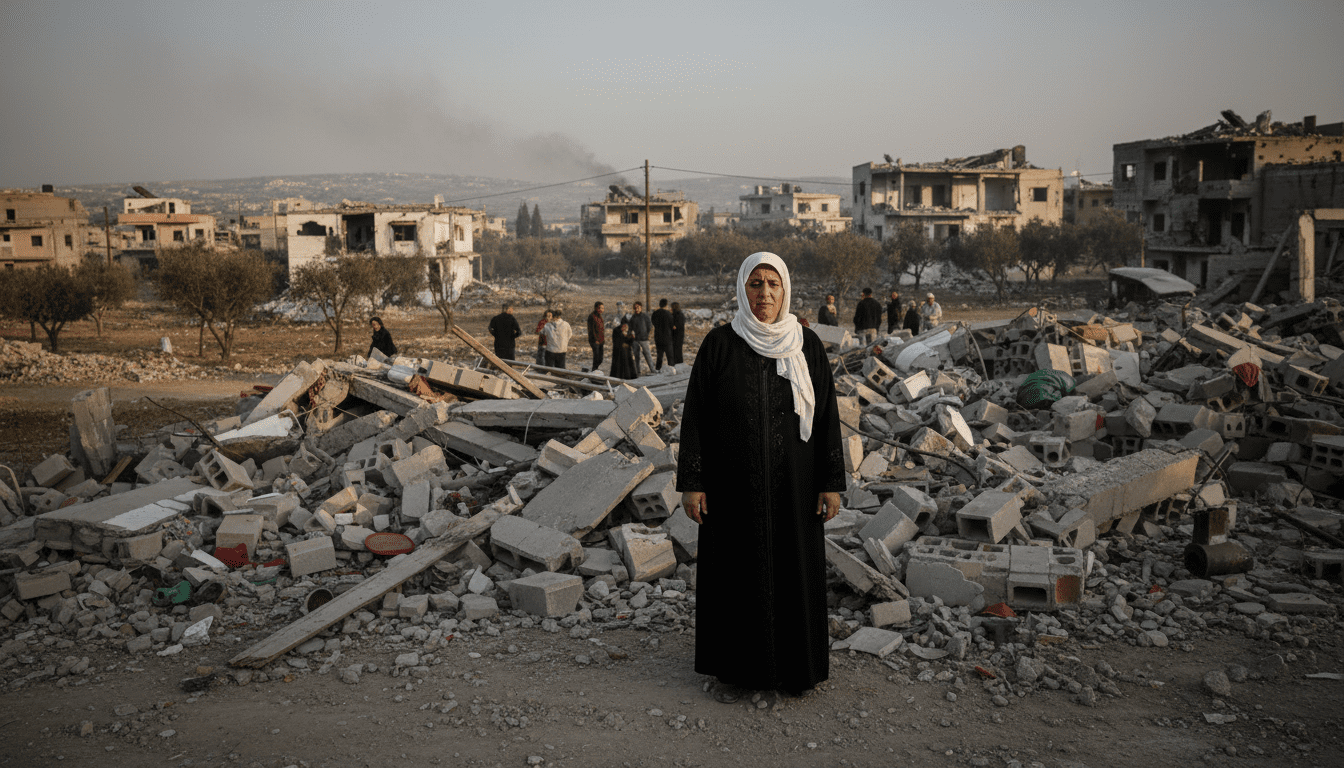
Displaced Residents Return to Southern Lebanon to Find Homes Reduced to Rubble
After a ceasefire, residents returned to southern Lebanon and found homes reduced to rubble. Zahra Eid, who fled Tayr Debba with her daughters at the start of the conflict, discovered her house destroyed when she came back on 19 April 2026. The scene in this coastal village underscores the immediate humanitarian and reconstruction challenges facing communities across the region.
Returnees Find Widespread Destruction in Tayr Debba
Many families who left Tayr Debba at the outset of hostilities have been coming back since the ceasefire took hold, only to encounter flattened houses and shattered belongings. Witnesses described streets littered with concrete and personal items, with little intact infrastructure to support immediate reoccupation. Local residents say the scale of damage is greater than anticipated, with entire blocks rendered uninhabitable and utilities severely disrupted.
Zahra Eid’s Home Reduced to Rubble
Zahra Eid’s return put a human face on the destruction: she arrived with her daughters and found what had been their home a pile of broken walls and twisted metal. Eid told neighbors she had fled with few possessions and had hoped to salvage at least some household items, but found nothing recoverable. Her account echoes those of other returnees who described shock at seeing years of investment erased in moments.
Civilian Toll and Displacement Patterns
Humanitarian workers and community leaders report that the civilian toll extends beyond physical destruction to long-term displacement and psychological trauma. Many families remain scattered across towns and informal sites, lacking clear pathways for safe, dignified returns. Local authorities estimate that returns are proceeding in phases, with only a fraction of displaced households willing or able to go back until basic services are restored.
Humanitarian Response Struggles to Keep Pace
Aid organizations on the ground say they face immediate gaps in shelter, clean water and medical assistance as return movements pick up pace. Emergency teams are prioritizing temporary shelter, food distributions and psychosocial support, but resources are strained and logistical access remains a problem in some areas. Agencies have issued urgent appeals for funding and coordination to prevent a secondary humanitarian crisis among those attempting to rebuild their lives.
Ceasefire Holds but Security Concerns Persist
While the ceasefire has allowed residents like Eid to attempt returns, security officials warn that the situation remains fragile and subject to rapid change. Clearance of unexploded ordnance and ensuring safe access to damaged properties are ongoing priorities for both military and civilian demining units. Local leaders emphasize that lasting returns will depend on guarantees of safety, restoration of law and order, and transparent steps to protect civilians.
Damage Assessment and Reconstruction Needs
Preliminary assessments point to extensive housing loss and critical infrastructure damage that will require a coordinated reconstruction effort over months or years. Planners say rehabilitation must include not only rebuilding homes but also restoring schools, health clinics and water systems to make returns sustainable. Donor coordination, clear property documentation and community-driven reconstruction strategies are being called for to avoid long-term displacement and to support recovery with local ownership.
The scenes in Tayr Debba are mirrored across other parts of southern Lebanon where families are returning in the wake of the ceasefire. Residents, aid agencies and municipal officials are now grappling with immediate relief needs while also pressing national and international partners for funding and technical support to begin reconstruction. For those like Zahra Eid, the path ahead begins with clearing rubble, securing shelter and navigating the uncertain process of rebuilding a life after conflict.
