
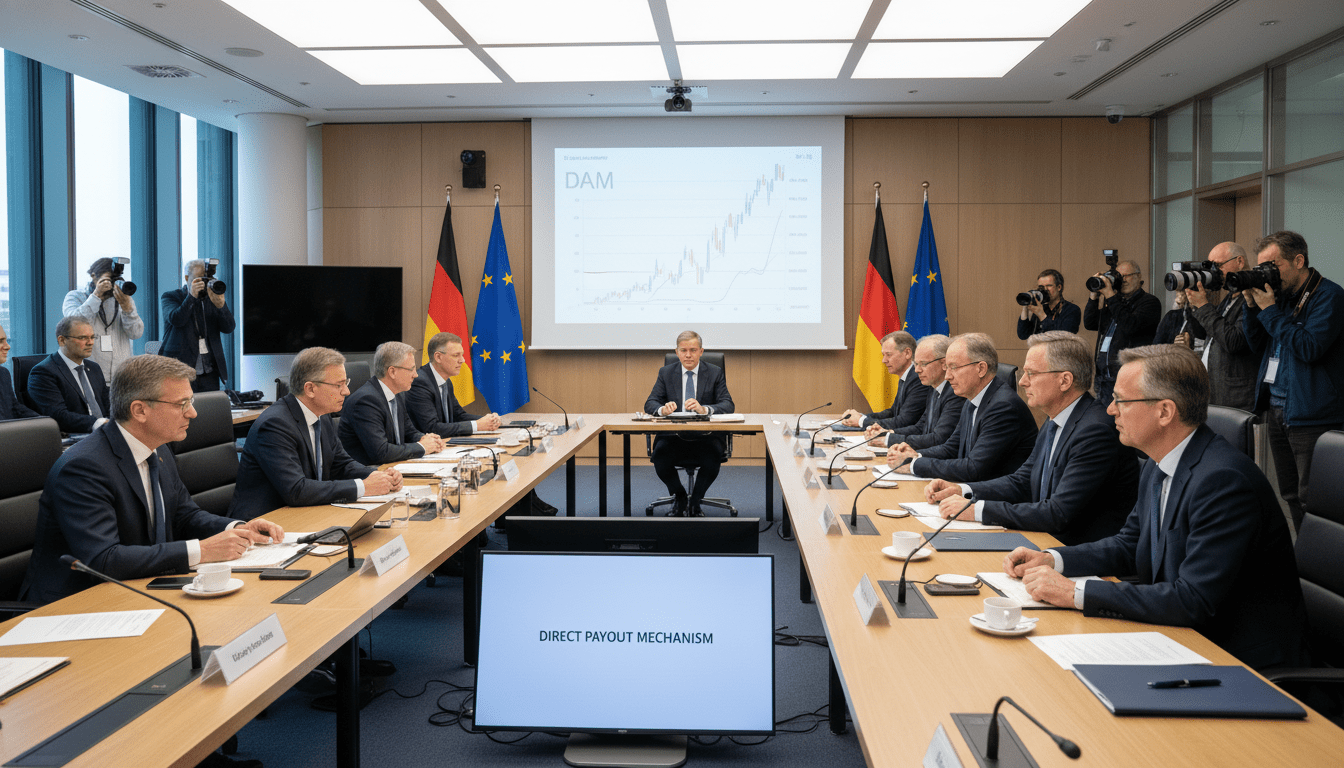
Germany Eyes Direct Payout Mechanism to Deliver Fast Relief for Rising Energy Costs
German officials reconsider a Direct Payout Mechanism to send cash straight to citizens’ bank accounts as a quick response to soaring energy and fuel prices.
The federal government has reopened discussions on a Direct Payout Mechanism to route payments directly from the finance ministry into citizens’ bank accounts in response to renewed price shocks. The proposal, known in German as the Direktauszahlungsmechanismus and often shortened to DAM, is being revisited as an emergency tool to provide rapid relief for households facing high energy and fuel bills.
Origins in the 2022 energy crisis
The idea for a Direct Payout Mechanism was first developed during the energy crisis that followed Russia’s 2022 invasion of Ukraine. Policymakers explored direct transfers as a pragmatic way to ease the burden on lower-income households as energy costs surged and households struggled with higher bills.
Early designs for the mechanism focused on targeted cash payments to compensate households for rising CO₂-related charges and other energy-related costs. Those initial proposals formed the technical and political foundation for what officials later called DAM.
Coalition commitments and unfinished promises
The current federal coalition included a commitment to a form of climate cash in its coalition contract, and the Direct Payout Mechanism was one of the administrative models discussed to deliver that promise. Political momentum ebbed and flowed as legislative priorities shifted and other energy support measures were deployed.
Despite the promise on paper, the mechanism was never fully implemented, leaving critics to question why a relatively simple payment idea stalled. Supporters in government say the question is not whether to pay, but how to do it in a lawful, secure, and administratively feasible manner.
Technical, legal and administrative hurdles
Designing a system capable of sending arbitrary sums to every citizen’s account is technically complex. Officials must reconcile data protection rules, banking interfaces, unique identification systems and real-time account verification to avoid errors or fraud.
Legal constraints also complicate the plan: payment authority, budgetary rules and tax law intersect in ways that require careful drafting to withstand judicial review. Building interoperable IT infrastructure across federal and regional agencies represents a major logistical undertaking.
Recent trigger: geopolitics and fuel-price spikes
This spring, a fresh surge in petrol prices and a high-profile international incident prompted renewed interest in a rapid payment option. In Berlin, officials recalled the Direct Payout Mechanism as a potential instrument for immediate relief when traditional subsidy schemes proved too slow or politically fraught.
The turnaround illustrates how external shocks can revive previously shelved policy tools, pushing administrators to reassess technical feasibility against the political imperative to act quickly.
Policy options and pilot proposals
Officials and experts are considering a range of designs, from limited pilots targeting low-income groups to a full-scale universal mechanism that could be activated in emergencies. Pilots would test authentication, targeting and reconciliation processes without exposing the state to large-scale operational risk.
Alternatives on the table include pre-authorized transfer frameworks, temporary hardship payments administered by existing social agencies, or expanding current tax-credit systems. Each option trades off speed, cost and legal clarity differently.
Political calculus and fiscal considerations
Beyond technical questions, the fate of a Direct Payout Mechanism depends on political agreement over scope, eligibility and funding. Parties disagree over whether payments should be universal or means-tested, how to avoid disincentivizing energy-saving behavior, and the fiscal cost of a standing payout capability.
Budget hawks warn that an easily triggered transfer mechanism could create expectations of recurring payments, while proponents argue that a reliable emergency conduit would allow the state to act decisively during acute price shocks.
Next steps and prospects for deployment
Officials say the immediate next steps include detailed legal reviews, consultation with banking and data-protection authorities, and small-scale operational tests. Any timetable for wider deployment will hinge on the outcomes of those processes and on whether lawmakers reach a political consensus.
While the Direct Payout Mechanism remains an attractive policy tool for rapid relief, substantial technical and legal work is required before the finance ministry can feasibly press a single button and make mass payments to citizens.
The debate over DAM highlights a broader tension in crisis policymaking: the desire for fast, flexible tools versus the institutional and legal safeguards that ensure accountability and prevent error. As energy and fuel markets continue to fluctuate, Germany’s policymakers must balance urgency with the painstaking work of building a mechanism that can be trusted to work when it is most needed.
