
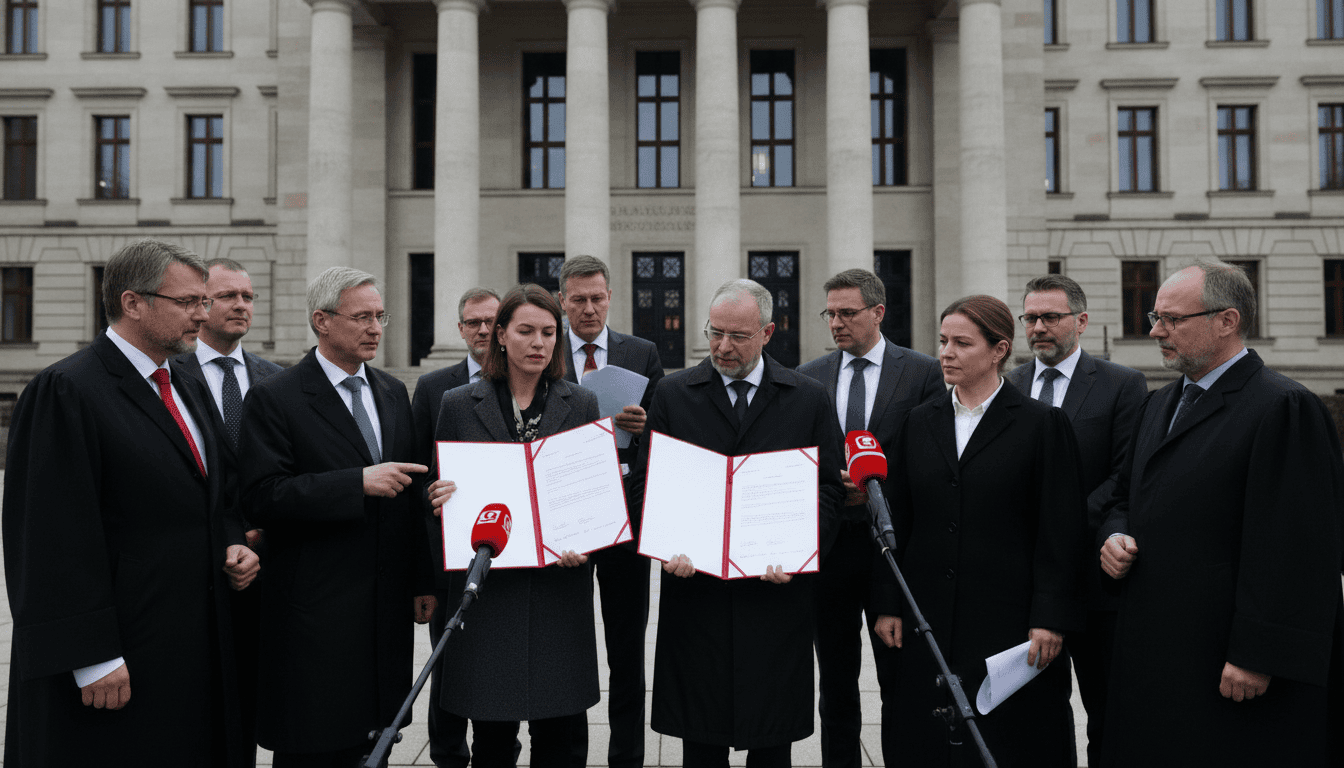
Die Linke files constitutional challenge to Germany’s heating law at the Federal Constitutional Court
Die Linke files constitutional challenge to Germany’s heating law, seeking an emergency injunction to block a fast-track vote until climate impact data is provided.
Germany’s heating law came under immediate legal attack after the parliamentary group Die Linke filed an organ dispute and urgent motion with the Federal Constitutional Court, arguing lawmakers lack essential information about the measure’s climate effects. The challenge, announced by the party’s climate policy spokesperson Violetta Bock, seeks to prevent a rushed parliamentary vote on the building modernization law until further data is supplied. A court spokesperson confirmed receipt of both the organ dispute and the emergency application, setting the stage for a rapid procedural review. The move signals a high-stakes clash over parliamentary information rights and the timetable for climate legislation.
Parliamentary group pursues organ dispute
The Left party framed its submission as an organklage, a constitutional action brought by a parliamentary organ to protect institutional rights of the Bundestag. Party officials argue that approving the building modernization law without full disclosure of its projected climate impact would deprive deputies of the information needed to exercise their legislative duties. Violetta Bock said the action was intended to stop the bill from being pushed through in an expedited procedure, describing the complaint as a defense of parliamentary transparency. The Federal Constitutional Court has acknowledged the filings, meaning the legal process will now determine whether the case warrants immediate relief.
Legal claim centers on alleged CO2 ‘credit’ for future parliaments
Die Linke’s legal team, represented by lawyer Johannes Franke, contends the proposed law effectively imposes an undefined “CO2-credit” on future legislatures by setting obligations that will bind successors without clear accounting. Franke argued that taking on a burdensome commitment of unknown scale and terms would violate MPs’ informational and decision-making rights under the constitution. The complaint asserts that legislators must be provided with quantified assessments of climate benefits and costs before a vote. That contention frames the dispute as not only procedural but also substantive: the adequacy of evidence underpinning climate-related legal obligations.
Court filing seeks to halt vote until after summer recess
The emergency application explicitly requests that the Bundestag refrain from voting on the building modernization law before the parliamentary summer recess, allowing time for supplementary climate impact information to be produced and reviewed. By seeking an interim order, Die Linke aims to remove the possibility of a last-minute, accelerated vote that it says would short-circuit scrutiny. If the court accepts the emergency motion, the legislative timetable would be interrupted and lawmakers would face pressure to supply additional documentation. A decision on the request could come quickly, though the court may also opt to rule only on the broader organ dispute after a more extended examination.
Political and policy implications for building modernization
The challenged bill, described by proponents as a cornerstone of Germany’s effort to decarbonize the building sector, aims to steer heating systems and building upgrades toward lower-emission technologies. Opponents, including Die Linke, argue that without clear evidence of the law’s climate effectiveness and without transparent cost and implementation details, the measure risks legal and practical pitfalls. Industry groups, homeowners and municipal authorities could be affected by any changes to the timetable, and judicial intervention would inject uncertainty into an already contentious policy area. The dispute underscores the tension between the government’s drive for expedited climate measures and parliamentary demands for rigorous impact assessment.
Possible outcomes and next steps in the dispute
Following the court’s confirmation of receipt, several pathways are open: the Constitutional Court could grant an interim injunction, refuse to halt proceedings, or move the case into a full constitutional review that would take longer. An interim order would pause parliamentary action and likely prompt negotiations to produce the requested data, while a refusal would allow the Bundestag to proceed with its scheduled debates and votes. Even if the court declines urgent relief, the organ dispute could continue as a substantive legal challenge that might shape future legislative practice. Political actors will now watch closely for signals about how the judiciary will balance parliamentary autonomy, transparency obligations and the urgency of climate policy.
The filing by Die Linke elevates questions about how lawmakers and courts should allocate time for scrutiny on complex climate legislation, and whether procedural safeguards are sufficient when measures with long-term environmental and fiscal consequences are proposed. The Constitutional Court’s response will determine whether the Bundestag must pause to produce further evidence about the building modernization law’s climate impact, or whether the legislative timetable will continue toward a vote. For now, both the political debate and legal review remain open, leaving the fate of the heating law contingent on the court’s next procedural decisions.
