
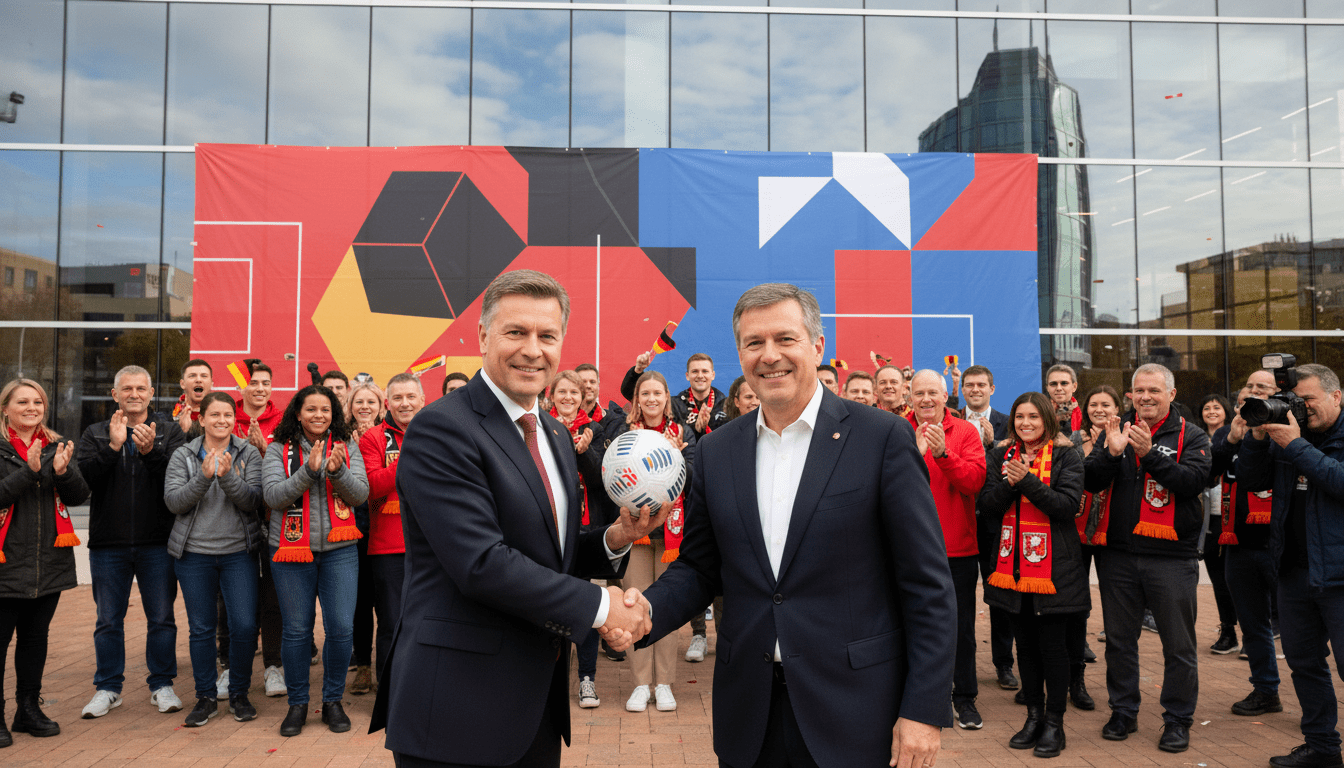
Germany World Cup base in Winston-Salem: DFB chooses Wake Forest estate for 2026 training camp
Germany World Cup base in Winston-Salem: DFB establishes training camp at a Wake Forest estate, with travel and community plans ahead of summer 2026.
The German Football Association (DFB) has confirmed Winston-Salem as its Germany World Cup base in Winston-Salem, selecting a Wake Forest estate to house and train the national team ahead of the 2026 tournament. The move has surprised many locals who had not expected a high-profile national side to settle in the North Carolina city. Organizers say the site offers privacy and high-quality sports infrastructure, even though it sits at a distance from several match venues.
DFB selects Winston-Salem as German World Cup base
The DFB’s decision followed an assessment of potential sites that balanced training quality, security and accommodation needs. Officials prioritized a location that could be adapted into a secure hub while offering controlled access for staff and players. Winston-Salem’s combination of collegiate facilities and residential properties emerged as a practical solution for the team’s preparation requirements.
Wake Forest facilities to host team sessions
Wake Forest University’s athletic complex will provide the backbone of the training environment, with pitches, weight rooms and sports science support available to the DFB delegation. Collegiate staff have worked with DFB planners to ensure pitch conditions meet professional standards and that recovery and medical areas can be insulated from public access. The university’s experience with elite competition logistics is expected to ease the transition for the national team into a concentrated training rhythm.
Accommodation described as a small château near campus
The team’s lodging has been characterized by locals as a “small château” with a French touch, a description that reflects a compact, villa-style residence surrounded by landscaped grounds. The property’s layout offers discrete entrances, meeting rooms and relaxation areas suitable for a national squad balancing routine and privacy. While visually charming, the estate’s relative remoteness from major stadiums has been noted by planners as a factor requiring precise transport coordination.
Travel distances to match venues pose logistical test
Winston-Salem does not sit adjacent to the principal 2026 match cities, and the anticipated travel distances mean the DFB will need a robust flight and recovery plan. Tournament schedules, opponent locations and training cycles will shape when the side departs the base for matches, and sports scientists will be tasked with mitigating the fatigue of frequent air travel. Officials will likely stagger training intensity and use charter flights to preserve player condition and maintain tactical preparation.
Local reaction: surprise, economic hopes and volunteer mobilization
Residents and business owners in Winston-Salem reacted with a mixture of surprise and enthusiasm following the announcement, citing pride at hosting one of the world’s most-followed teams. Local tourism and hospitality sectors anticipate increased demand during the team’s stay, and civic groups have begun outlining volunteer and cultural programs to welcome players. Security and public-safety agencies are coordinating with DFB representatives to manage crowds while preserving the team’s need for seclusion.
Planned community engagement and cultural exchange
The DFB traditionally embraces outreach during preparatory camps, and organizers in Winston-Salem are preparing programmes that could include youth coaching sessions, community visits and joint events with local soccer clubs. Such initiatives aim to leave a lasting legacy beyond the immediate logistical footprint by strengthening ties between German football structures and regional development efforts. Cultural exchanges are also planned to reflect the German side’s role as both a sporting delegation and an informal ambassador during the tournament.
The selection of Winston-Salem as the Germany World Cup base in Winston-Salem represents a strategic choice that balances seclusion with access to established athletic resources. As preparations accelerate toward summer 2026, attention will fall on the DFB’s logistics, the quality of on-site training, and how effectively the town and team translate goodwill into practical cooperation. In the weeks ahead, detailed schedules and support arrangements will determine whether the compact Wake Forest estate can become the calm, efficient hub the German squad expects as it pursues success on the world stage.
