
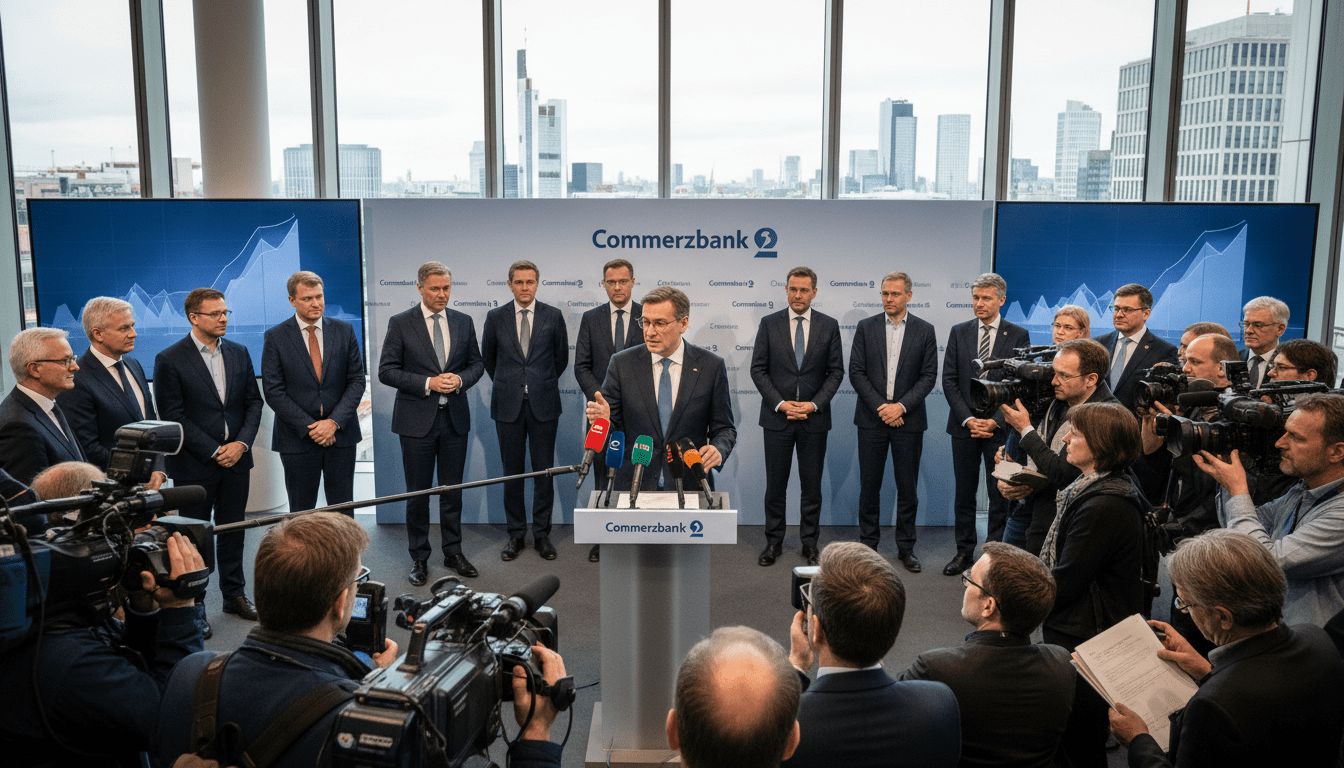
Commerzbank Rejects UniCredit Takeover Offer, Calling Bid Unfair and Strategically Flawed
Commerzbank rejects UniCredit takeover offer, saying the exchange proposal offers no adequate premium and lacks a credible strategic plan; UniCredit holds just under 30%.
Commerzbank on Monday formally rejected UniCredit’s latest takeover proposal, saying the Italian bank’s exchange offer does not provide an adequate premium and lacks a convincing strategic plan for a merger. The rejection follows an early-May bid in which UniCredit proposed swapping its own shares for Commerzbank stock, a move Commerzbank’s board and management described as a restructuring that would undermine its current business model. The dispute has sharpened pressure on both banks as a mid‑June acceptance window approaches.
Terms of UniCredit’s exchange offer
UniCredit’s voluntary proposal offers Commerzbank shareholders 0.485 new UniCredit shares for each Commerzbank share, with the exchange window set to run until June 16. The Italian group already holds 26.77 percent of Commerzbank’s shares directly and has financial instruments giving it access to an additional 3.22 percent, keeping its total position just below the 30 percent threshold that would trigger a mandatory, more expensive takeover bid. UniCredit says the share swap would allow it to build control without immediately launching a formal takeover that would carry greater regulatory and financial costs.
Valuation and market gap behind the rejection
Commerzbank’s board noted that UniCredit’s offer implied a valuation of about €34.56 per Commerzbank share, below the recent trading level of roughly €36.48 and well under the average analyst target near €41.50. Management argued the bid effectively met only the minimum legally required compensation and therefore failed to reward existing shareholders adequately for the bank’s value and future prospects. That valuation gap is central to Commerzbank’s position that the offer is opportunistic rather than a genuine merger proposal.
Limited initial uptake and investor reaction
Market response to the exchange offer has so far been muted; in the first week UniCredit reported only a negligible acceptance amounting to about 0.006 percent of outstanding Commerzbank shares. Investors have expressed concern about both the price on offer and the uncertainty created by potential restructuring after a deal, prompting some to favor Commerzbank’s independent strategy. Analysts and fund managers watching the process have signaled that any successful transaction would likely require either a higher premium or broader shareholder and regulatory comfort with UniCredit’s plans.
Commerzbank management frames UniCredit bid as restructuring, not merger
Commerzbank chief executive Bettina Orlopp said the proposal amounted to a restructuring blueprint that would “massively” disrupt the bank’s profitable operations, and the bank’s board concluded the plan lacked a credible, evidence-based path for an integrated group. Deputy CEO Michael Kotzbauer similarly criticized the proposal as dismantling the bank’s customer-facing setup while offering shareholders insufficient compensation. Commerzbank reiterated that it intends to pursue its own strategy aimed at independent growth and value creation for shareholders.
UniCredit’s stakebuilding and planned cost cuts
UniCredit first increased its exposure to Commerzbank in September 2024 and has since become the largest shareholder by a significant margin, intensifying pressure on Commerzbank’s management. The Italian lender’s public plan foresees substantial restructuring, including the potential elimination of around 7,000 full‑time positions, a step UniCredit argues is necessary to unlock synergies and build scale. UniCredit chief Andrea Orcel has defended the rationale for the offer as a route to create a larger European banking franchise, though critics question whether the proposed changes sufficiently protect Commerzbank’s customer operations and franchise value.
Political and regulatory stakes in Berlin and Brussels
The approach has drawn scrutiny beyond the two boards, with the German government expressing reservations about the terms and implications for domestic banking and employment. Regulatory rules around mandatory offers and shareholder protections are central to the unfolding contest: crossing the 30 percent ownership threshold would ordinarily oblige UniCredit to make a higher-priced compulsory bid, which the swap proposal is designed to avoid. Brussels and Berlin will be watching closely for any material change in ownership or commitments on jobs, branch networks and national financial stability.
Next steps, timeline and likely scenarios
With the voluntary exchange window closing on June 16, both banks have until then to press their cases to investors and to gather or resist acceptances that could alter the ownership balance. Possible outcomes include an increased offer from UniCredit if acceptances remain low, a failed takeover that leaves UniCredit as a significant minority shareholder, or negotiations that yield concessions on governance or guarantees for Commerzbank’s operations. Market participants say a higher cash or share premium, concrete transitional arrangements, or regulatory assurances would be needed to change Commerzbank’s current stance.
The dispute over UniCredit’s takeover proposal has moved from boardroom statements into a public contest over valuation, strategy and control, with shareholder decisions over the coming weeks likely to determine whether the proposed exchange evolves into a full takeover or stalls, leaving Commerzbank to continue executing its independent plan.
